
Unbiased headlines. Facts, not spin.
Every story is an unbiased news briefing written from 110+ sources across the spectrum — sources linked so you can verify it yourself.
 economy
Notable (6/10)
July 24, 2026 at 12:01 AM
economy
Notable (6/10)
July 24, 2026 at 12:01 AM
Senate Panel Advances Bill to Ban Chinese Cars and Connected Vehicle Tech From U.S. Roads
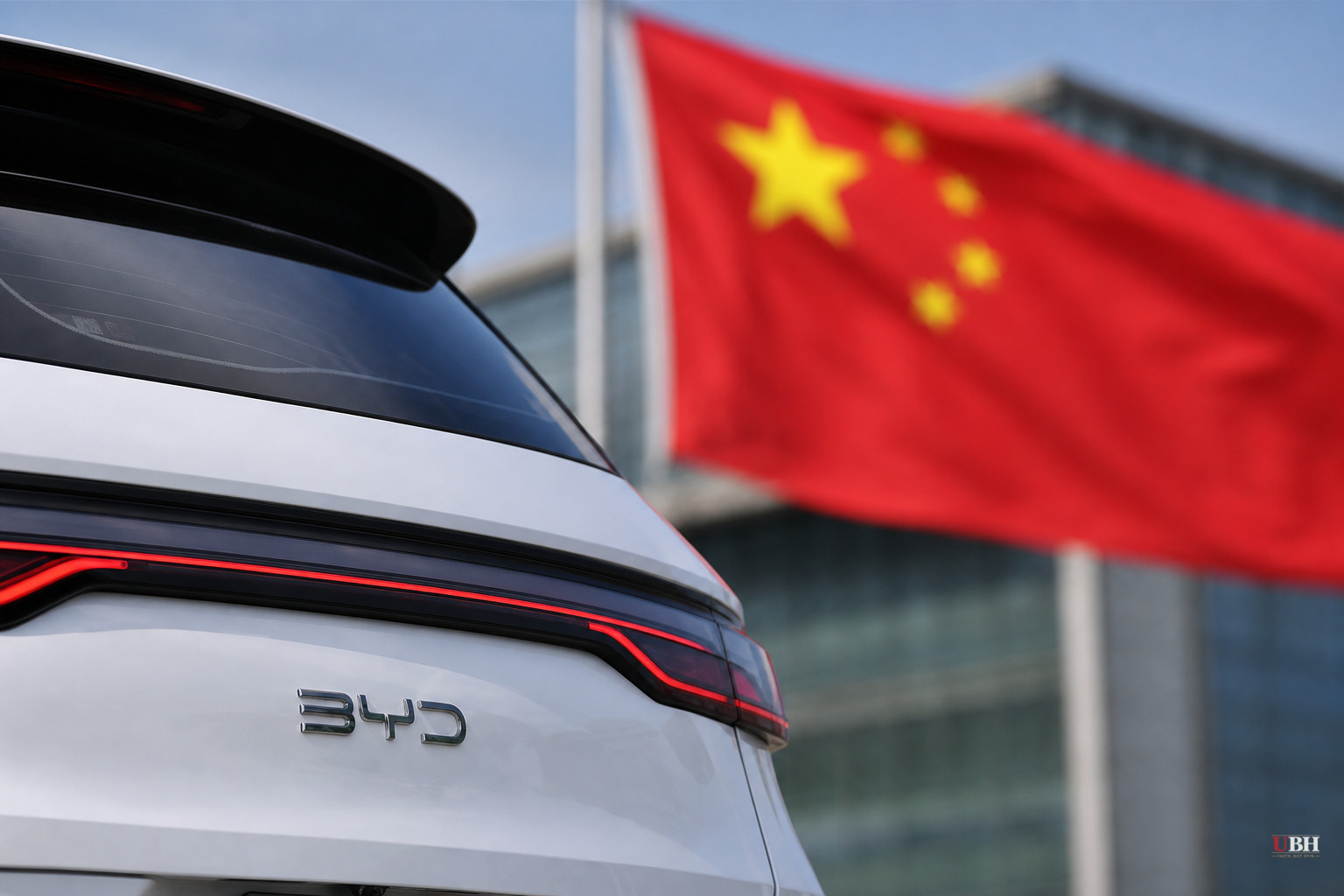
The Senate Commerce Committee voted unanimously Wednesday to advance the Connected Vehicle Security Act of 2026, a bill that would ban the import, sale, and operation of vehicles made by China and other designated foreign adversaries, and prohibit Chinese-developed connected vehicle software and data systems from American roads.
The bill, sponsored by Sen. Bernie Moreno (R-OH) and Sen. Elissa Slotkin (D-MI), still needs full Senate passage, House approval, and a presidential signature before it becomes law. Wednesday's committee vote is a procedural step, not a final one.
What the bill actually does
The legislation goes further than existing federal restrictions. The Biden administration had already imposed rules effectively blocking Chinese automakers from entering the U.S. passenger vehicle market and restricting Chinese-made connected vehicle software and hardware. This bill broadens that approach to cover the entire production, import, and sales pipeline for Chinese-manufactured vehicles and components, not just the software layer.
Modern cars increasingly function as networked computers. They collect location data, driving behavior, and can allow remote access to functions like steering, braking, and acceleration through over-the-air software updates. Moreno has described this as vehicles operating like "roving electronic devices." The same basic concern drove the Commerce Department's 2024 rule restricting Chinese software and hardware in connected vehicles under the Biden administration.
Why a Republican and a Democrat teamed up
Moreno and Slotkin are coming at this from different angles, and the bill's bipartisan appeal depends on both holding together.
Slotkin, who represents a state built on the auto industry, frames it as a jobs and surveillance issue. "Chinese cars are surveillance packages on wheels, with the ability to collect on American citizens and transmit that data back to Beijing," she said after the vote, adding that Beijing's subsidized industrial strategy "puts Michigan's auto industry and millions of American workers at risk."
Moreno's framing is more combative, calling China's auto sector something "not built to compete" but "built to destroy American manufacturing, gut the middle class, and undermine our national security." He also took a swipe at past U.S. policy, saying "D.C. globalists propped up Chinese businesses" for decades.
Both lawmakers are pointing at the same underlying fact: China's government has heavily subsidized its domestic auto industry, particularly electric vehicle makers like BYD, allowing Chinese manufacturers to sell vehicles well below the cost American or European automakers could match. Whether you call that "predatory" or just aggressive industrial policy, the price gap is real and has already reshaped EV markets in Europe and Southeast Asia, where Chinese brands have taken significant market share.
The case for the bill, and the case against
The security argument has real teeth. A connected vehicle with remote access to braking and steering, built by a manufacturer subject to Chinese state direction, is a different threat model than a normal consumer product. That's why the Biden-era Commerce Department already acted on the software and hardware side before this broader bill existed.
The protectionism argument is murkier. Restricting subsidized foreign competition can shield domestic jobs in the short term, but it can also mean American consumers pay more for cars and have fewer choices, particularly in the EV segment where Chinese manufacturers have driven down global prices. Critics of broad industrial protectionism, on the left and right, have long argued that tariff and import walls tend to raise costs for buyers even as they protect specific unionized jobs. Neither side of that trade-off gets resolved just because the security case is strong.
Chinese-brand vehicles are not currently a meaningful presence in the U.S. passenger market, largely because of existing tariffs and the 2024 connected-vehicle rule. That raises a fair question: how much practical difference this bill makes versus how much it's a preemptive, belt-and-suspenders move to lock in restrictions before Chinese automakers find workarounds, such as manufacturing through third countries.
Who's backing it
The bill has support from General Motors, along with labor unions, steel manufacturers, and other industry groups, according to reporting on the committee action. That kind of coalition, automakers and unions on the same side, suggests genuine industry anxiety about Chinese competition rather than a purely symbolic gesture.
What happens next
The bill now heads toward a full Senate floor vote, with no date yet set. It would then need House passage and a presidential signature. Given the bipartisan committee vote and the political incentives on both sides, particularly in swing-state Michigan and Ohio, the bill has a real path forward. Whether it passes intact, gets narrowed, or gets folded into a larger trade or national-security package remains an open question heading into the fall legislative calendar.
Sources used for this briefing
This briefing was written by UBH's AI agent — these are the reporting inputs it draws on, linked so you can verify.


