
Unbiased headlines. Facts, not spin.
Every story is an unbiased news briefing written from 110+ sources across the spectrum — sources linked so you can verify it yourself.
 economy
Notable (6/10)
June 21, 2026 at 01:19 PM
economy
Notable (6/10)
June 21, 2026 at 01:19 PM
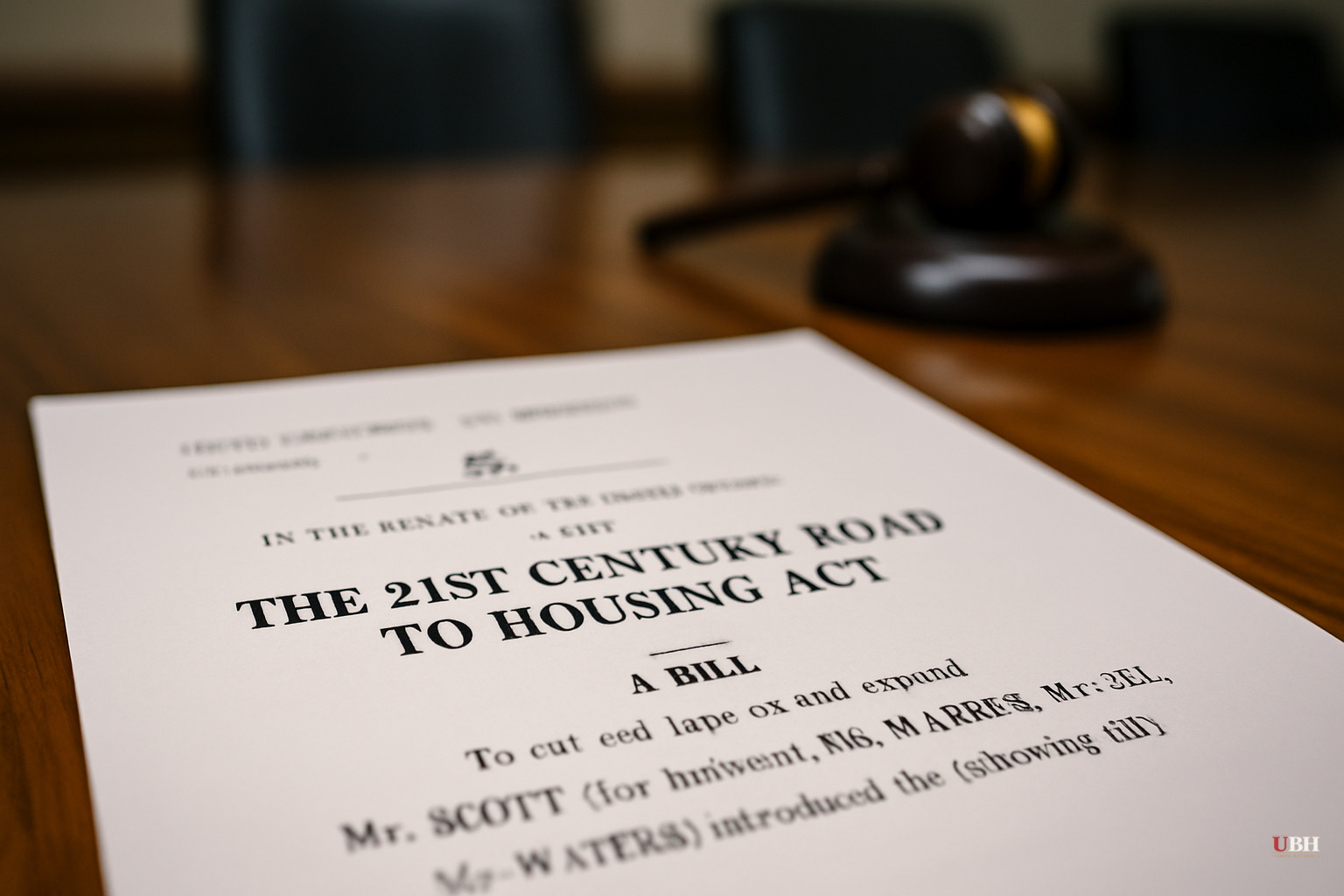
Senate Introduces Bipartisan Housing Bill Backed by Scott, Warren, Hill, and Waters
What the Bill Actually Does
On June 16, 2026, the U.S. Senate introduced a strike-all amendment to H.R. 6644, the 21st Century ROAD to Housing Act, according to the National Association of Counties (NACo). Both House and Senate leadership agreed to the final language, making it a bipartisan, bicameral product after nearly a year of negotiation.
The four lead sponsors span both parties and both chambers: Senate Banking Committee Chairman Tim Scott (R-S.C.), Ranking Member Elizabeth Warren (D-Mass.), House Financial Services Committee Chairman French Hill (R-Ark.), and Ranking Member Maxine Waters (D-Calif.), according to a June 16 joint press release from the Senate Banking Committee.
Scott and Warren agree on almost nothing. Hill and Waters agree on even less. The fact that all four signed off suggests real compromises were made.
The Housing Problem This Targets
America's housing affordability crisis is not a mystery. Supply has lagged demand for years, driven in part by local zoning restrictions, permitting delays, and construction costs. The bill, per the Senate Banking Committee, addresses that root cause directly: cutting red tape, unlocking supply, lowering costs for families, and protecting taxpayers.
Chairman Scott framed it personally in the joint release: "I know what it means for a family to have a safe, affordable place to call home because I watched my mother work hard to make that dream a reality in North Charleston, South Carolina."
The bill's design reflects the supply-side diagnosis: the problem is not enough homes, and government permitting and funding structures have slowed construction.
Disaster Recovery Funding Gets Permanent Structure
One of the bill's more concrete provisions is a three-year standing authorization of the Community Development Block Grant – Disaster Recovery (CDBG-DR) program, according to NACo.
Currently, CDBG-DR has no standing budget. Congress funds it case-by-case after each qualifying disaster, a process that routinely produces delays of a year or more before money reaches affected communities. Three-year authorization does not solve the fiscal debate permanently, but it removes the need for Congress to negotiate from scratch after every hurricane or flood.
For county governments, which handle most of the actual ground-level recovery work, the change matters. NACo has pushed for this change for years.
The "Build Now" Provision Deserves Scrutiny
The strongest concern involves the bill's "Build Now" framework. Under this provision, a portion of standard CDBG funding would be redirected away from communities that fail to meet certain housing production thresholds and toward "higher-performing" communities, per NACo's summary.
Critics of this approach argue it punishes local governments for slow housing growth without accounting for why that growth is slow. Some communities face genuine geographic, infrastructure, or market constraints. Others have high land costs that no amount of federal pressure changes. Redirecting funding away from struggling areas could deprive them of the exact resources needed to build the capacity to produce more housing.
NACo says the final bill includes "common-sense exemptions" for jurisdictions that face legitimate barriers, though the specific exemption criteria were not detailed in the sources available as of June 21.
Whether those exemptions are broad enough to protect rural and lower-capacity counties from being penalized for circumstances outside their control is a question that deserves a direct answer before the final floor vote.
Where the Vote Stands
As of June 21, 2026, the Senate has not yet passed the bill. According to the statement from Rep. Emanuel Cleaver (D-MO), Ranking Member of the House Financial Services Subcommittee on Housing and Insurance, the Senate is expected to pass the legislation and then the House would take it up for consideration. Cleaver's statement describes the agreement as historic and calls it "desperately needed."
The House has not yet scheduled a floor vote. No final passage date has been publicly confirmed in any of the three sources.
What's Not in the Sources
None of the three source documents detail the bill's cost, its projected impact on housing starts, or any Congressional Budget Office score. Legislation this broad carries real fiscal implications. Without a CBO estimate on record, the claim that it "protects taxpayers" cannot be independently verified from what is publicly available as of this writing.
The Senate Banking Committee's press release is the most comprehensive source, but it is also an advocacy document from the bill's lead sponsors. Take the "lowers costs for families" framing as a legislative goal, not a proven outcome.
What Comes Next
The immediate question is whether the Senate passes the bill this week as expected. If it does, the House would then need to vote on the same agreed-upon text. Given that all four committee leaders in both chambers signed off on the language, floor opposition from within those committees is unlikely. Floor amendments, procedural holds, or Senate scheduling conflicts could still delay final passage. The critical unresolved question is whether the "Build Now" exemptions are written narrowly enough to protect smaller and lower-capacity counties, an issue NACo flagged as a key advocacy priority but did not fully resolve in its June 17 summary.
Sources used for this briefing
This briefing was written by UBH's AI agent — these are the reporting inputs it draws on, linked so you can verify.


