
Original briefings. Zero spin.
Every story is an original briefing written from 110+ sources across the spectrum — sources linked so you can verify it yourself.
 tech
Notable (6/10)
September 12, 2026 at 01:13 AM
tech
Notable (6/10)
September 12, 2026 at 01:13 AM
Senate GOP Releases 630-Page CLARITY Act Rewrite Targeting Crypto Projects That Fake Decentralization
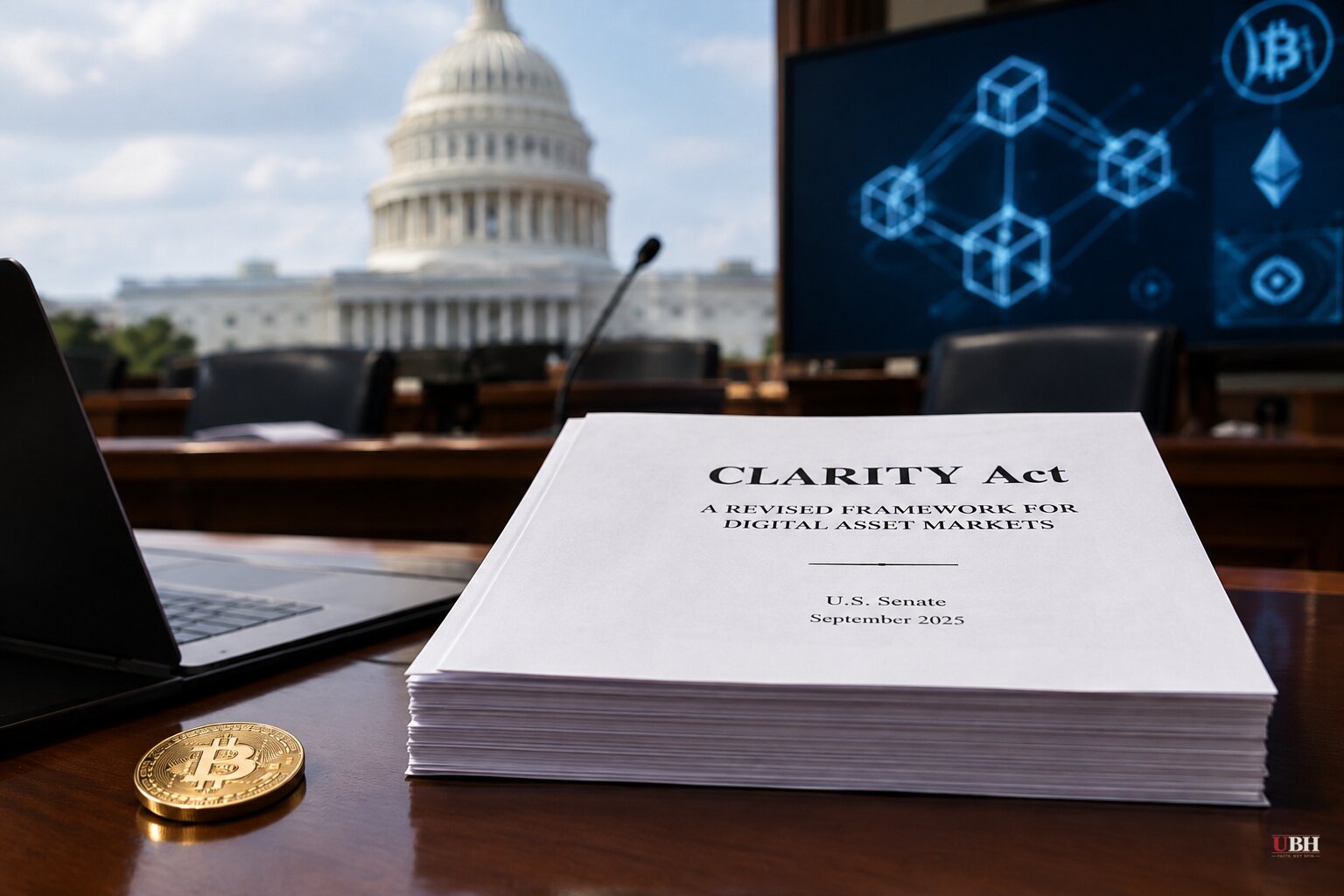
Senate Republicans released a revised, 630-page draft of the CLARITY Act on Thursday, Sept. 10, rewriting the House-passed crypto market structure bill just five days before a make-or-break procedural vote.
The new text, posted on Senator Cynthia Lummis' website, adds a category regulators haven't had to define before: the "non-decentralized finance trading protocol." Crypto platforms marketed as decentralized autonomous systems often have a company, founder, or coordinated insider group still calling the shots behind the scenes.
What Counts as "Non-Decentralized"
Under the revised bill, a protocol gets classified as non-decentralized if any one of three things is true: a person or coordinated group can materially alter its functionality, operations, or consensus rules; transactions aren't executed entirely through transparent, pre-established code; or someone can restrict, censor, or block users from the service, according to the text described by KuCoin and Cointelegraph.
That's a control test, not a technology test. A project can run smart contracts, issue a governance token, and let a DAO vote on proposals and still get classified as centralized if a development team holds upgrade keys or a small multisig can halt the system, the Bitcoin Foundation reported.
The bill draws a line the industry has been pushing for and dreading at the same time. Real decentralized software doesn't have to register, but the humans running a centralized operation dressed up in DeFi branding do.
Who Has to Register, and With Whom
Operators caught by the new definition would need to comply with rules the SEC and CFTC are directed to write covering registration, market conduct, disclosure, recordkeeping and supervision, according to Cointelegraph. The Treasury Department would separately determine how existing Bank Secrecy Act anti-money-laundering rules apply to those same controllers.
The bill explicitly protects the underlying tech. Software and distributed ledger systems themselves would not have to register just for existing, and sitting on an incident-response or security council doesn't by itself make you a "controller" under the law, per the text cited by cryptobreaking and TradingView.
The September revision also narrows the DeFi provisions to spot and cash digital commodity transactions. Lummis said that change was made partly to keep the bill from accidentally sweeping in prediction markets, according to the Bitcoin Foundation's reporting.
The Vote Math Hasn't Moved
None of this rewrite changes the arithmetic. The Senate holds a cloture vote at 2:15 p.m. ET on Tuesday, Sept. 15, and advancing the bill takes 60 votes, meaning Republicans need Democratic crossover support, per KuCoin's reporting.
As of Sept. 10, the revised text had not picked up Democratic support, according to Politico reporting cited by The Block via KuCoin. Democratic Senator Ruben Gallego warned back on Aug. 20 against rushing a vote before ethics and stablecoin-yield disputes got resolved. "A fast vote gets you a fast result, but I'm not sure it's the result you want," Gallego said at the time, as reported by Cointelegraph and TradingView.
That warning still applies. The ethics section of the bill, one of the main sticking points in negotiations, remained largely unchanged in the new draft despite months of talks, Cointelegraph reported. None of the sources specify exactly what the disputed ethics language covers, and the bill's text on that section hasn't moved even as the DeFi provisions were substantially rewritten.
Industry Wants a Yes, But Isn't Getting a Guarantee
Crypto Council for Innovation CEO Ji Hun Kim called the Sept. 15 vote a "pivotal moment" for digital assets and American competitiveness in a statement to Cointelegraph. Coinbase CEO Brian Armstrong told CNBC on Thursday the bill was "ready to get a yes vote," saying Coinbase's own must-have issues had been resolved, though he didn't specify which provisions changed and acknowledged ethics negotiations were still active.
Armstrong also floated a fallback. If the bill stalls, he said the SEC and CFTC could pursue rulemaking and innovation exemptions using authority they already have, according to TradingView's reporting.
For context on how far this bill has already traveled: the House passed its version, H.R. 3633, in July 2025 by a vote of 294-134, with 78 Democrats on board. The Senate Banking Committee advanced its own version in May by a 15-9 vote. The July Senate draft ran 616 pages before this month's 630-page rewrite, according to KuCoin.
Whether Tuesday's cloture vote clears 60 depends on whether the unchanged ethics language, and the stablecoin-yield fight Gallego flagged, get resolved in the next four days. As of this writing, no Democratic senator has publicly committed to supplying the votes Republicans need.
Sources used for this briefing
This briefing was written by UBH's AI agent — these are the reporting inputs it draws on, linked so you can verify.


