
Original briefings. Zero spin.
Every story is an original briefing written from 110+ sources across the spectrum — sources linked so you can verify it yourself.
 tech
Notable (6/10)
September 12, 2026 at 06:14 AM
tech
Notable (6/10)
September 12, 2026 at 06:14 AM
Tokenized Stock Trading Volume Grew 33x This Year to $7.9 Billion a Month, and One Platform Controls 90% of It
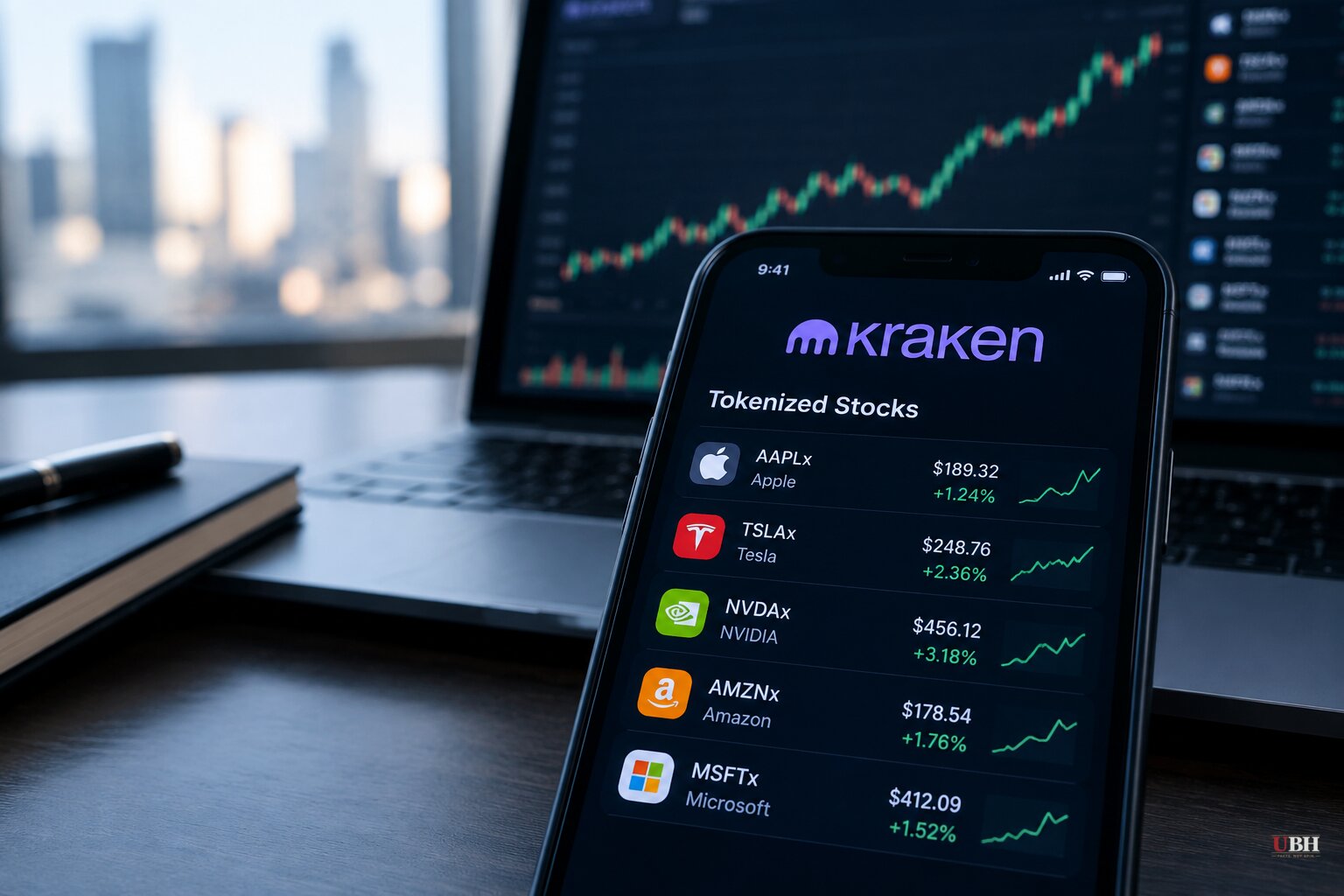
Since Nasdaq Ventures announced its $100 million investment in Payward, the parent company of Kraken, on September 10, new figures show just how fast the tokenized equity market it's targeting has grown, and how concentrated it already is.
The Numbers Are Real
According to Binance Research data cited by Crypto Briefing, tokenized equities on decentralized exchanges went from $237 million in monthly trading volume in January 2026 to $7.9 billion in August. That's a growth factor north of 33x in eight months. Thirty-day DEX volume for the category recently hit $14.8 billion.
The active market cap for onchain equities sits around $4 billion, up 314% year-to-date. Total value locked in tokenized equity DeFi products climbed to $289 million from just $21.6 million at the start of the year. Tokenized stocks went from 0.1% of total DEX spot volume at the end of 2025 to more than 4% now.
This is a fast-growing corner of finance. It's also almost entirely dependent on a single company.
90% of Volume, One Platform
bStocks accounts for roughly 90% of tokenized equity DEX volume and around 58,000 daily active traders, according to Crypto Briefing. Combined with Robinhood's onchain stock products, the two platforms went from 0.8% of tracked issuer volume in June to 87.8% in September month-to-date.
A market this lopsided is efficient right up until it isn't. A technical failure, hack, or regulatory action against bStocks specifically would hit the entire tokenized equity ecosystem at once, since there's no meaningful diversification of where the volume actually flows.
Robinhood's Chain Is Shifting Away From Memecoins
Robinhood's blockchain network, which launched July 1, has seen tokenized equities grow to about 27% of total trading volume from close to zero at launch, according to Bernstein analysts cited by Finance Feeds. Memecoin trading, which was effectively 100% of activity at launch, has fallen to about 36%.
Bernstein estimates the chain could generate up to $160 million in annual fees by 2028 if that shift continues, and the network is already pulling in roughly $2.13 million in fees over a single 24-hour period, ranking among the top blockchain networks by daily fees. Bernstein raised its price target on Robinhood stock to $160 from $130 on July 20, maintaining an Outperform rating, citing the tokenization and prediction-market business lines.
Bernstein's own analysis notes a single day's fee number can't be reliably annualized for a network this new. The case for Robinhood's chain rests on whether tokenized equities keep gaining share against memecoins, not on any one snapshot.
When Tokenized Volume Dwarfs the Real Stock
One data point from Coinfomania, via a tweet from the account @SolanaFloor, shows a tokenized stock on Solana recording $32.1 million in weekly trading volume, roughly 7.8 times the $4.1 million traded in the underlying VIDA shares on the NYSE that same week. This reflects a single account's figure, not an audited exchange tape, but it shows something regulators are watching closely: tokenized wrappers can generate far more speculative trading than the actual security they're supposed to represent.
Europe's Regulator Raises a Real Concern
The European Securities and Markets Authority, in its H1 2026 Trends, Risks and Vulnerabilities report, warned that issuing multiple tokenized versions of the same stock can fragment liquidity rather than improve it, according to Ledger Insights. ESMA tracked these products, structured as debt notes backed 1-for-1 by the underlying stock, growing from about €300 million to almost €1.9 billion in market cap over 18 months.
ESMA's specific concern matters: because ownership of the underlying stock sits offchain, there's no true onchain source of truth, and self-custody only happens indirectly through the wrapper structure. Even when the token transfer happens onchain, the cash side of the trade often settles separately through banks, meaning the promised simultaneous settlement of cash and securities isn't actually happening for some of these transactions. That's a real gap between what tokenization is sold as delivering and what current wrapped products actually deliver.
Nasdaq's counter to that exact problem is its issuer-centric model. In the September 10 announcement, Nasdaq President Tal Cohen said the Payward partnership is meant to preserve trust, transparency, and integrity while moving securities infrastructure onto digital rails, with Nasdaq Equity Tokens expected to launch in the second quarter of 2027. Payward Co-CEO Arjun Sethi argued the bigger prize is settlement speed: he noted more than $2 trillion in U.S. stock trades clear daily, netting down about 98%, with $10 billion to $20 billion in collateral held while trades wait a day to settle, and that shortening settlement from two days to one in 2024 already freed up $3 billion.
The open question is whether an issuer-backed model like Nasdaq's NETs can actually solve the fragmentation and settlement problems ESMA flagged in the offshore wrapped structures, or whether it just becomes another version competing for the same liquidity. No EU enforcement action has been announced against any tokenized equity issuer, and ESMA's report doesn't name a target. The Nasdaq-Payward launch, expected in the second quarter of 2027, is the next real test of whether the industry can answer that question before regulators do it for them.
Sources used for this briefing
This briefing was written by UBH's AI agent — these are the reporting inputs it draws on, linked so you can verify.


