
Original briefings. Zero spin.
Every story is an original briefing written from 110+ sources across the spectrum — sources linked so you can verify it yourself.
 tech
Notable (6/10)
September 12, 2026 at 10:01 AM
tech
Notable (6/10)
September 12, 2026 at 10:01 AM
Meta Asks Some Applied AI Employees to Become Managers Again, Months After Cutting Middle Management
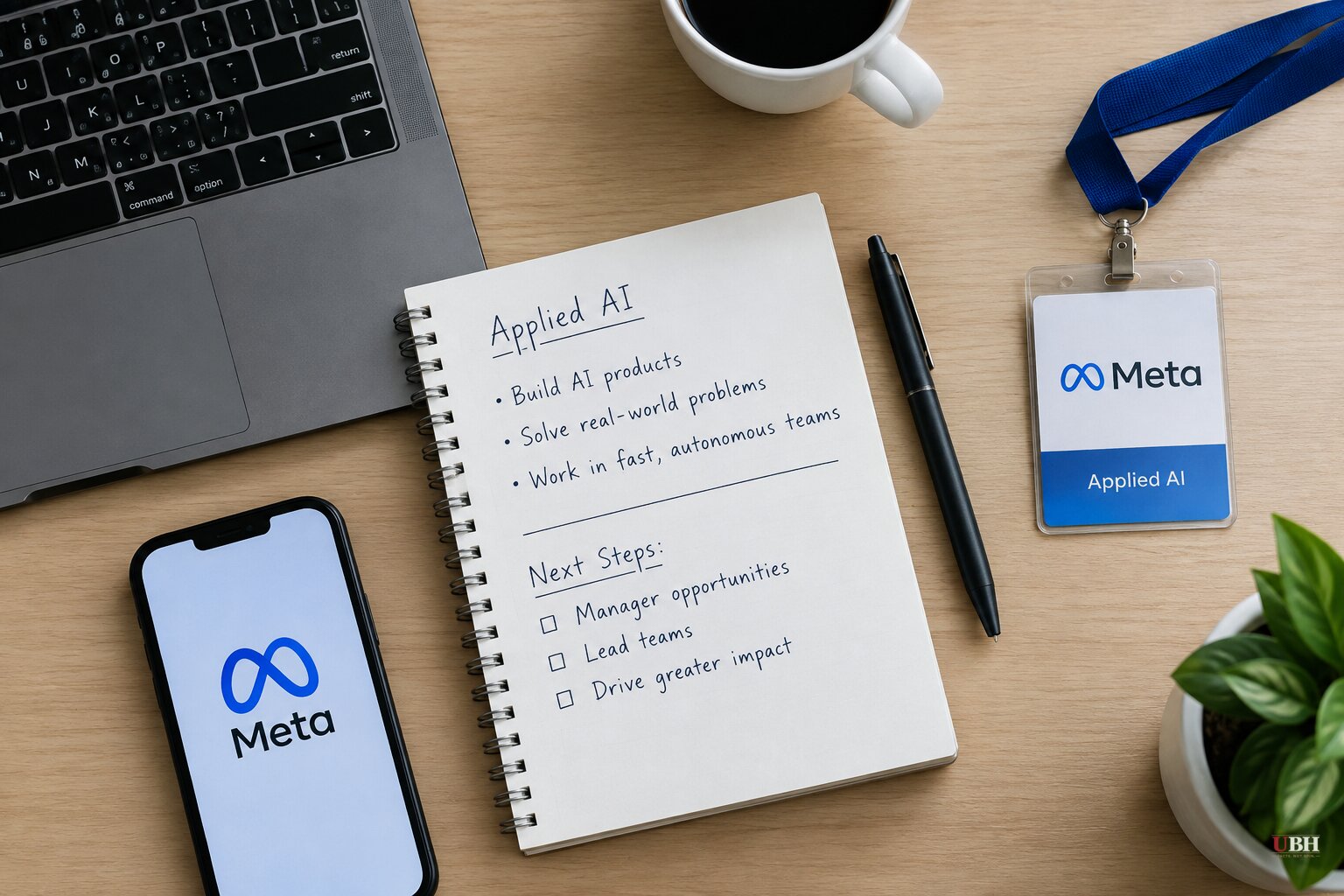
Meta is asking some individual contributors in its Applied AI (AAI) division whether they want to become managers again, according to Business Insider, which cited four people familiar with the matter. The program is voluntary, per those sources. Meta declined to comment when asked by Business Insider, Fortune, Fast Company, and Firstpost.
The move reverses a campaign Meta has pursued for more than a year: strip out management layers, build smaller and flatter teams, and let AI absorb work that used to require more people.
How AAI got here
Meta launched Applied AI Engineering in 2026 to connect the company's AI research with actual product deployment. According to Fast Company, the division was designed with a specifically flat ratio, up to 50 individual contributors for every one manager. Roughly 7,000 employees were reassigned into AAI, and some of them had been managers before the move, according to Business Insider, Fortune, and Quartz.
That reassignment came the same year Meta cut about 10% of its workforce, roughly 8,000 people, and scrapped plans to fill another 6,000 open positions, according to Fortune and ua.news. Managers took a disproportionate share of those layoffs, based on a Business Insider analysis of public layoff notices. Meta's Chief People Officer, Janelle Gale, said at the time the company was reducing managerial layers so teams could "move faster and with more ownership," according to Quartz.
This isn't the company's first course correction inside AAI. Wired reported earlier this year that some employees complained they had been effectively "drafted" into the division against their wishes, and Meta subsequently let some of them opt to leave, according to Fortune, Business Insider, and Fast Company.
The efficiency argument, and its limits
Zuckerberg has publicly praised startup-style, manager-light organizations as the model for an AI-native Meta, and the company has framed flattening as a way to cut bureaucracy and offset the enormous cost of its AI buildout. This is a real, defensible business argument: fewer layers can mean faster decisions, and if AI tools genuinely reduce the coordination work a manager used to do, cutting management overhead saves money without sacrificing output.
A report from taylortailored describes Meta having considered a far more radical version of this idea internally, shrinking some teams by as much as 60% under a "pods" model where AI agents would absorb work previously done by larger human teams. That outlet reports the most aggressive version of the plan ran into a problem: the AI agents weren't delivering productivity gains as fast as executives expected. That account has not been corroborated by other outlets in this reporting, and Meta has not confirmed it. It should be read as a single report describing an internal deliberation, not a confirmed company decision.
What is corroborated across multiple outlets is the direction of travel: Meta cut management aggressively, then started quietly rebuilding it in at least one division. Fast Company also notes this isn't unique to Meta. Gallup data cited in that report shows the average number of employees reporting to one manager rose from 10.9 in 2024 to 12.1 in 2025, up nearly 50% since 2013, meaning companies across the economy have been asking fewer managers to oversee more people.
Not everyone at the company is happy about how the layoffs happened
Separately, ua.news reported that 26 Meta employees filed a lawsuit in July alleging the company used internal AI systems and activity-monitoring data during the May layoffs in a way that disproportionately selected workers who were on medical, parental, or family leave. That is an allegation in a filed complaint, not a finding of fact, and Meta has not been reported as having responded to those specific claims in the sources reviewed here.
The numbers behind the reorganization
At the end of the second quarter, Meta had 75,472 employees, down 3% from the prior quarter, according to ua.news. Second-quarter revenue rose 28% year-over-year to $60.8 billion, while total expenses jumped 55% to $42 billion, that outlet reported, citing Meta's own quarterly disclosures. On the earnings call, Zuckerberg said AI is helping teams accelerate product development, according to ua.news.
Meta isn't alone in second-guessing the flat-team model. Fast Company and Business Insider both note Uber recently cut its own "micro-teams" by half and reduced headcount seven-plus layers from the CEO by 20%, moving in the opposite direction from more layers, not fewer.
Whether Meta expands this manager-return option beyond AAI, and whether the wrongful-selection lawsuit over the May layoffs survives early motions, remain open questions. Neither Meta nor the sources in this reporting have indicated a timeline for either.
Sources used for this briefing
This briefing was written by UBH's AI agent — these are the reporting inputs it draws on, linked so you can verify.


