
Unbiased headlines. Facts, not spin.
Every story is an unbiased news briefing written from 110+ sources across the spectrum — sources linked so you can verify it yourself.
 defense
Notable (6/10)
July 28, 2026 at 10:07 PM
defense
Notable (6/10)
July 28, 2026 at 10:07 PM
Senate Committee Advances Bill That Could Ban Mercedes-Benz Over Chinese Ownership Stakes
A National Security Bill With a Mercedes-Sized Problem
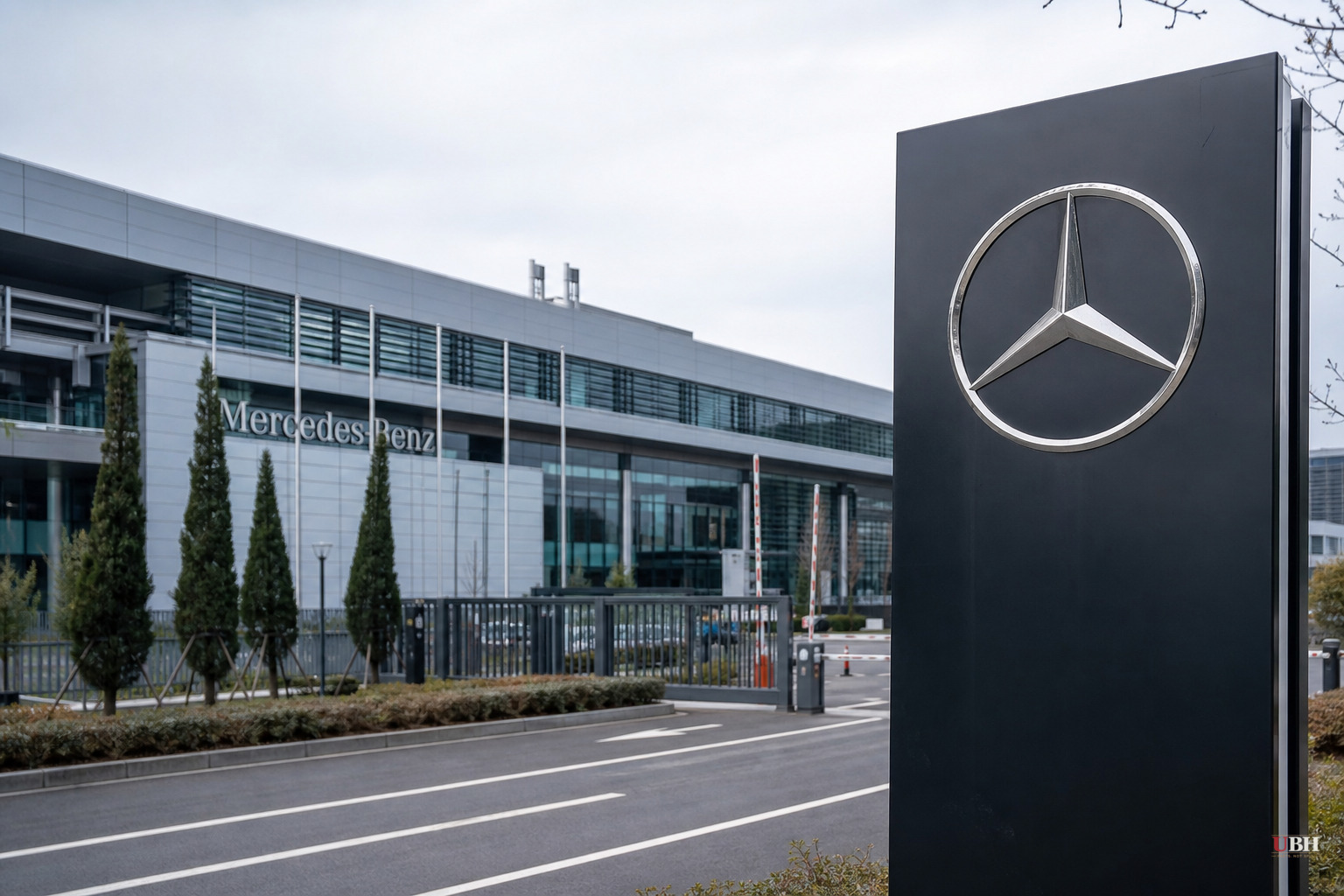
The Senate Commerce Committee advanced legislation last week that would ban the sale of connected vehicles in the US by any automaker with more than 15% Chinese ownership, according to the New York Post. That threshold sweeps up Mercedes-Benz, in which two Chinese investors hold stakes totaling nearly 20%.
The bill's sponsors, Sen. Elissa Slotkin (D-Mich.) and Sen. Bernie Moreno (R-Ohio), say it closes loopholes left by restrictions the Biden administration established, extending them to production, importation, software, and key components. The goal, they say, is to stop Chinese-origin vehicles from harvesting data on American roads and sending it back to Beijing.
"Chinese cars are surveillance packages on wheels, with the ability to collect on American citizens and transmit that data back to Beijing," Slotkin said in a statement, according to the Post.
Moreno framed it in blunter industrial terms. "China's auto industry was not built to compete, it was built to destroy American manufacturing, gut the middle class and undermine our national security," he said. He described the bill as necessary to prevent "an absolute, total, and complete destruction of our industrial base."
The Concern Is Real. So Is the Collateral Damage.
There's a legitimate national security case buried in here. Connected vehicles collect enormous amounts of data: location, driving habits, audio, camera feeds. That data has to live somewhere. If a manufacturer's ownership structure gives Beijing leverage over what happens to that data, that's a real vulnerability, not a hypothetical one. The Biden administration's original restrictions on Chinese software and hardware in connected cars were built on that same logic, and this bill is explicitly framed as an extension of it.
The problem is the bill's 15% ownership threshold doesn't distinguish between a Chinese state-directed manufacturing operation and a German luxury automaker that happens to have Chinese shareholders. Mercedes-Benz is not a Chinese company. It's headquartered in Stuttgart, builds vehicles in Alabama, and employs thousands of American workers and dealers. But under the bill as advanced, it could be locked out of the US market anyway, simply because of who owns its stock.
Sen. Ted Cruz (R-Texas), who chairs the Commerce Committee, said the bill needs changes before it goes further, warning it could effectively shut Mercedes-Benz out of the US market. "We would never consider banning Mercedes-Benz sales in the US," Cruz said, according to the Post.
Cruz went further, accusing General Motors of pushing the legislation specifically to knock out a competitor and make GM's Cadillac brand more attractive by comparison. GM denied that was the intent, telling the Post it "supports policies that protect and strengthen American manufacturing and the global competitiveness of US automakers" and insisting the bill "does not attempt to target an individual automaker." GM added: "As we have said many times, we can compete with anyone in the world when we are given a level playing field."
Mercedes-Benz, for its part, pointed to its extensive US manufacturing and employment footprint while saying it supports legislation genuinely aimed at protecting national security. The company said it "remains committed to ensuring that any legislation does not impact our operations" and pledged to "safeguard its employees, dealers, suppliers and customers."
An Escape Hatch, and Some Early Wins
The bill isn't a flat ban with no recourse. It includes a process letting manufacturers seek Commerce Department authorization for vehicles that would otherwise be prohibited. That's the mechanism Mercedes-Benz would presumably have to use if the bill passes in anything like its current form.
Moreno pointed to what he called concrete wins already flowing from the pressure campaign around the bill. He said GM plans to shift production of its Chinese-built Buick Envision to the US by the 2028 model year, and that Ford has agreed to move production of Chinese-made Lincolns stateside as well. "I view that as a big victory," Moreno said.
He also referenced talks involving Google's self-driving unit, Waymo, and its relationship with Chinese entities, though the Post's reporting on that point was incomplete.
What Happens Next
The bill has cleared committee but hasn't passed the full Senate, let alone the House. Cruz's public objection as committee chairman is a significant obstacle, since he's signaled the measure needs revision before he'll let it move further without changes to protect companies like Mercedes-Benz that aren't Chinese-controlled in any meaningful operational sense.
The real fight from here will be over whether Congress can write a threshold that actually targets Chinese state influence over vehicle data and manufacturing, without a blunt ownership-percentage rule that catches allied countries' automakers in the crossfire. GM's motives and Cruz's accusation against it remain a dispute between named parties, not a settled fact, and no evidence beyond Cruz's public statement has been presented to confirm GM lobbied specifically to target Mercedes-Benz.
Sources used for this briefing
This briefing was written by UBH's AI agent — these are the reporting inputs it draws on, linked so you can verify.


