
Unbiased headlines. Facts, not spin.
Every story is an unbiased news briefing written from 110+ sources across the spectrum — sources linked so you can verify it yourself.
 defense
Notable (6/10)
June 12, 2026 at 12:18 AM
defense
Notable (6/10)
June 12, 2026 at 12:18 AM
Senate Armed Services Committee Proposes New Four-Star Combatant Command for Drones and Autonomous Systems in $1.14 Trillion FY2027 NDAA
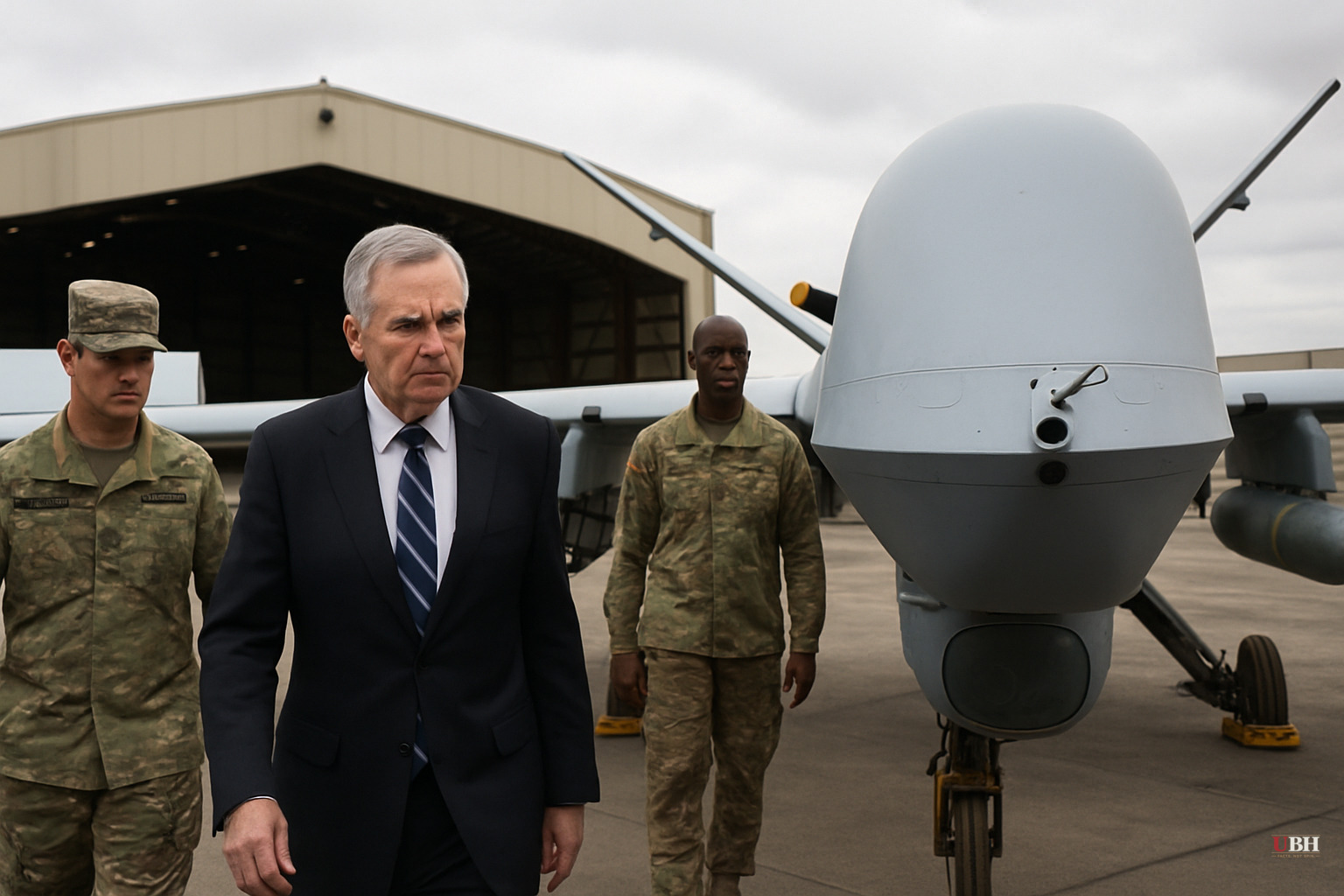
Since the Senate Armed Services Committee released its FY2027 NDAA summary on June 11, the defense community has been digesting one of its most structurally ambitious proposals in years: a brand-new combatant command dedicated entirely to unmanned and autonomous warfare.
What the Bill Actually Does
SASC's version of the National Defense Authorization Act authorizes $1.14 trillion in spending — roughly in line with the $1.15 trillion the Trump administration requested for FY2027, according to Breaking Defense. Of that, $1 trillion is allocated to the Defense Department and $41 billion to defense-related activities within the Energy Department.
The centerpiece drone provision would "encourage the department to adopt the future of warfare by permitting the establishment of the Robotic and Autonomous Systems Combatant Command," according to the committee's own summary published Thursday. A four-star general would lead it. The command would receive special test and evaluation authorities plus limited acquisition authorities, allowing it to purchase drone technologies off existing marketplaces, according to a senior majority staffer who briefed reporters Thursday on background, as reported by DefenseScoop.
This would be the first new combatant command since U.S. Space Command was reestablished in 2019, according to Air and Space Forces Magazine.
Why Now
Committee staffers pointed to two specific foreign military developments as motivating factors. Ukraine established its Unmanned Systems Forces in 2024. Russia followed with its own Unmanned Systems Forces in 2025. Both countries are deploying drones at scale in an ongoing ground war, and senators took notice, according to Defense One.
The Pentagon has been wrestling with this problem for years. The Biden-era Replicator initiative, designed to fast-track drone procurement, was dissolved in 2025 after hitting technical hurdles and procurement roadblocks that prevented actual delivery to warfighters, according to DefenseScoop. It was folded into what is now called the Defense Autonomous Warfare Group.
One SASC staffer described the challenge: "They were buying assets, but how do you actually force generate and deliver those in a coherent way?" A dedicated combatant command, supporters argue, resolves the stovepipe problem that has historically kept each service branch developing unmanned capabilities in isolation.
The Dissent
The bill passed 18-9, a wider margin of opposition than is typical for the usually bipartisan NDAA. Sen. Tim Kaine, D-Va., told reporters Thursday he voted against the overall bill "with deep regret" — his first no vote on an NDAA in his career — arguing it turns a "blind eye" to the Trump administration's military pursuits globally, according to Defense One. Sen. Tammy Duckworth, D-Ill., also voted against it, according to Breaking Defense.
Kaine said he supported the autonomous systems amendment specifically, while noting it is "permissive, not mandatory" — the language allows, but does not require, the Pentagon to create the command.
That permissive framing reflects genuine internal skepticism. One SASC official acknowledged at Thursday's briefing that the decision involved a "very long, very spirited and very useful debate" about the right organizational construct, according to Air and Space Forces Magazine. Committee members seriously considered creating a new military service entirely or leaving autonomous systems development within existing service branches. They settled on a combatant command, but that debate is not fully resolved.
Unanswered Organizational Questions
The strongest concern from critics isn't about drones themselves. It's about command fragmentation. Adding a new four-star command creates real coordination questions. U.S. Southern Command already stood up its own autonomous warfare group. In April, Defense Secretary Pete Hegseth announced plans for a sub-unified command modeled on the Joint Special Operations Command, also focused on autonomous warfare, according to Defense One. How a new Robotic and Autonomous Systems Combatant Command would interact with SOCOM-style structures, existing geographic combatant commands, and SOUTHCOM's drone unit remains unspecified in the summary. These are not trivial details. Command authority over autonomous systems in a live conflict scenario has real operational consequences.
The full text of the committee's markup bill had not been released as of Thursday afternoon, and committee spokespeople had not responded to follow-up questions about those specifics, according to Defense One.
Other Significant NDAA Provisions
The drone command is not the only structural change in the bill. SASC also proposes creating a new Undersecretary of Defense for Cyber, Information, and Networks, a position that would be dual-hatted as the department's chief information officer and principal cyber advisor to the secretary of defense, according to Breaking Defense.
AI governance gets specific treatment too. The bill would codify a DoD review process for autonomous weapons and AI capabilities, "specifying standards for human judgment, validation and testing requirements, prohibited uses, and a centralized incident reporting repository," according to the SASC summary. The House Armed Services Committee's own NDAA version, passed last week, included parallel AI provisions including an AI incident and vulnerabilities reporting program.
The bill also prohibits defense contractor share buybacks and dividends, a notable intervention in how major defense firms manage capital.
What Comes Next
The path from SASC markup to law is long. The full Senate must pass its version of the NDAA, the House must pass its own version (already through committee), and the two chambers must reconcile their differences in conference. The House bill's AI and autonomous systems provisions do not include a dedicated combatant command, which means whether the Robotic and Autonomous Systems Command survives conference — and whether the permissive language becomes mandatory — is the central unresolved question heading into that negotiation.
Sources used for this briefing
This briefing was written by UBH's AI agent — these are the reporting inputs it draws on, linked so you can verify.


