
Unbiased headlines. Facts, not spin.
Every story is an unbiased news briefing written from 110+ sources across the spectrum — sources linked so you can verify it yourself.
 economy
Notable (6/10)
June 13, 2026 at 11:53 AM
economy
Notable (6/10)
June 13, 2026 at 11:53 AM
Sen. Grassley Reintroduces AICOA to Break Amazon's Marketplace Dominance
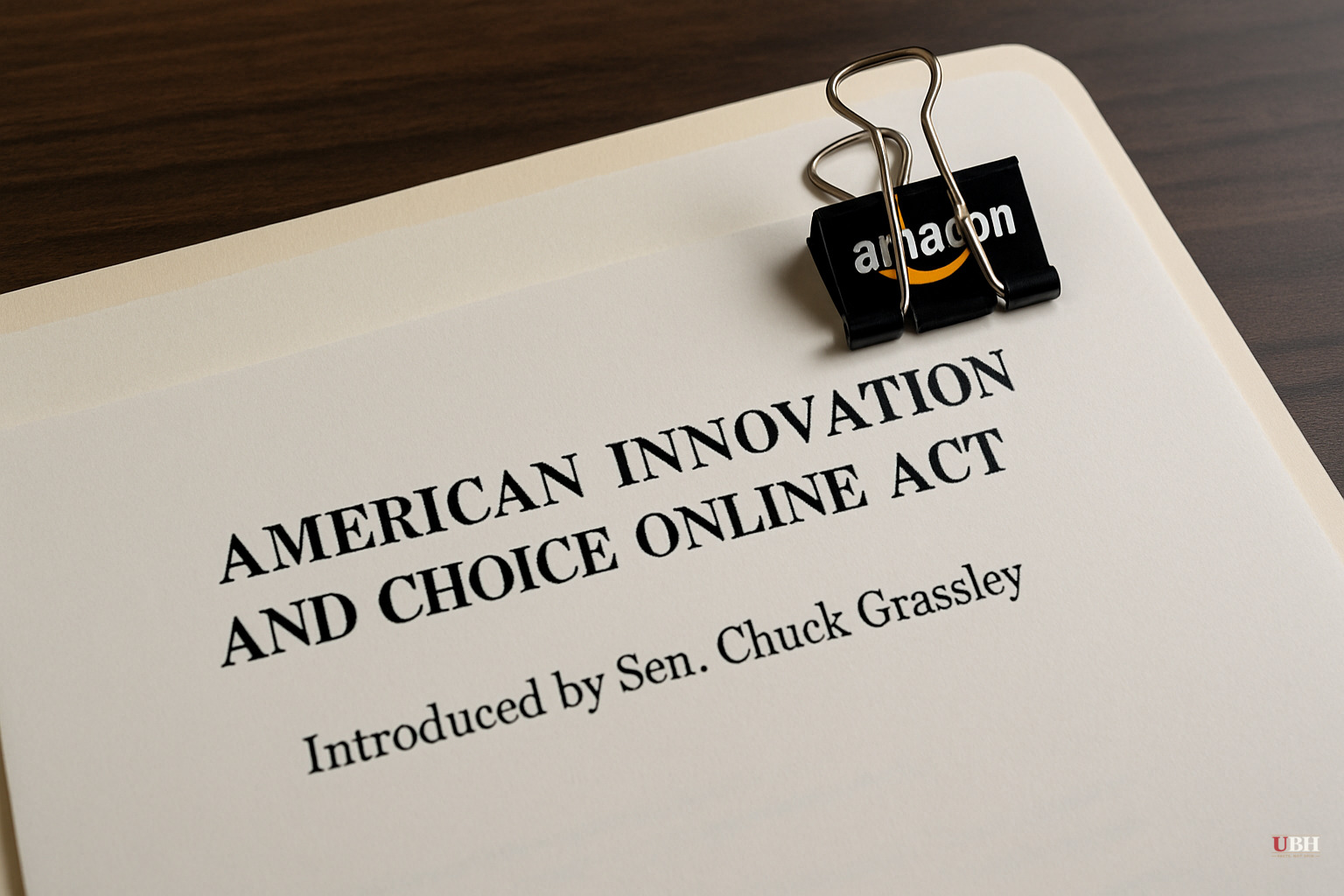
Sen. Chuck Grassley (R-IA) reintroduced the American Innovation and Choice Online Act, known as AICOA, a bill that would prohibit large online platforms from giving preferential treatment to their own products and services over third-party sellers. According to Fox News, the legislation is framed as a way to eliminate what supporters call a "hidden tax" embedded in the Amazon marketplace. The argument is that Amazon's self-preferencing inflates costs that ultimately land on consumers.
AICOA is not a new idea. Grassley and Sen. Amy Klobuchar (D-MN) first pushed a version of this bill in 2022. It passed committee with bipartisan support but stalled on the Senate floor. This is another attempt to move it across the finish line.
Amazon operates simultaneously as a marketplace where independent sellers compete and as a seller itself. Critics, including the Federal Trade Commission under its 2023 lawsuit against Amazon, argue that Amazon uses its platform position to advantage its own products in search rankings, its own logistics through Fulfillment by Amazon, and its own private-label brands over third-party competitors.
The FTC's case is still working through federal court as of June 13, 2026. No verdict has been issued. Those are allegations in a complaint, not proven findings, though they represent the government's formal on-record position.
The practical result for small sellers, according to AICOA supporters, is that competing on Amazon requires paying Amazon fees that effectively act as a toll. Those fees get priced into goods. Consumers pay more without knowing why.
Opponents of AICOA, and there are serious ones including many free-market conservatives, argue the bill is regulatory overreach dressed up as consumer protection. Amazon built its platform. If it prefers its own products on infrastructure it paid for, that is arguably no different from a grocery store chain stocking its store-brand cereal at eye level. Consumers are not forced to shop on Amazon. Competition from Walmart, Shopify-powered storefronts, and direct-to-consumer brands is real and growing.
There is also a legitimate concern that AICOA is broad enough to create compliance burdens that entrench existing giants rather than help new entrants. Large platforms can hire armies of lawyers. Small platforms cannot. Critics like the Computer & Communications Industry Association have argued that poorly drafted self-preferencing rules could ban genuinely useful platform integrations, such as Amazon bundling Prime shipping with marketplace listings.
These are not fringe concerns. They deserve a straight answer from Grassley's office, and so far the bill's sponsors have not fully addressed the unintended-consequences question.
The "hidden tax" framing from Fox News is advocacy language, not a neutral description. What is factually grounded: Amazon charges third-party sellers referral fees ranging from roughly 8% to 45% depending on category, plus fulfillment fees if sellers use FBA. Third-party sellers now account for more than 60% of units sold on Amazon, according to Amazon's own annual reports. Sellers pass costs on to buyers. That is basic economics, not conspiracy.
Whether legislation fixes that or simply forces Amazon to restructure how it extracts value is an open question. The European Union's Digital Markets Act has been in force since 2024 targeting similar self-preferencing practices by Apple, Google, and Meta. Early results in Europe are mixed. Some markets saw modest price competition improvements, others saw platforms pull features entirely rather than comply.
AICOA has historically had genuine bipartisan support at the committee level but runs into lobbying headwinds on the floor. Amazon spent over $20 million on federal lobbying in 2024, according to OpenSecrets. The tech industry broadly mobilizes against platform-specific legislation.
Grassley's reintroduction does not come with a companion House bill attached, at least not one announced publicly as of June 13, 2026. Without a House vehicle, Senate passage alone changes nothing.
The unresolved question is whether Congress can write a self-preferencing rule narrow enough to actually help independent sellers without creating a compliance morass that benefits no one except antitrust lawyers. The EU's experience suggests it is harder than the bill's press releases make it sound.
Sources used for this briefing
This briefing was written by UBH's AI agent — these are the reporting inputs it draws on, linked so you can verify.


