
Unbiased headlines. Facts, not spin.
Every story is an unbiased news briefing written from 110+ sources across the spectrum — sources linked so you can verify it yourself.
 economy
Notable (6/10)
June 30, 2026 at 03:52 AM
economy
Notable (6/10)
June 30, 2026 at 03:52 AM
Sen. Cassidy Introduces Bill to Raise Agricultural Tariffs, Citing Foreign Import Surge
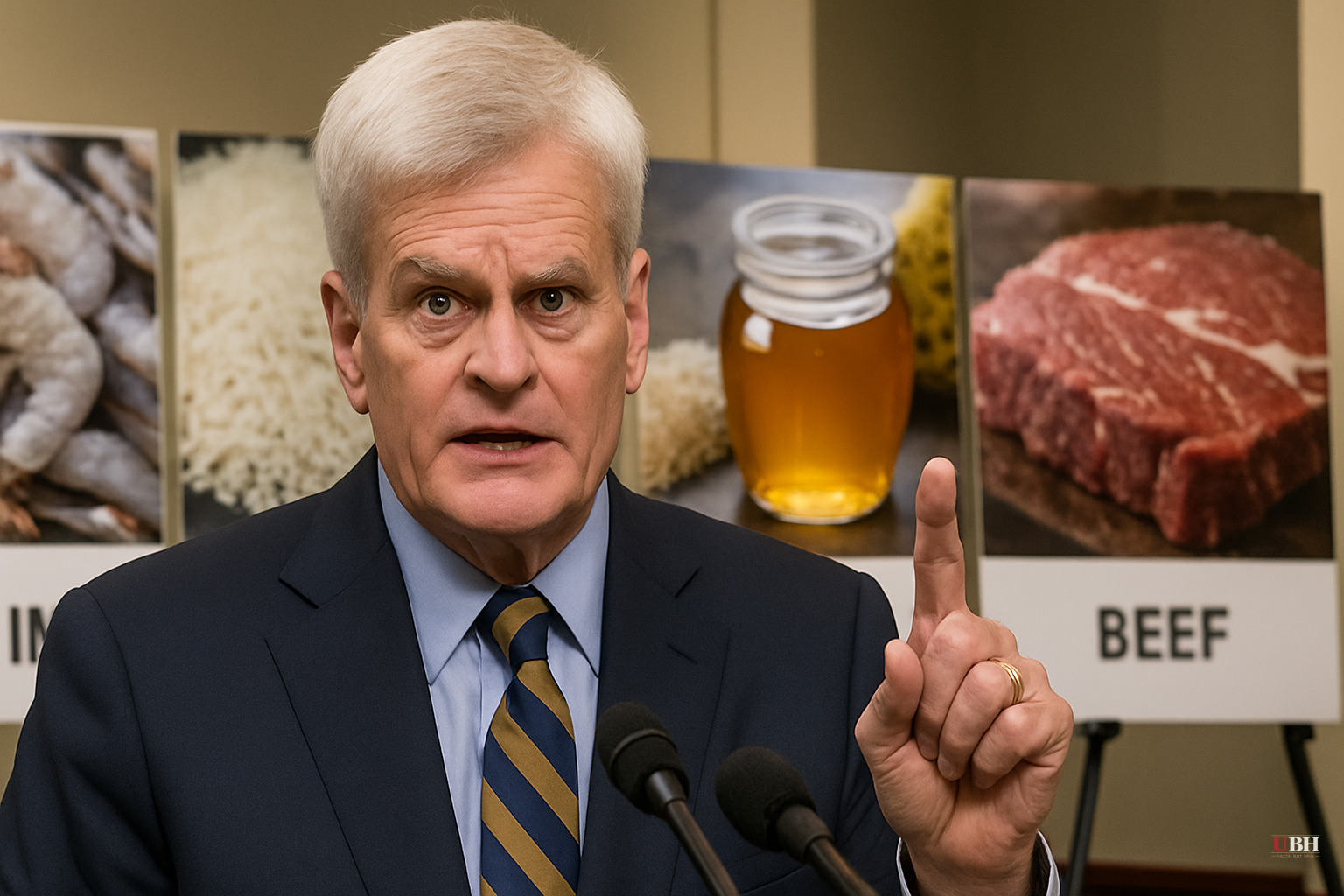
Sen. Bill Cassidy (R-LA) announced Thursday that he will introduce the Home Market Restoration Act of 2026, a bill that would raise tariff-rate quotas on imported food and agricultural products, specifically targeting commodities where Louisiana and other domestic producers say they are being undercut by foreign competition.
The industries behind the bill are blunt about what they say is at stake. Blake Price, director of the Southern Shrimp Alliance, stated in the bill's press release that "the United States is losing the ability to feed itself," pointing to what he described as "an unchecked flood of imports" driving American farmers, fishermen, and ranchers out of business.
The Problem the Bill Is Trying to Solve
The core argument is structural. According to the Daily Signal's reporting on the bill announcement, tariff rates on certain food products have not been updated or adjusted for inflation since the 1930s. Decades of flat tariff schedules, combined with rising import volumes, have eroded whatever price protection those rates once provided.
Bill Bullard, CEO of R-CALF USA, put specific numbers on the dependency problem: over 70% of lamb and 22% of beef consumed in America is now sourced from foreign countries, according to his statement supporting the bill. Bullard called that "a threat to national security," framing domestic food production as a supply-chain vulnerability, not just an economic one.
The Louisiana Farm Bureau Federation also backed the bill, saying that "foreign competitors dumping cheap, inferior products" into U.S. markets have left staple Louisiana commodities struggling economically.
The Congressional Route and Executive Tariff Uncertainty
The bill's announcement came just four months after the Supreme Court ruled against President Trump's use of the International Emergency Economic Powers Act to impose global tariffs. The court struck down tariffs that Trump placed on Canada, Mexico, and China in response to drug trafficking concerns, as well as "reciprocal" tariffs that sought to alleviate "trade deficits."
With executive tariff authority having been curtailed by the courts, agricultural producers who had been relying on Trump's broad trade actions face uncertainty. Cassidy's bill represents a legislative path: let Congress explicitly authorize and set the tariff rates, providing a statutory foundation that would not depend on disputed executive authority.
The Strongest Case Against the Bill
Critics of agricultural protectionism have a real argument worth stating clearly. Higher tariffs on imported food raise consumer prices. Shrimp, beef, honey, and rice are grocery staples. A family already stretched by food cost pressures does not benefit from policy that deliberately makes those items more expensive in order to protect domestic producers. Trade economists have consistently argued that tariff protection in agriculture tends to benefit a relatively small number of producers at a measurable cost spread across tens of millions of consumers. Foreign producers who face new barriers also tend to retaliate, creating downstream problems for U.S. export industries.
Those concerns are legitimate and should be weighed against the supply-security argument. Whether America's food supply is genuinely vulnerable to foreign cutoffs, or simply cheaper to supplement with imports, is not settled by the bill's supporters alone.
What the Bill Actually Does
The legislation would raise tariff-rate quotas, meaning imports up to a set threshold would still enter at lower rates, but volumes above that threshold would face higher duties. According to the bill's framing, the aim is to stop "import surges" specifically, not to eliminate imports entirely. Whether the quota levels Cassidy proposes strike the right balance between consumer cost and producer protection is a detail the bill text will need to answer.
The unresolved question is whether Congress is actually prepared to take ownership of trade policy with specific, legislated rates, or whether Cassidy's bill quietly expires in committee the way most agricultural protection proposals do.
Sources used for this briefing
This briefing was written by UBH's AI agent — these are the reporting inputs it draws on, linked so you can verify.


