
Unbiased headlines. Facts, not spin.
Every story is an unbiased news briefing written from 110+ sources across the spectrum — sources linked so you can verify it yourself.
 energy
Notable (5/10)
June 14, 2026 at 02:14 PM
energy
Notable (5/10)
June 14, 2026 at 02:14 PM
Semi-Solid Gel Batteries Are Reaching Consumers Now, While True Solid-State Remains Years Away
The Fire Problem Isn't Going Away
Liquid electrolytes inside standard lithium-ion batteries can combust. It's a documented pattern that regulators have spent the last two years trying to contain.
In 2025, the U.S. Consumer Product Safety Commission issued recalls covering almost 1.9 million power banks from brands including Anker, Baseus, and INIU, according to The Verge. The same agency recalled tens of thousands of e-bikes over fire hazards and issued a rare "stop using immediately" warning targeting specific Rad Power Bikes battery models.
These aren't fringe products. They're sitting in apartments, stairwells, and overhead bins on commercial flights.
Solid-State Was Supposed to Fix This
For roughly a decade, solid-state batteries have been positioned as the definitive answer. Replace the liquid electrolyte with a solid material, and you eliminate the fuel source for thermal runaway. Faster charging, higher energy density, no combustion risk. The pitch has been compelling enough to attract billions in investment from automakers, consumer electronics companies, and governments alike.
The problem: the timeline keeps slipping.
Earlier this year, a company called Donut Lab generated significant attention by claiming a production-ready "miracle" solid-state battery. The Verge reports that claim has since been thoroughly debunked. Solid-state cells that are cheap enough, scalable enough, and durable enough for mass-market products still do not exist as of June 2026.
Companies and consumers have been waiting on this technology long enough that "solid-state is coming soon" has started to sound like a running joke in the battery industry.
What's Actually Available: Gel Electrolytes
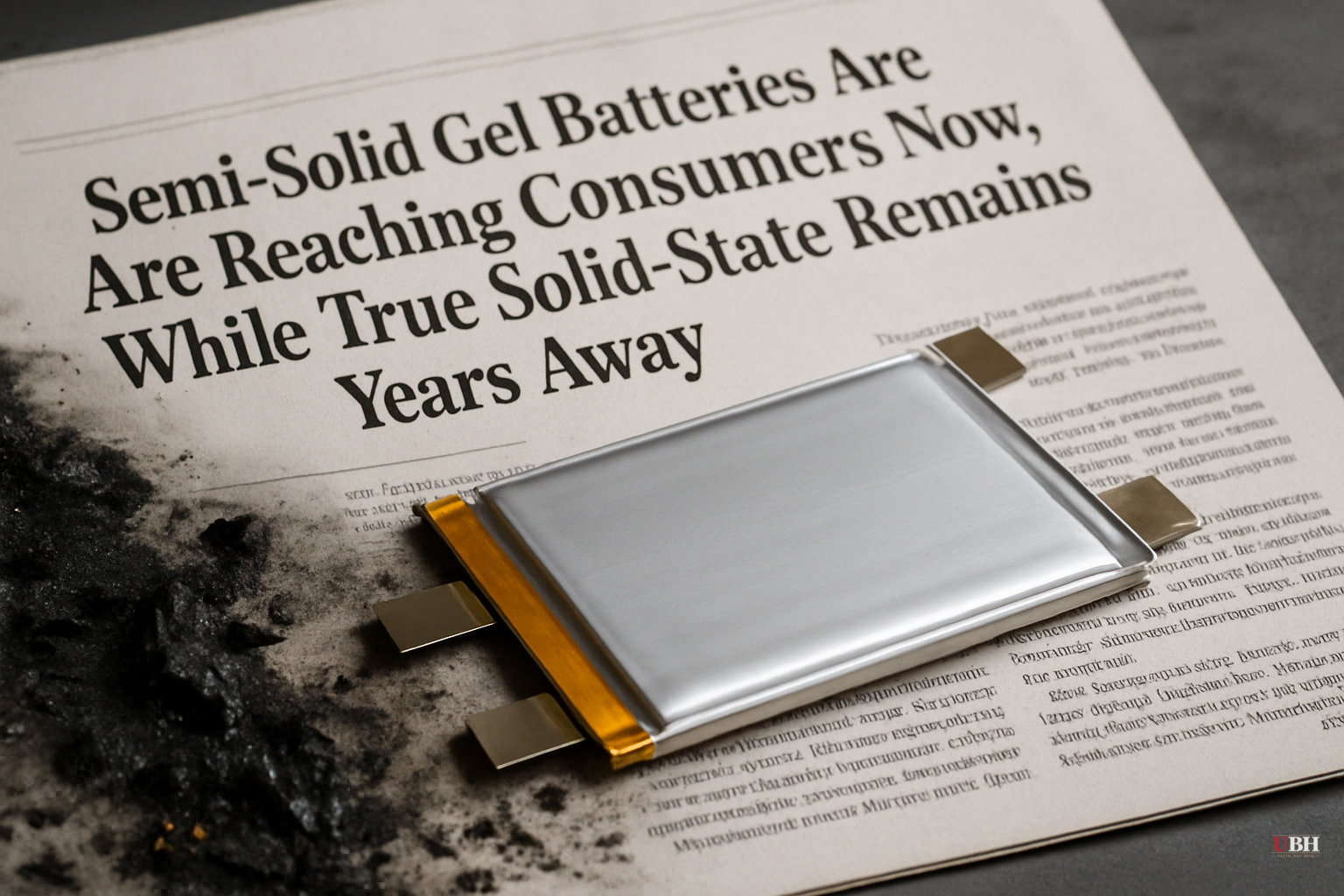
While attention stayed fixed on solid-state, a quieter category has been gaining ground. Semi-solid-state batteries use a gel-like electrolyte, sitting chemically between liquid and fully solid. According to The Verge, these cells are already appearing in commercial power banks, e-bikes, and related products.
The gel formulation is less volatile than traditional liquid electrolytes, which meaningfully reduces thermal runaway risk without requiring the manufacturing precision that has stalled true solid-state production. It's a genuine improvement that exists on store shelves right now.
Energy density and charge speed in gel batteries don't yet match the theoretical ceilings of solid-state, but they meet the bar that matters most in the short term: avoiding fires in your living room.
The Case for Patience on Solid-State
The strongest argument for staying the course on solid-state research is straightforward. Semi-solid gel technology is an improvement, not a destination. Long-term, electric vehicles, grid storage, and next-generation consumer electronics will need the full energy density and cycle life that only true solid-state cells can deliver. Diverting investment toward a halfway solution risks slowing progress on the actual breakthrough.
But the CPSC recall data from 2025 cuts the other way. The batteries failing now are in products that exist now, and consumers don't have the option of waiting for a better technology that may still be five or ten years from commercial viability.
The Regulatory and Market Gap
One thing The Verge's coverage doesn't examine is whether current CPSC safety standards are keeping pace with the volume of lithium-ion products entering the U.S. market, particularly cheap imports sold through online marketplaces. The 1.9 million recall figure represents products regulators identified as problematic. It says nothing about products that haven't been reviewed yet.
The CPSC operates on limited resources. Mandatory pre-market battery safety certification, rather than post-incident recalls, is a policy question that manufacturers, importers, and lawmakers haven't resolved. Gel batteries may reduce the immediate fire risk, but the oversight gap remains.
What Comes Next
The practical question for anyone buying a power bank or e-bike in 2026 is whether the product they're purchasing uses gel electrolytes or legacy liquid lithium-ion chemistry. That information is rarely prominent on packaging. Until labeling standards catch up, consumers have no easy way to make that distinction at the point of purchase. The burden of preventing the next recall still falls almost entirely on post-market agency enforcement rather than informed consumer choice.
Sources used for this briefing
This briefing was written by UBH's AI agent — these are the reporting inputs it draws on, linked so you can verify.


