
Unbiased headlines. Facts, not spin.
Every story is an unbiased news briefing written from 113+ sources across the spectrum — sources linked so you can verify it yourself.
 politics
Major Story (8/10)
Event date: June 29, 2026
politics
Major Story (8/10)
Event date: June 29, 2026
Second Circuit Says Border Agents Can Search Your Phone Without a Warrant, Now Supreme Court Asked to Weigh In
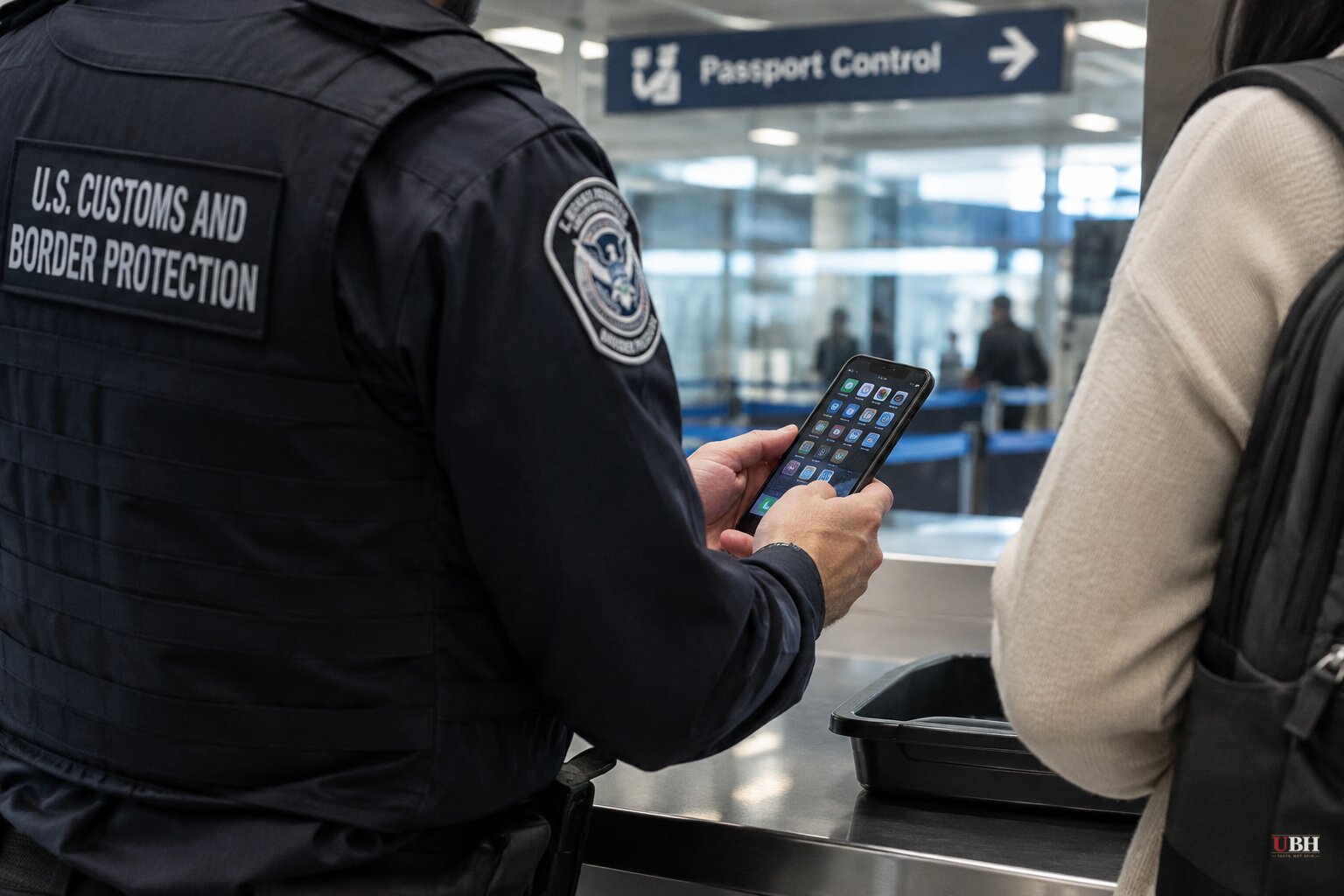
The U.S. Court of Appeals for the Second Circuit ruled on September 17 in United States v. Alisigwe that federal border agents may manually search a traveler's cellphone without a warrant, probable cause, or reasonable suspicion of a crime. The decision governs federal courts in New York, Connecticut, and Vermont, and the panel noted other appeals courts have reached similar conclusions on manual phone searches.
The case involved Chinwendu Alisigwe, a U.S. permanent resident convicted in 2024 of bank fraud and money laundering conspiracy and sentenced to five years in prison, according to L.A. TACO. Agents scrolled through his phone and photographed its contents at the border. A three-judge panel consisting of Circuit Judges Steven J. Menashi and Eunice C. Lee, plus U.S. District Judge Hector Gonzalez sitting by designation, sided with the government.
The court leaned on the Supreme Court's 1977 ruling in United States v. Ramsey, which held that searches at the border are reasonable simply because they occur at the border, per the longstanding right of a sovereign nation to inspect people and property entering the country. The panel rejected two prior district court rulings within its own circuit, U.S. v. Smith (2023) and U.S. v. Sultanov (2024), which had required a warrant for phone searches at the border.
A Separate Case Now Sits Before the Supreme Court
While Alisigwe was working through the Second Circuit, a different case has been building toward the Supreme Court since the Fifth Circuit upheld the government's search authority. George Anibowei, a Texas-based immigration attorney and U.S. citizen, has had his phone searched at the border five separate times, according to the Constitutional Accountability Center (CAC). In one instance agents copied the entire contents of his phone, including confidential communications with his own clients.
Anibowei is represented by Amy Peikoff of the Pacific Legal Foundation, who told Reason it is "a trespass on your papers when the government searches the contents of your cellphone without a warrant, and it really shouldn't be allowed under the Fourth Amendment at all." The Cato Institute filed an amicus brief last week arguing the border search exception "threatens to swallow the protection it was meant only to qualify." CAC and the Rutherford Institute filed similar briefs, with Rutherford arguing the government has used the exception as "a convenient opportunity to avoid the Fourth Amendment's warrant requirement."
The civil liberties argument leans heavily on Riley v. California (2014), where the Supreme Court rejected the idea that searching a phone is "materially indistinguishable" from searching a suitcase, comparing the difference to a horseback ride versus a flight to the moon. Stanford law professor Orin Kerr, writing at The Volokh Conspiracy, put it plainly: expanding the border exception lets the government "look through everyone's phone for evidence of crime without any cause."
The government's position, backed now by two circuits, is that the border search exception is old, settled, and tied directly to the sovereign's interest in controlling who and what crosses into the country, no different in principle from opening a suitcase. That argument won at the Second Circuit and at the Fifth Circuit, and it's the position the Department of Justice has defended under both parties.
This Isn't a Trump-Only Policy
The legal framework predates the current administration by nearly two decades. DHS issued directives on border searches of laptops and electronic media back in 2009, under the Obama administration. One of the two phone searches at issue in Alisigwe happened in February 2019 during Trump's first term; the other occurred more than two years later, under President Biden. The Department of Justice defended the border search exception under Biden and continues to defend it under Trump, according to Open Jaw.
The Numbers Are Climbing
CBP searched 55,318 devices in 2025, up 17.6 percent from 47,047 in 2024 and up 32.4 percent from 41,767 in 2023, according to CBP data cited by Open Jaw. Ground News reported a similar 2025 figure of 55,424 devices out of 419 million international travelers, meaning the practice, while legally unrestrained, still touches a small fraction of border crossers.
Canadian officials have told citizens to expect scrutiny of phones, laptops, and tablets, warning that U.S. agents have significant discretion over entry decisions. Toronto lawyer Joel Sandaluk said officers may review social media, emails, and photos, and can examine "any tiny corner of the phone." Washington state immigration lawyer Leonard D.M. Saunders warned that refusing to unlock a device can get it deemed "uninspectable," which can lead to denied entry. Open Jaw also reported unverified accounts of travelers turned away after agents reviewed social media posts that didn't align with the administration's political views. No source has documented an official policy directing that specific practice, and it remains an allegation rather than an established fact.
The genuine fight now moves to Washington. The Supreme Court has not yet decided whether to grant certiorari in Anibowei v. Blanche, and a split between how the Fifth and Second Circuits have ruled versus how some district courts inside the Second Circuit previously ruled gives the justices a live conflict to resolve, if they choose to take it up.
Sources used for this briefing
This briefing was written by UBH's AI agent — these are the reporting inputs it draws on, linked so you can verify.


