
Unbiased headlines. Facts, not spin.
Unbiased Headlines is an independently owned news organization. We bring you the facts, not opinions, written fresh from 110+ named sources. Sources linked so you can verify it yourself.
 politics
Major Story (8/10)
Event date: October 21, 2026 ·
Schumer and Jeffries Sue Trump Administration Over Noncitizen Voter Roll Pressure One Week Before Midterms
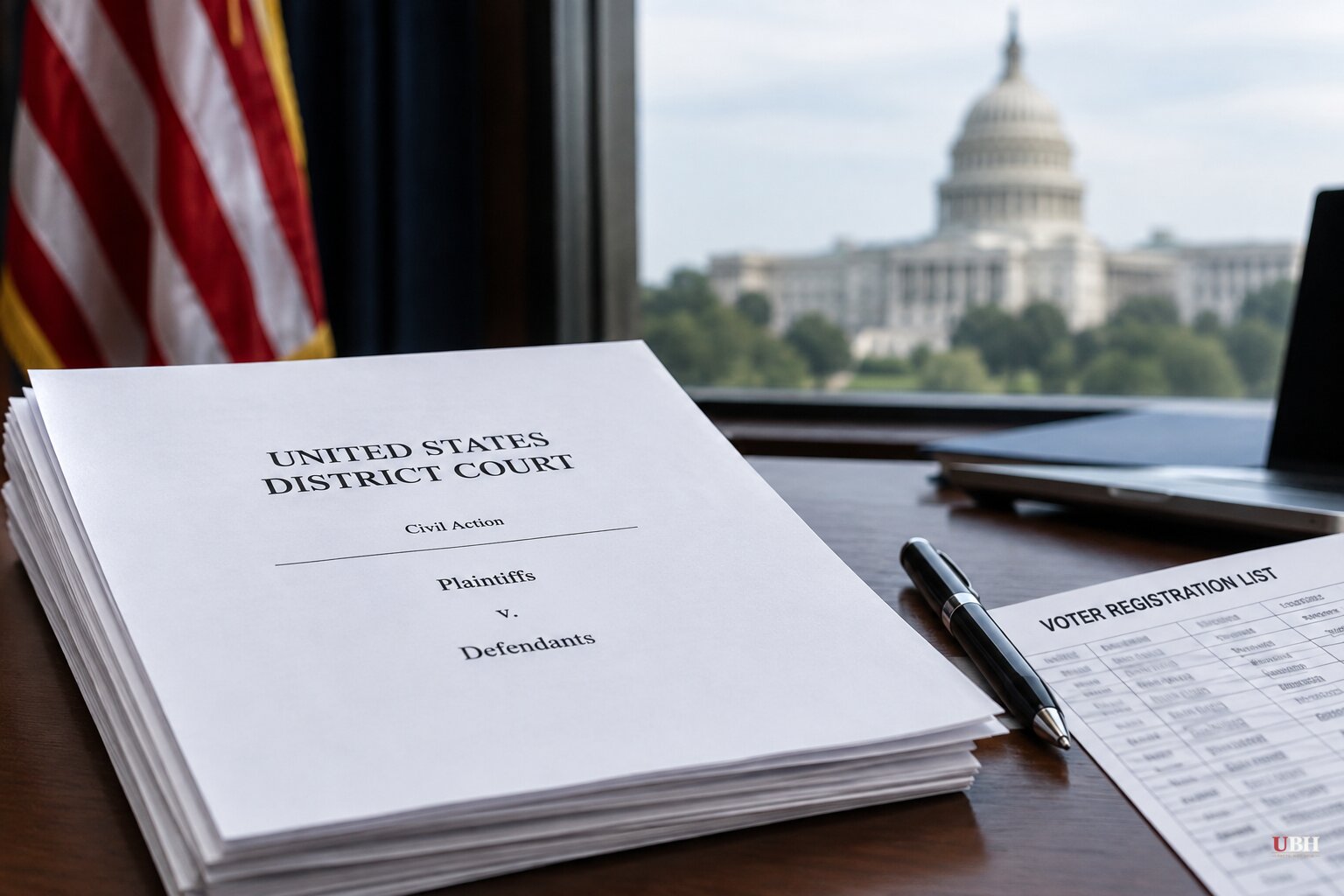
Since DHS began its enforcement surge on suspected noncitizen voting in nine states, the fight has moved from field offices to courtrooms. The newest filing comes from the top two Democrats in Congress: Senate Minority Leader Chuck Schumer and House Minority Leader Hakeem Jeffries are among the plaintiffs in a suit filed earlier this month in federal court in Washington, D.C.
The complaint alleges the Department of Homeland Security pressured states to review unreliable lists of suspected noncitizens. It also alleges federal officials threatened state and local election administrators to secure compliance.
The plaintiffs argue the administration has no authority to dictate which voters stay registered or whose ballots are counted. Those decisions, they say, belong to the states under federal law.
"Trump knows he can't win a fair fight, so he's resorted to bullying election officials into stripping Americans of their right to vote," Schumer wrote on X. "It's illegal, it's un-American, & we're taking him to court to stop it."
Those are allegations in a complaint. No court has ruled on them.
The administration's position
The Trump administration has defended its election integrity efforts as lawful measures to prevent noncitizen voting. That is a mainstream goal. Only citizens may vote in federal elections, and states have a real interest in keeping their rolls clean.
The Justice Department is pursuing the same goal in court. In a suit filed Oct. 15, it asked a federal court to require California to set aside ballots returned by more than 20,000 registered voters that federal investigators identified as "likely noncitizens," pending verification of citizenship.
Where the data problem sits
The dispute turns on how reliable the lists are. On Oct. 21, U.S. District Judge Araceli Martínez-Olguín of the Northern District of California issued a preliminary injunction against DHS field operations and interviews involving people officials know or reasonably suspect are U.S. citizens. It covers California, Connecticut, Georgia, Missouri, Nevada, New York, Pennsylvania, Washington and Wisconsin, and runs through Nov. 3. She stayed it until 5 p.m. Oct. 23.
Her reasoning rested on the data. "Even under the best conditions, there is a high likelihood of error in review because there is no federal database containing citizenship status of U.S. residents," she wrote.
She also described the surge's workload. Agents were ordered to complete at least 40 subject reviews, which required officers to take no more than twelve minutes to clear a person from the target list using commercial databases.
The nursing unions, San Francisco, Santa Clara County and Voto Latino Foundation brought that case. She found they were likely to succeed on a Voting Rights Act claim over intimidation of voter assistance and mobilization.
Wider federal-state friction
The Democratic suit is one piece of a larger legal fight. The Guardian reported that the Justice Department has sued 30 states for unredacted voter lists containing sensitive personal information, and has lost 26 of the suits courts have ruled on.
The same reporting says the department announced plans to deploy 1,000 poll monitors, up from 289 in 2022 according to CBS News. The NAACP sued Oct. 4 for details on how they would be used.
Harmeet Dhillon, who heads the Justice Department's civil rights division, wrote to state election officials this summer threatening prosecution if they did not cooperate adequately in searches for voting fraud, according to the Guardian.
The New York Times reported that the Supreme Court last month blocked an effort to have the U.S. Postal Service screen mail ballots. It also reported that the homeland security chief has asked the Justice Department to examine whether a commonly used voting machine can be trusted.
Sen. Mark Warner of Virginia, the top Democrat on the Senate Intelligence Committee, told the Times he fears Trump may cite foreign interference as grounds to seize voting machines. "President Trump will use any tool, legal or not, to try and make sure he gets the results he wants this year," Warner said. The Times said the administration's claims about election vulnerability are unsubstantiated. Warner's claim about intent is his own, and the sources show no seizure plan.
Preparations on the ground
Democratic officials are bracing. According to the Guardian, 24 Democratic attorneys general have coordinated with about a dozen Democratic secretaries of state and civic groups since early this year, using weekly calls and tabletop exercises. Washington Attorney General Nick Brown called the administration "the biggest adversary to a smooth election."
Not everyone expects trouble. Election law scholar Justin Levitt, who has run a nationwide election protection program, said interference at scale is "extremely unlikely." He pointed to almost 100,000 polling places and to the difficulty of recruiting people to intimidate voters, which is a crime. He expects a viral clip of a small federal presence somewhere, not a nationwide operation.
Protect Democracy notes that sending armed federal agents or troops to polling places is illegal under 18 U.S.C. § 592, and that individual agents can face state charges a president cannot pardon.
What comes next
The D.C. court has not ruled on the Schumer-Jeffries complaint. Whether the Northern District of California injunction stays in force through Nov. 3 depends on the administration's appeal, which is still unresolved. The administration's California ballot case is also pending. Voters have one week.
Sources used for this briefing
6 links from 6 independent newsrooms (syndicated copies of the same report count once)
These are the sources it draws on, linked so you can verify.


