
Unbiased headlines. Facts, not spin.
Unbiased Headlines is an independently owned news organization. We bring you the facts, not opinions, written fresh from 110+ named sources. Sources linked so you can verify it yourself.
 politics
Major Story (8/10)
Israel Election Draws Highest Early Turnout Since 1981 as Netanyahu Warns of Iranian Attacks
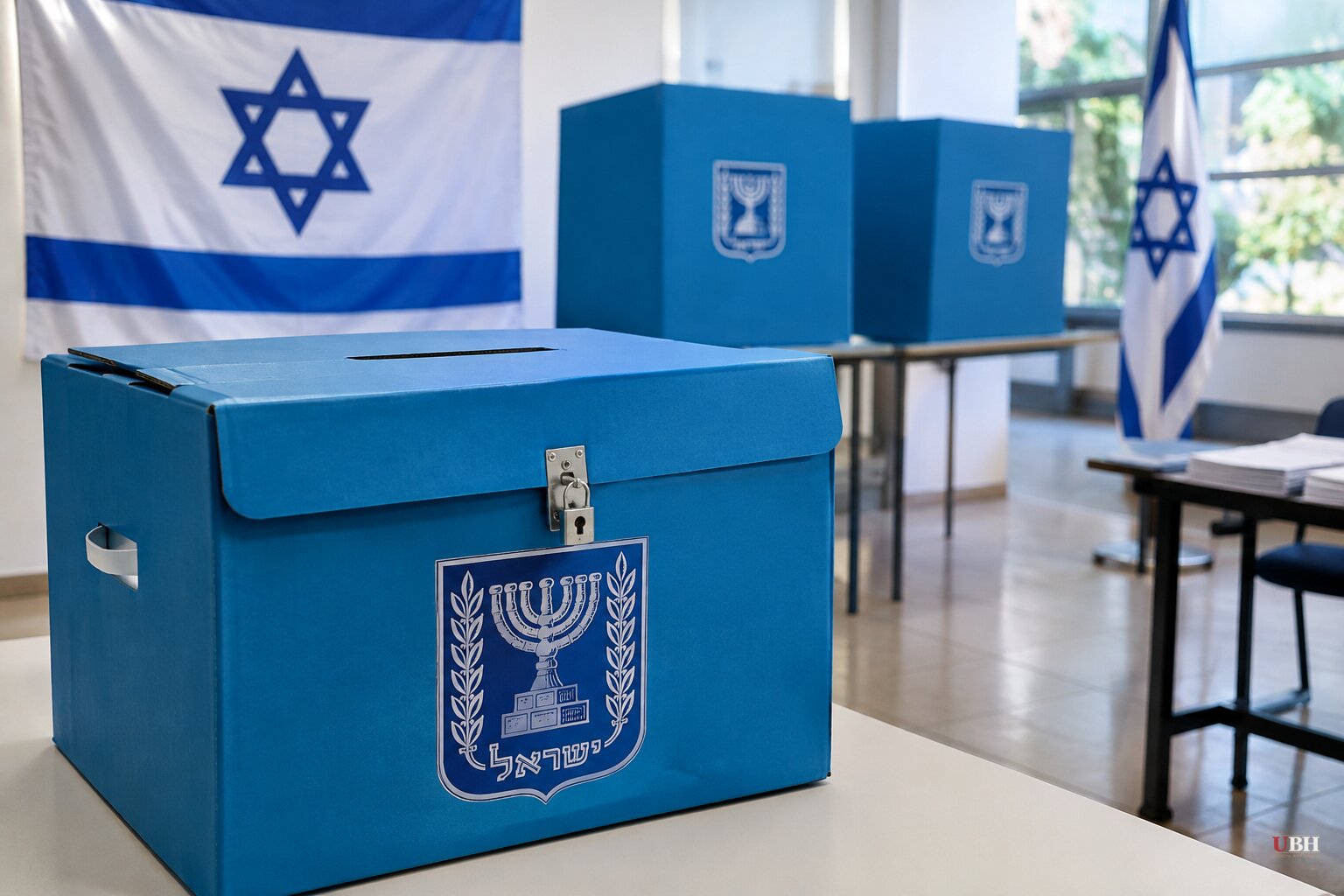
Since Netanyahu's weekend warning that Iran and its proxies might try to disrupt the vote, Israelis have turned out in force. Almost 17% voted in the first three hours after polls opened at 7 a.m. local time, the highest turnout at that point since 1981, according to initial figures from the Central Elections Committee. Polls close at 10 p.m. local time (4 p.m. ET).
It is Israel's first national election since the Oct. 7, 2023 attacks. More than 7 million people are eligible to vote. Netanyahu has cast his ballot, and President Isaac Herzog voted in Jerusalem's Rehavia neighborhood. "I hope this will be a true holiday for democracy," Herzog said. "No one can be allowed to spoil or undermine it."
The Iran warning
In a video released by his office on Sunday, Netanyahu said, "We have intelligence signs that our enemies, Iran and its proxies, could challenge us with attacks in order to disrupt the elections." He added: "Don't test us. You will suffer disproportionate blows." He said the military was postured for both defensive and offensive operations. Earlier this week he appeared beside a missile-defense battery and warned Tehran of "a devastating blow" if it attacked.
Iranian Foreign Ministry spokesman Esmaeil Baghaei, asked on Monday about Israeli reports of a possible Iranian preemptive strike, said it "makes no difference" who wins. "I do not think there are elections there in the true sense of the word," he said, according to Iranian state media IRNA. He did not address the intelligence claim directly.
Defense Minister Israel Katz told voters today they face a choice "between two security paradigms: an approach based on offense, initiative, and decisive victory, or a return to a policy of containment and restraint." Katz had already denied on X that there was any plan to attack Iran before the vote, calling reports of gaps between the political echelon and the army "entirely baseless and false."
Regional diplomacy and oil
On Monday, senior officials from Saudi Arabia, Turkey and Pakistan, the three signatories of the Mecca Joint Defense Agreement, held talks in Tehran. A Saudi foreign ministry statement said the aim was to "de-escalate between the parties to the current crisis." Iran called the discussions "very good."
Brent crude was hovering around $116 a barrel early today, little changed from Monday, as the eight-month war between Iran on one side and the U.S. and Israel on the other remains unresolved.
Supreme National Security Council secretary Mohsen Rezaee posted on X today that "America has not brought security to any country in the region" and that Washington's "inability to provide security guarantees has become clear."
Separately, Houthi political bureau member Mohammed Ali al-Houthi said Egypt's parliament, by authorizing President Abdel Fattah el-Sisi to send forces to Saudi Arabia, had "declared war against the Republic of Yemen." El-Sisi said last week the deployment would be entirely defensive and "does not include an attack on Yemen."
The Trump endorsement
A week ago, President Trump gave Netanyahu a "Complete and Total Endorsement," calling him a "Great Warrior Prime Minister." He also said that if Iran does not "change their ways, rapidly, we will soon finish the job." Trump told Axios's Barak Ravid, "I was always going to do that. I just didn't want to do it too soon."
The race
Final polls show a tight contest between Netanyahu's Likud-led bloc, which includes Itamar Ben-Gvir's Otzma Yehudit and Bezalel Smotrich's Religious Zionism-Zehut, and an opposition led by former army chief Gadi Eisenkot's Yashar party. The opposition also includes a Bennett-Lapid joint ticket, Avigdor Lieberman's Yisrael Beiteinu and Yair Golan's Democrats. Some polls put Yashar slightly ahead of Likud. Neither bloc is assured of the 61 seats needed in the 120-member Knesset.
Arab-led parties could end up as kingmakers. Ra'am leader Mansour Abbas said while voting, "Our vote will change the government," and hoped Arab turnout would pass 70%. Ben-Gvir answered after casting his ballot that if Netanyahu and his allies lose, "it will be Mansour Abbas' government."
No single party has ever won 61 seats outright. Coalition talks can run weeks or months.
What happens after the count
Yossi Mekelberg of Chatham House told Euronews that a government does not change overnight. "There is no new government in Israel the day after the election," he said. A caretaker Netanyahu would keep the authority to order military action, which Mekelberg said "makes it more volatile and more dangerous."
Mekelberg also argued that an opposition-led government might reconsider Israel's reliance on military force against Tehran. Katz and Netanyahu have framed the choice differently, presenting it as one between an approach based on offense and decisive victory and a return to a policy of containment and restraint.
The U.S. midterms follow on Nov. 3. Some observers cited by CBS and AFP say the period between those elections and the seating of the new Congress could be especially fraught for the Iran front. Israel's count begins after polls close at 10 p.m. local time tonight. Whether Netanyahu or Eisenkot can assemble 61 seats, and who holds the war powers while they try, will not be known for some time.
Sources used for this briefing
8 links from 8 independent newsrooms (syndicated copies of the same report count once)
These are the sources it draws on, linked so you can verify.


