
Unbiased headlines. Facts, not spin.
Every story is an unbiased news briefing written from 110+ sources across the spectrum — sources linked so you can verify it yourself.
 economy
Notable (6/10)
June 12, 2026 at 10:44 PM
economy
Notable (6/10)
June 12, 2026 at 10:44 PM
SBA Proposes Ending Race-Based Eligibility for Federal Contracting Program. Twenty States Are Already Suing.
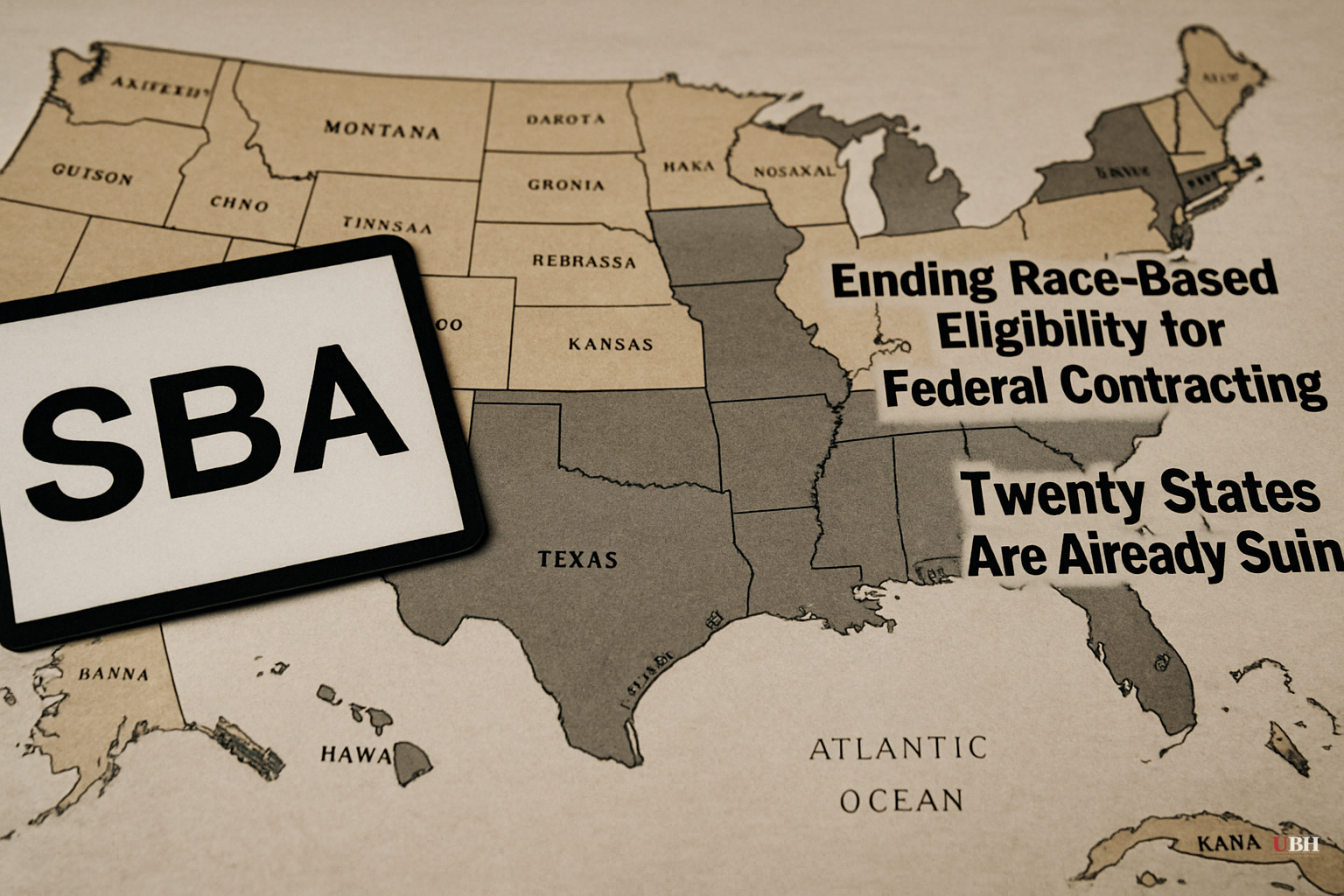
Since this publication reported on the SBA's ban on green card holders from small business loans in March, the administration has continued reshaping how federal contracting dollars flow. A proposed rule published Wednesday, June 11, represents the most structurally significant change yet.
What the Rule Actually Does
The SBA's proposed rule would eliminate the longstanding presumption that members of named racial-minority groups automatically qualify as "socially disadvantaged" under the 8(a) Business Development Program. According to the official SBA news release dated June 11, the change means no applicant — of any race — can be admitted or denied solely on the basis of race or ethnicity. Everyone must submit "verifiable, fact-based evidence" of social disadvantage.
SBA Administrator Kelly Loeffler framed it plainly in the agency's statement: "This proposed rule will dismantle the race-based admissions framework of the past and replace it with one standard for all applicants."
The 8(a) program awards set-aside and sole-source federal contracts to qualifying small businesses. It has existed in some form for roughly five decades. The SBA noted that the Biden administration approved approximately 2,100 new 8(a) firms between 2021 and 2024. The Trump SBA has approved 65 during the same program window under its tenure, according to the same release.
That comparison reflects a deliberate slowdown, not a processing bottleneck. The agency says it stopped approving admissions based on what it called "unsubstantiated claims or Biden-era narratives of racial discrimination" on day one of the administration.
The Legal Context the SBA Didn't Fully Explain
The SBA's statement references a 2023 federal court ruling that found the rebuttable presumption of minority disadvantage unconstitutional, but frames the proposed rule as the administration's own initiative. What the release underplays: that ruling already constrained the program before Trump took office, meaning some of this change reflects court-ordered legal reality, not purely executive initiative. The proposed rule codifies and expands on that legal shift.
The rule is proposed, not final. It will go through a public comment period before taking effect.
The Opposition Case, Stated Fairly
Critics of the administration's broader anti-DEI campaign have a serious legal argument worth hearing out. Michigan Attorney General Dana Nessel joined a coalition of 20 state attorneys general in a lawsuit filed June 11 in U.S. District Court for the District of Maryland, challenging Executive Order 14398, which Trump signed March 26. The states argue that federal agencies bypassed required public-comment procedures when adding new DEI-prohibition terms to existing federal contracts, leaving contractors—including state agencies—facing potential False Claims Act liability with no clear guidance on what is actually prohibited.
"The federal government rushed this process without providing clear guidance," Nessel said in the state's press release.
Contractors who sign federal agreements reasonably expect to know what they're agreeing to. If agencies skip notice-and-comment requirements under the Administrative Procedure Act, courts have grounds to invalidate the rules regardless of their underlying policy merit.
Separately, HR Dive reported June 9 that the National Association of Diversity Officers in Higher Education—which filed suit against Trump on April 20—asked a Maryland judge on June 4 to issue a preliminary injunction blocking the same executive order, arguing it violates the First and Fifth Amendments and the APA. NADOHE lost a similar injunction battle in the 4th U.S. Circuit Court of Appeals this past February on a standing question, which means the administration has already won one round in the same legal venue.
Interior Cuts $4 Million in Outside Partnerships
The SBA rule is one piece of a broader week of administrative action. The Daily Signal reported June 12 that the Department of the Interior, under Secretary Doug Burgum, terminated 43 partnerships with outside organizations following a department-wide review that began in March. The review examined nearly 3,000 active agreements with roughly 2,000 outside groups. The terminated agreements represented more than $4 million in planned funding.
Targeted groups included the Hispanic Access Foundation, which the department said offers scholarships for students without legal immigration status, and Latino Outdoors, which the department said had published guidance on avoiding ICE detention. Also cut: a contract with the American Alliance of Museums tied to DEI programming across national parks, and a partnership with Conservation International, which the department characterized as advocating a total phase-out of fossil fuels.
None of the organizations have been charged with any legal violation. The terminations are partnership and funding decisions, not enforcement actions.
What Happens Next
The SBA's proposed rule enters the public comment process, where opponents—including the same coalition of state attorneys general—can formally argue against it before it is finalized. The more immediate legal question is whether the Maryland court grants a preliminary injunction against Executive Order 14398. The 4th Circuit's February ruling against NADOHE turned on standing, not the merits of the constitutional claims, so the door to a substantive ruling on the First and Fifth Amendment questions remains open. That ruling, whenever it comes, will set the boundaries for how far the administration can go in rewriting federal contracting terms mid-contract without the procedural steps the law normally requires.
Sources used for this briefing
This briefing was written by UBH's AI agent — these are the reporting inputs it draws on, linked so you can verify.


