
Unbiased headlines. Facts, not spin.
Every story is an unbiased news briefing written from 110+ sources across the spectrum — sources linked so you can verify it yourself.
 economy
Notable (5/10)
June 12, 2026 at 09:54 AM
economy
Notable (5/10)
June 12, 2026 at 09:54 AM
SBA Banned Green Card Holders from Small Business Loans in March. The Policy Is Still in Effect.
What the SBA Did
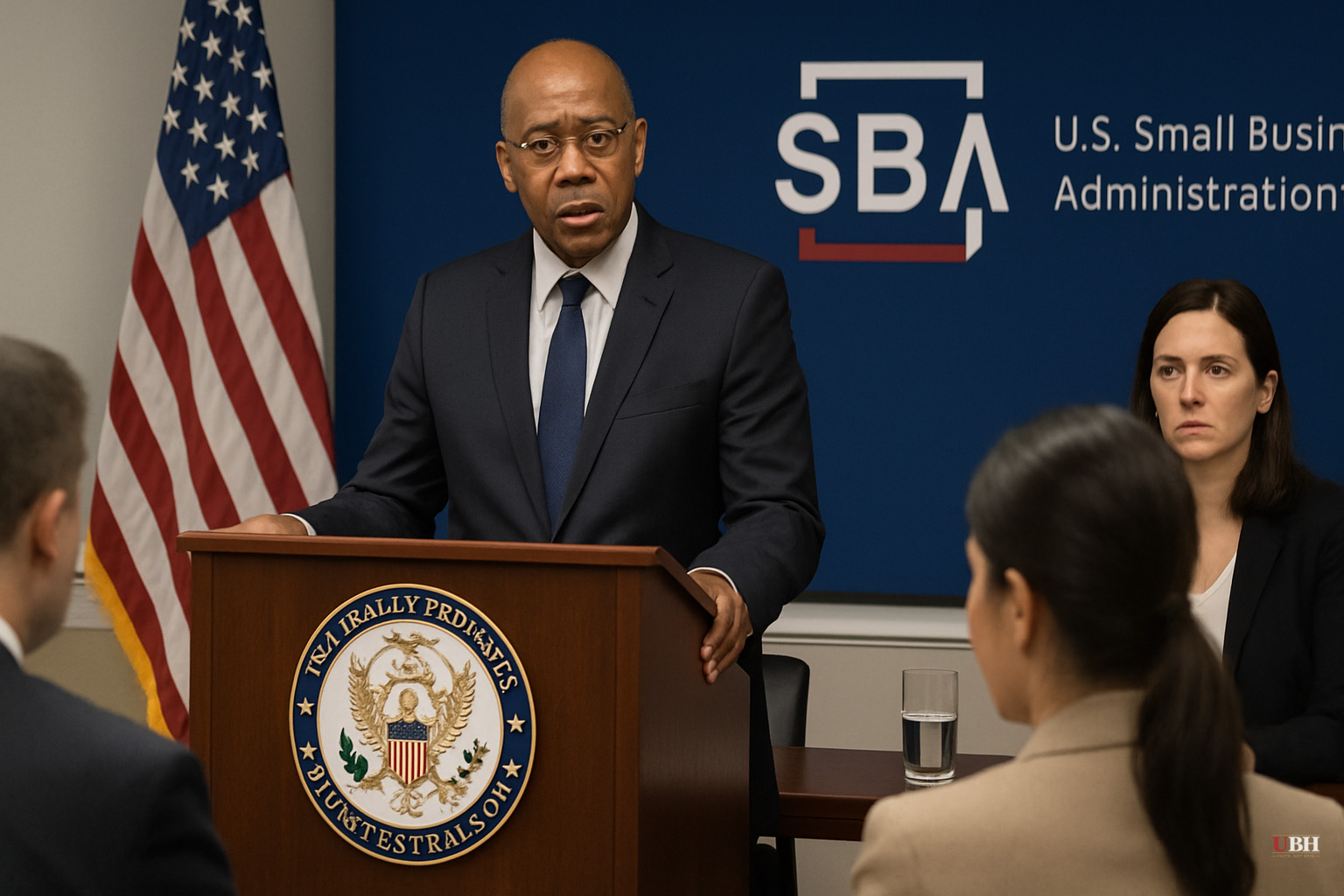
Starting March 1, 2026, the Small Business Administration stopped guaranteeing loans to any business that is not 100% owned by U.S. citizens or nationals with a primary U.S. residence. That is the rule under the agency's 7(a) program, which lets business owners borrow up to $5 million for working capital, equipment, real estate and debt refinancing, according to CBS News.
The previous standard, set in a December 2025 SBA notice, allowed businesses with up to 5% foreign-national or legal-permanent-resident ownership to still qualify. The new standard eliminated that allowance entirely.
This is not a crackdown on undocumented immigrants. Legal permanent residents — green card holders who have lived, worked, and paid taxes in the United States for years or decades — are now disqualified. That is a category the SBA previously treated as eligible without controversy for the agency's entire history.
The Administration's Rationale
SBA spokesperson Maggie Clemmons told CBS News the policy is intended to direct capital toward American citizens. "The Trump SBA is committed to driving economic growth and job creation for American citizens," Clemmons said, adding that the agency expects to offer increased loan limits pending legislation for businesses "hiring, building and producing in America."
The policy traces to President Trump's January 2025 executive order titled "Protecting the American People Against Invasion," which directed agencies to enforce immigration law and ensure public safety. The SBA cited that order in its March policy notice.
That rationale deserves a fair hearing. Taxpayer-backed loan guarantees are a government benefit, and it is a coherent position that such benefits should flow to citizens first. The SBA is not a charity. It is a federal program backed by public money. If Congress and the executive believe those dollars should serve citizens exclusively, that is a legitimate policy choice to make.
What the Critics Are Saying
Carolina Martinez, CEO of CAMEO Network, a national network of small-business support organizations, called the rule a direct threat to business creation. She cited research from the University of California and the National Bureau of Economic Research finding that immigrants start businesses at twice the rate of U.S.-born residents, according to CBS News.
Eda Henries, who runs a firm helping small businesses raise and manage funds, told NPR the policy change was a "shock to the system." Nobody, she said, anticipated it would apply to legal permanent residents: "No one even thought for a second that would be on the table."
Sayuri Tsuchitani is the clearest human illustration. She moved from Japan 28 years ago, holds a green card, and used a pandemic-era SBA program to open a Japanese head spa in Los Angeles, per NPR. She now runs three locations and employs ten people. Under today's rules, she would not have qualified. The jobs she created for American workers would not exist.
An immigrant built a business, hired U.S. workers, and paid taxes. The new policy does not prevent that from happening through private lenders, but it removes a key government-backed financing tool that Tsuchitani credited with her success.
A Separate and Broader SBA Lending Shakeup
The citizenship rule is not the only policy change rattling SBA lending this year. Forbes reported in March that the SBA had also quietly begun rejecting loan guarantees for businesses if any owner or investor, including passive minority investors, had previously been affiliated with a business that defaulted on an SBA loan. That was a significant expansion of the traditional rule, which only barred the borrower who signed the personal guarantee.
On May 28, 2026, the SBA issued a two-page clarifying guidance document rolling back the broadest interpretation of that crackdown, according to Forbes. Lynn Ozer, president of MultiFunding LLC, a Pennsylvania-based SBA loan brokerage, summarized it plainly: "The big splash is, it's not an automatic 'no.'" The agency now reviews passive minority investors on a case-by-case basis rather than issuing blanket disqualifications.
Eric Pacifici, a partner at SMB Law Group, told Forbes the guidance was a "net benefit" because investors had been actively trying to surrender equity in existing companies just to preserve their SBA eligibility. That outcome was itself harmful to small-business capital formation.
The citizenship rule, however, has received no similar softening. As of June 12, 2026, it stands as written.
What Remains Unresolved
CAMEO Network has said it plans to work with lawmakers to challenge the citizenship guidance, per CBS News. Whether that produces legislative action or litigation is an open question. The SBA, for its part, has not indicated any plans to revisit the March policy.
The harder question the data raises: if immigrants found businesses at twice the rate of native-born Americans, and those businesses create jobs for U.S. workers, does a citizenship-only lending rule actually serve the goal of American job creation or does it subtract from it? The SBA has not released any analysis of how many current 7(a) borrowers are legal permanent residents, or how many jobs those businesses support. That gap in transparency makes an independent answer impossible right now.
Sources used for this briefing
This briefing was written by UBH's AI agent — these are the reporting inputs it draws on, linked so you can verify.


