
Unbiased headlines. Facts, not spin.
Every story is an unbiased news briefing written from 110+ sources across the spectrum — sources linked so you can verify it yourself.
 economy
Notable (6/10)
July 7, 2026 at 04:51 AM
economy
Notable (6/10)
July 7, 2026 at 04:51 AM
SBA and USDA Sign Agreement to Collect and Analyze Regulatory Complaints from Farmers and Ranchers
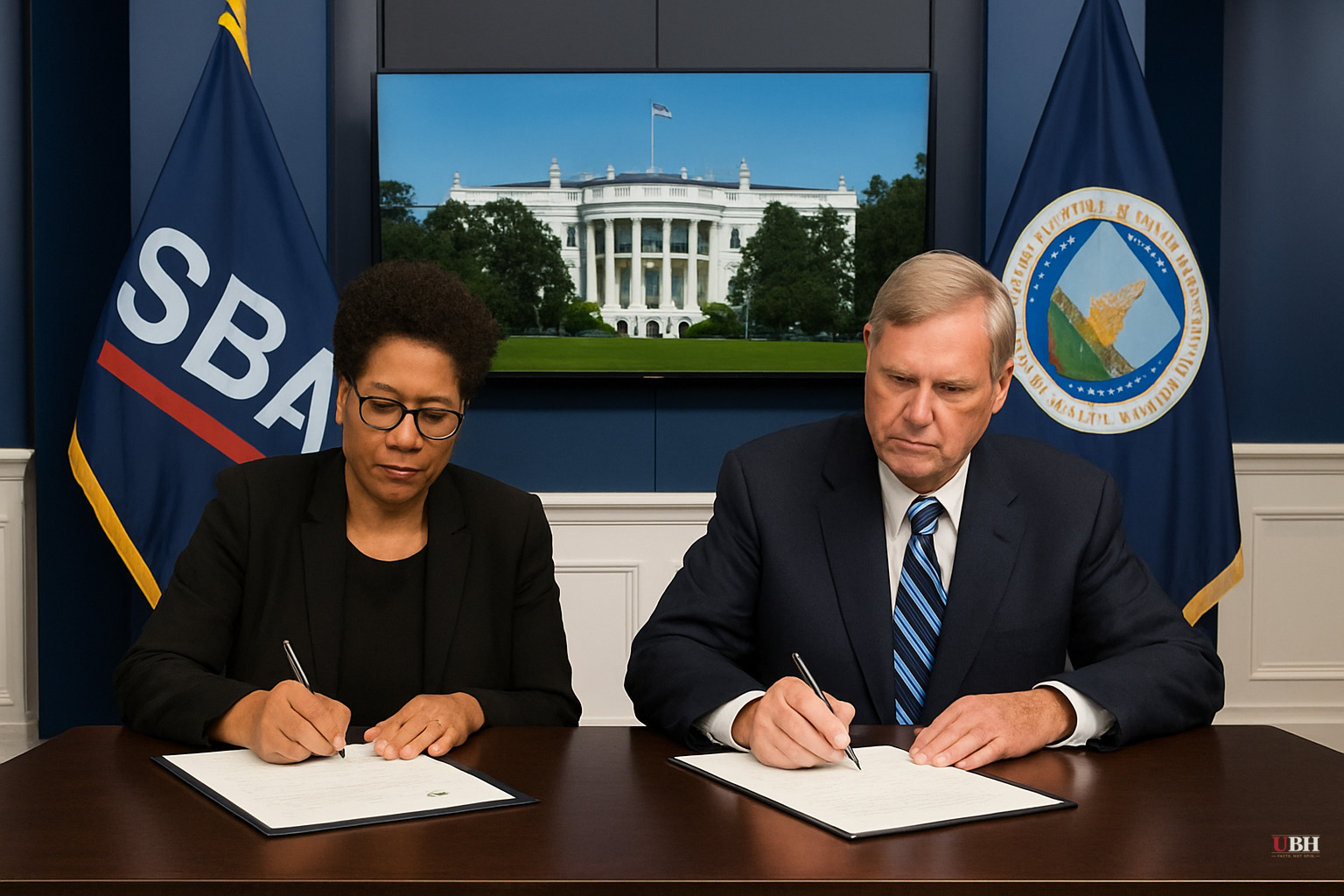
The Small Business Administration and the U.S. Department of Agriculture formalized a partnership on July 2, 2026, aimed at tracking what the agencies call regulatory "lawfare" targeting agricultural producers and rural small businesses.
What the Agreement Does
Under the memorandum, the USDA will operate a centralized portal where producers can submit complaints about federal regulations they believe are driving up costs or cutting into productivity, according to a July 2 SBA statement. Complaints involving the USDA get handled internally by that department; complaints touching other federal agencies get referred by the SBA to whichever agency is responsible.
The SBA's Office of the National Ombudsman is authorized to analyze the incoming complaint data to identify recurring patterns. Specific rules, enforcement styles, or regulatory structures show up repeatedly across complaints. That analysis is intended to feed into broader deregulatory action.
SBA Administrator Kelly Loeffler described the purpose plainly in a July 2 post on X: the deal is designed to let "producers get back to what they do best: feeding, clothing, and fueling America." She added that "family farms should not have to spend time and resources they don't have fighting crushing regulations or costly legal battles waged by radical anti-ag 'environmentalists,' whether they are inside or outside the government."
The Policy Backdrop
The SBA stated the memorandum aligns with President Trump's January 2025 executive order, "Unleashing Prosperity Through Deregulation," which described the accumulated body of federal regulation as an "ever-expanding morass" imposing substantial costs on American businesses and households.
Lawfare, as both agencies define it in this context, refers to the strategic use of legal proceedings or regulatory enforcement to burden a target rather than achieve a legitimate compliance goal. The complaint portal is designed to surface examples of that practice in agriculture and rural commerce specifically.
The Strongest Counterargument
Critics of this approach note that environmental regulations on agriculture—covering water quality, pesticide use, wetlands, and endangered species habitat—exist because farming and ranching can produce real, documented externalities that affect neighboring communities and ecosystems. What one producer calls regulatory overreach, a downstream water user or a federal wildlife biologist might call a necessary guardrail. A complaint portal that feeds exclusively into a deregulatory agenda could systematically discount those concerns and effectively let the regulated industry set its own compliance floor.
The counterpoint is that the complaint system does not itself eliminate any regulation. It aggregates data for analysis. Whether that analysis actually leads to meaningful reform, and whether any reform process includes input from affected non-agricultural parties, remains an open question. The memorandum as described does NOT include a public comment mechanism for groups outside the agricultural sector.
What It Is and Is Not
This agreement is an administrative coordination tool, not a statute, a court order, or a rule change. It creates a reporting channel and an analytical function. No existing regulation is suspended or modified by the memorandum itself.
There is no announced timeline for when the portal will be operational, no dollar figure attached to the program's budget, and no stated threshold for how many complaints on a given regulation would trigger a formal deregulatory review. Those details, if they exist, have not been made public as of July 7, 2026.
Who's Watching
The American Farm Bureau Federation has publicly identified regulatory reform as one of its core ongoing priorities, listing it alongside trade, the farm bill, and rural broadband on its issues page. The Federation has not issued a specific public statement on this memorandum that is available as of today.
The practical test for this agreement is narrow but concrete: whether the complaint data the USDA portal collects actually surfaces in any formal rulemaking record at a federal agency. Under the Administrative Procedure Act, agency rulemaking requires public notice and comment. If the SBA's pattern analysis generates a recommendation to weaken or eliminate a specific rule, that rule change would still need to go through the standard APA process. It could be challenged in court by the same environmental groups Loeffler described as adversaries. The complaint portal may identify targets, but it does not shorten the road to changing them.
Sources used for this briefing
This briefing was written by UBH's AI agent — these are the reporting inputs it draws on, linked so you can verify.


