
Unbiased headlines. Facts, not spin.
Every story is an unbiased news briefing written from 110+ sources across the spectrum — sources linked so you can verify it yourself.
 economy
Notable (5/10)
May 25, 2026 at 05:34 AM
economy
Notable (5/10)
May 25, 2026 at 05:34 AM
Saudi Arabia's Vision 2030 Is Bleeding Cash as Oil Revenues Collapse and Megaproject Costs Explode
The Numbers Don't Lie
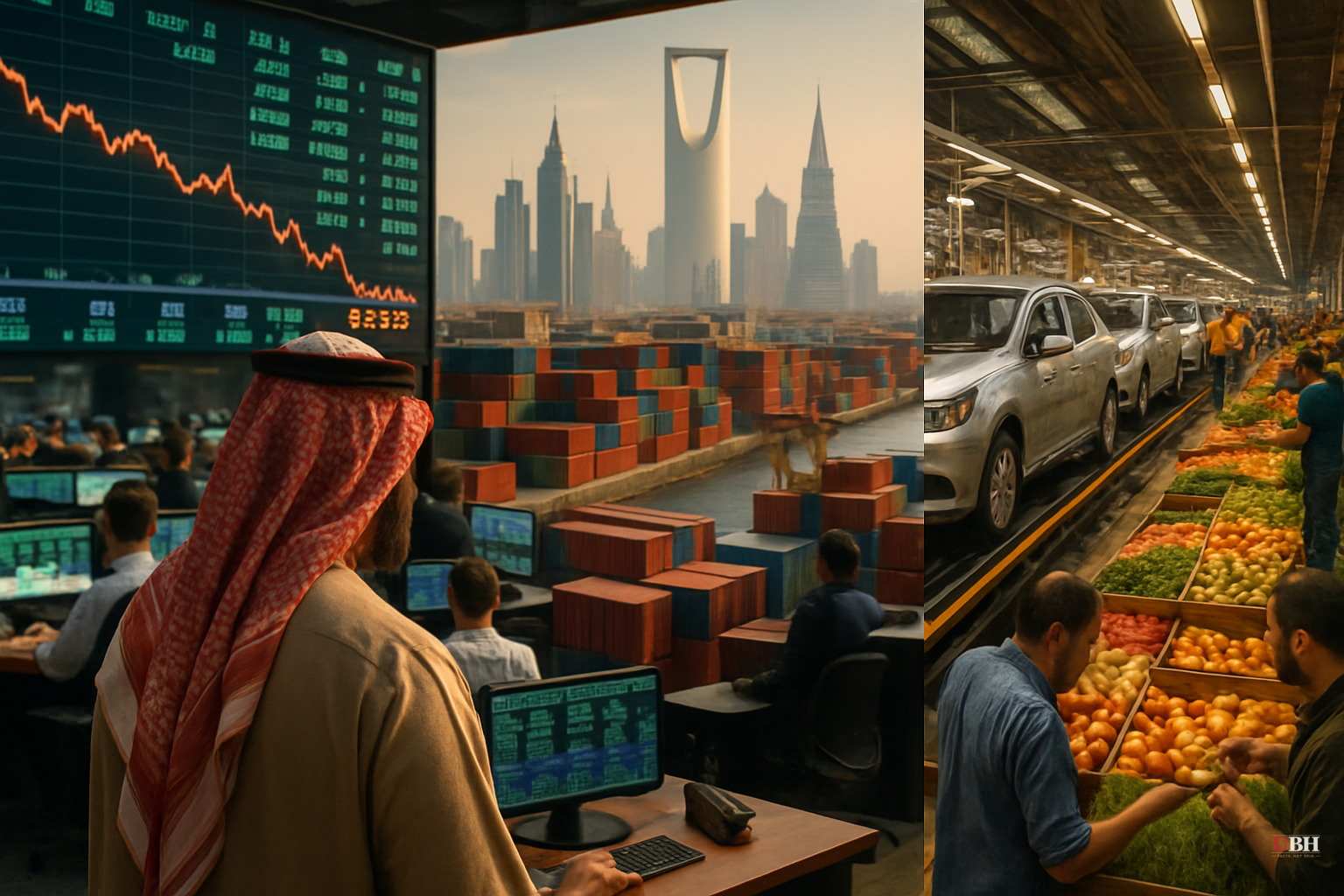
Saudi Arabia projected a 2025 budget deficit of 101 billion riyals — $26.88 billion — according to the Saudi Ministry of Finance. The U.S. Department of State put the deficit trajectory this way: $21.9 billion in 2023, $32 billion in 2024, and an estimated $27 billion in 2025. In just the first quarter of 2025 alone, Saudi Arabia ran a deficit of SR58.7 billion ($15.65 billion), driven by declining oil revenues and continued Vision 2030 spending, according to Prism News.
The trend accelerated in 2026. Al Jazeera reported on May 6, 2026, that Saudi Arabia posted a $33.5 billion budget deficit in just the first quarter of 2026 — more than double the shortfall from the same period the previous year. Officials had projected a deficit of only $17 billion for the entire year of 2026.
What Broke the Math
Two factors hit simultaneously. Government spending jumped 20 percent year-on-year to 386.7 billion riyals. Meanwhile, oil revenues fell 3 percent to 144.7 billion riyals, according to Saudi Ministry of Finance figures cited by Al Jazeera.
The Strait of Hormuz is a major reason why. Maritime traffic through the strait — which normally carries roughly one-fifth of global fuel supplies — has been at a standstill for more than two months due to Iranian threats against shipping. Saudi Arabia relies on crude and petroleum products for more than half of government revenues. In 2025, those sales generated 606.5 billion riyals for state coffers. The closure cut directly into Riyadh's wallet.
Saudi Arabia has rerouted some exports through the Red Sea port of Yanbu via the East-West Pipeline, but that's a workaround, not a permanent solution. Workarounds cost money and move less volume.
NEOM: The World's Most Expensive Idea
NEOM illustrates the tension between Vision 2030 ambition and fiscal reality.
NEOM's deputy CEO Rayan Fayez disclosed at Davos in February 2025 that the project had already cost more than $50 billion just to build basic infrastructure. That's before construction of the finished city or THE LINE — the linear skyscraper city designed to house 9 million people.
BBC News reported the megaproject generated global coverage mixing "awe and derision." The world's media showed glowing CGI renderings and struggled to decide whether to be impressed or skeptical.
Fitch Ratings has warned that lower oil prices and heavy Vision 2030 commitments are pressuring Saudi fiscal consolidation, according to Prism News.
What Mainstream Coverage Is Getting Wrong
Most Western media has framed Vision 2030's slowdown as a story about one man's ambition — MBS dreaming too big. That framing overlooks the structural issue.
This is a sovereign wealth management problem with global consequences. The Public Investment Fund (PIF), Saudi Arabia's sovereign wealth fund, controls nearly $1 trillion in assets. That money is deployed worldwide — in U.S. tech companies, European sports franchises, and global infrastructure. When the PIF faces pressure at home, it affects capital flows everywhere.
Bloomberg reported Saudi Arabia is planning spending cuts amid declining oil revenues. Coverage has also been sparse on the Strait of Hormuz factor. The partial closure is directly responsible for accelerating Saudi Arabia's fiscal deterioration in early 2026.
The Spending That Kept Going Up Anyway
Even as revenues fall, Saudi Arabia is spending more. Total government spending rose 20 percent year-on-year in Q1 2026. Economic resources spending shot up 52 percent. Military spending rose 26 percent. General items rose 46 percent, per Al Jazeera.
Non-oil revenues edged up 2 percent, which is nowhere close to covering the gap.
On the military side, context matters. Trump's "Project Freedom" operation aimed at reopening the Strait of Hormuz was suspended after less than 48 hours. The regional instability that operation targeted is not resolved. Saudi Arabia knows it.
What This Means for Regular People
Saudi citizens were promised a diversified, post-oil economy with world-class cities and cutting-edge technology by 2030. The clock is ticking and the pace is slowing.
Western investors who backed Vision 2030-adjacent deals — construction contracts, tech partnerships, tourism infrastructure — face longer timelines and higher risk.
Anyone who fills a gas tank or pays an energy bill should care, because Saudi Arabia's fiscal squeeze affects how aggressively Riyadh manages OPEC production decisions. A kingdom burning through cash needs oil prices high.
MBS built his legacy on the idea that Saudi Arabia could buy its way into the future. The bill is coming due.
Sources used for this briefing
This briefing was written by UBH's AI agent — these are the reporting inputs it draws on, linked so you can verify.


