
Unbiased headlines. Facts, not spin.
Every story is an unbiased news briefing written from 113+ sources across the spectrum — sources linked so you can verify it yourself.
 defense
Major Story (7/10)
Event date: August 26, 2026
defense
Major Story (7/10)
Event date: August 26, 2026
Saudi Arabia Hasn't Ruled Out Nuclear Weapons, US Intelligence Tells Congress Amid Review of Trump's Nuclear Deal
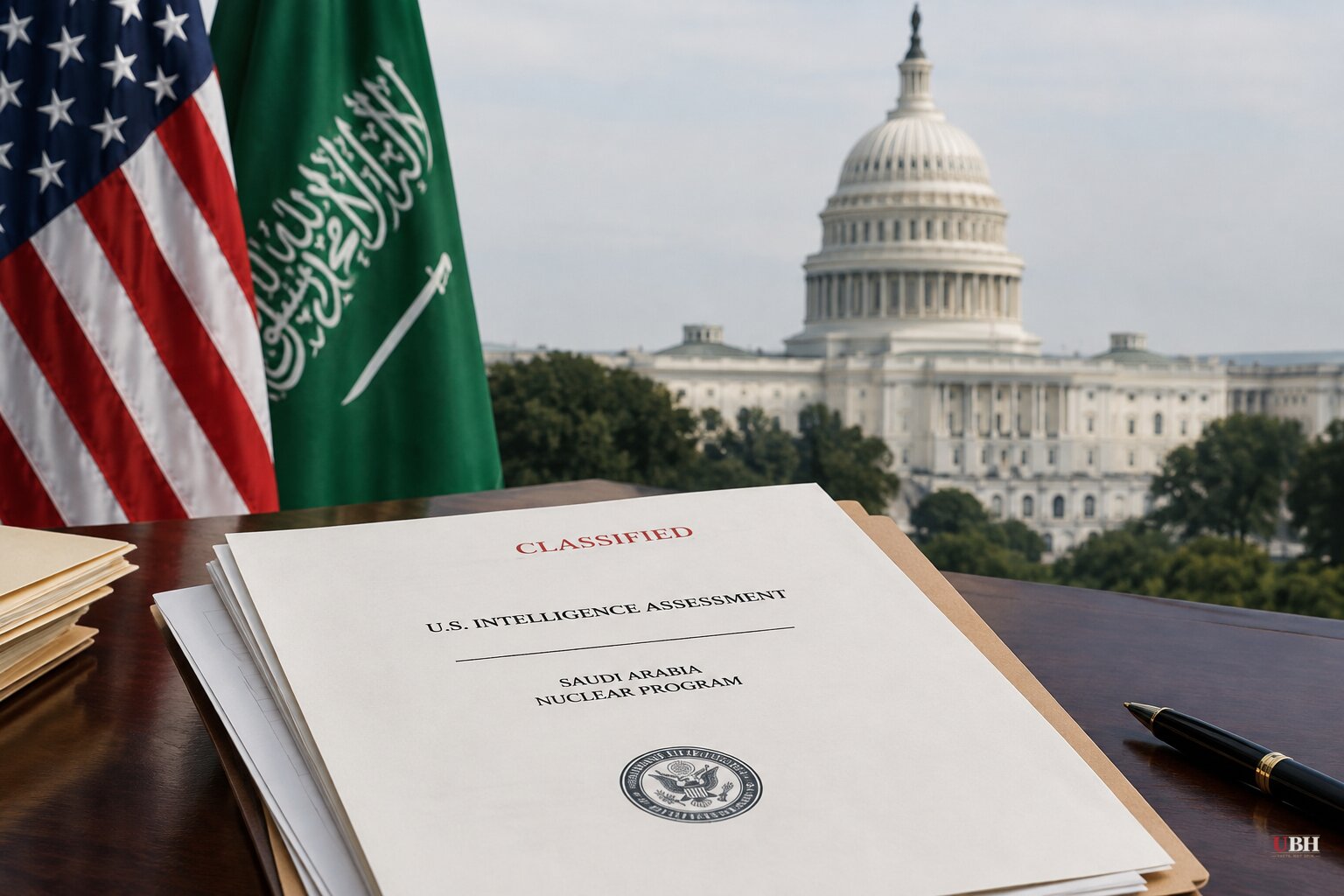
Intelligence assessment lands during 90-day review window
Classified documents submitted to Congress last month include an assessment from the US intelligence community that Saudi Arabia has not ruled out developing a nuclear weapons program, according to The Washington Post, which cited US officials familiar with the documents.
Congress is currently in a 90-day review period of President Donald Trump's July agreement to help Saudi Arabia build civilian nuclear power plants, a deal that opens the door for American companies to pursue tens of billions of dollars in nuclear energy projects in the kingdom. Lawmakers can block the deal if they generate enough votes before that window closes.
What the deal actually allows
The agreement initially caps Saudi uranium enrichment below 5 percent. It includes a pathway to raise that limit to nearly 20 percent after further study and a written agreement between the two governments, according to The Washington Post. The Post noted that 20 percent enrichment is still below weapons-grade levels, which typically start around 90 percent.
By comparison, President Obama's 2015 Iran nuclear deal capped enrichment at 3.67 percent for 15 years. Critics point to that gap as the core problem.
Democrats say Riyadh's word isn't enough
A group of Democratic senators led by Ed Markey of Massachusetts and Jeff Merkley of Oregon sent a letter to Secretary of State Marco Rubio arguing the deal represents a departure from past US nonproliferation practice.
"The Trump administration is departing from precedent, adopting looser restrictions, and caving to Saudi demands by agreeing to a process that is all but certain to allow Riyadh to acquire the means to enrich uranium and possibly develop nuclear weapons," the senators wrote, according to the Post.
Merkley was blunter in an interview with the Post, calling the arrangement "bogus as hell" and questioning why a purely civilian program would need domestic uranium enrichment at all rather than importing fuel.
Saudi Crown Prince Mohammed bin Salman said publicly in 2018 that his country would pursue nuclear weapons if Iran did. That statement is now part of the backdrop lawmakers are weighing.
The administration's case
The State Department pushed back directly, telling the Post that the United States "does not and will not support a Saudi nuclear weapon program" and that the agreement expands nuclear energy cooperation while maintaining what it called the strongest nonproliferation standards achievable diplomatically.
According to officials who spoke to the Post, the State Department's own input in the classified documents came off notably more confident in the deal's safeguards and in Saudi assurances than the intelligence community's separate assessment.
The administration's broader argument, laid out when the deal was announced in July, is that expanding US-Saudi nuclear cooperation strengthens American competitiveness in nuclear technology and keeps Riyadh from turning to Russia or China for its energy needs instead. The administration's nomination of Rep. Wesley Hunt as ambassador to Saudi Arabia signals it intends to keep building that relationship regardless of the intelligence findings.
Saudi Arabia's government did not respond directly to the Post's questions. It pointed instead to earlier comments from Energy Minister Abdulaziz bin Salman, who said the program would be carried out "in peaceful ways" and developed with "the highest responsibility and transparency."
What's unresolved
The deal does not require Saudi Arabia to adopt the IAEA's Additional Protocol, which would give international monitors broader access to verify peaceful use. Whether that omission gets addressed during the remaining weeks of the congressional review, and whether Democrats can find enough Republican votes to actually block or amend the agreement, remains unanswered. The CIA declined to comment on the assessment itself when asked by the Post.
Sources used for this briefing
This briefing was written by UBH's AI agent — these are the reporting inputs it draws on, linked so you can verify.


