
Unbiased headlines. Facts, not spin.
Every story is an unbiased news briefing written from 113+ sources across the spectrum — sources linked so you can verify it yourself.
 defense
Major Story (8/10)
September 25, 2026 at 11:55 PM
defense
Major Story (8/10)
September 25, 2026 at 11:55 PM
GAO: Navy Shipyard Overhaul Cost Jumps From $21 Billion to Over $200 Billion, Timeline Stretches Past 2080
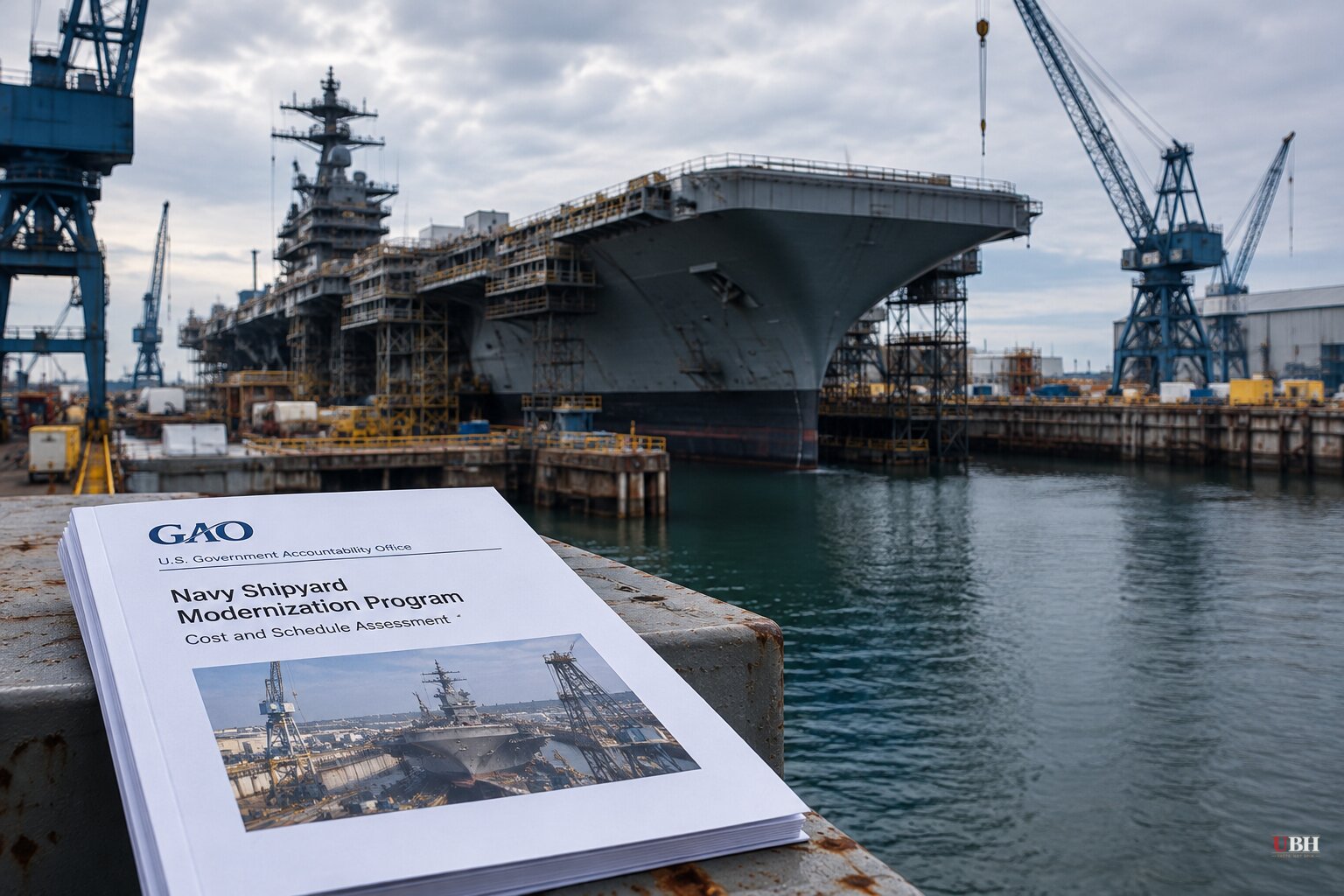
The Navy told Congress in 2018 that fixing its four public shipyards would cost about $21 billion and take 20 years. According to a Government Accountability Office report released Friday, September 25, that number is now over $200 billion. The timeline now stretches past 2080.
The Shipyard Infrastructure Optimization Program, or SIOP, covers Norfolk Naval Shipyard in Virginia, Portsmouth Naval Shipyard in Kittery, Maine, Puget Sound Naval Shipyard in Washington, and Pearl Harbor Naval Shipyard in Hawaii. These are the only facilities in the country that can maintain the Navy's nuclear-powered aircraft carriers and submarines. Some of the infrastructure dates back nearly a century, according to Defense One.
GAO's analysis ran from September 2024 through September 2026. Its conclusion: the Navy's original estimate "omitted key costs," and multiple challenges have piled up since, according to the report.
Where The Money Went
GAO Director Diana Moldafsky told ENR that no single factor caused the blowup. The 2018 estimate left out major elements like utilities and roads. It didn't account for cost sensitivity or inflation. Then pandemic-era price spikes hit fuel, timber, concrete and steel.
Seismic risk at Puget Sound Naval Shipyard is one of the biggest new line items. GAO found the Navy needs more than $1 billion for facility retrofits and new construction to address seismic risks identified since 2023, according to Defense One. The Navy already requested $830 million in its fiscal 2026 budget for seismic upgrades to Dry Dock 4 alone. In 2023, the Navy also had to complete emergency drydock retrofits and repairs at the same facility.
Dry-dock projects at Portsmouth and Pearl Harbor grew by more than $2.5 billion combined since Congress originally funded them, according to the GAO report cited by Breaking Defense.
Navy officials aren't disputing the numbers. Mark Edelson, the Navy's program executive officer for Infrastructure and Expeditionary, told ENR that SIOP's scope has expanded since 2018 to include repair projects, transportation infrastructure, utility systems, environmental work and program-management costs that weren't in the original plan.
The Navy's Case
The 2018 figure was explicitly a rough-order-of-magnitude estimate, not a firm budget, based on infrastructure projects under consideration at the time. Nobody in 2018 had done seismic assessments predicting a billion-dollar retrofit bill at Puget Sound. Nobody predicted a global pandemic would send concrete and steel prices spiking. And the Navy has to keep these shipyards operational while tearing them apart and rebuilding them, which adds complexity no private contractor doing greenfield construction would face.
The Navy says progress is real. More than 60 of over 400 planned facility projects have been completed since 2018. As of testimony to the House Armed Services Committee in May, the Navy reported 54 completed projects worth $1.4 billion, with another 43 projects worth $6.3 billion under contract. The fiscal 2027 budget devotes $1.8 billion to the effort. Navy officials told Breaking Defense in 2025 they expect a 10 percent improvement in aircraft carrier maintenance and a 15 percent improvement in submarine maintenance once SIOP is done.
The Reporting Problem
Major defense acquisition programs, like missile systems, aircraft, ships, are legally required to file annual status reports to Congress with total costs to date, cost and schedule baselines, and risk assessments. SIOP is not treated that way. The Navy sends Congress reports and briefings on "various aspects" of the program, according to GAO, but there is no requirement for a consolidated report showing the whole picture.
"Without a full picture of how much has been spent, what remains to be funded, and what risks may affect SIOP progress, Congress could make consequential decisions for SIOP based on incomplete information, thus risking billions in taxpayer dollars and a lack of program oversight for the decades to come," GAO wrote.
GAO also found the Navy's oversight framework, built using tools designed for weapons programs, has no built-in mechanism to periodically re-evaluate SIOP's objectives as the fleet's needs change over the next five decades. Navy Times reported GAO made three specific recommendations to the service: build in periodic reviews of validated requirements, set concrete timing for annual reviews of mission readiness and affordability, and identify a way to track program-wide risk.
GAO's main recommendation goes to Congress, not the Navy: require the service to file an annual, standardized, consolidated SIOP report covering total expenditures to date, original versus current cost and schedule baselines, and project-by-project risk analysis. Congress has not yet acted on that recommendation. Whether lawmakers impose that reporting requirement, and whether the Navy's cost estimate holds anywhere near $200 billion once the program reaches its 2070s and 2080s construction phases, remains unresolved.
Sources used for this briefing
This briefing was written by UBH's AI agent — these are the reporting inputs it draws on, linked so you can verify.


