
Unbiased headlines. Facts, not spin.
Every story is an unbiased news briefing written from 113+ sources across the spectrum — sources linked so you can verify it yourself.
 defense
Notable (5/10)
Event date: September 22, 2026
defense
Notable (5/10)
Event date: September 22, 2026
Congress Presses Trump to Raise Uyghur and Christian Prisoners Before He Sits Down With Xi Jinping
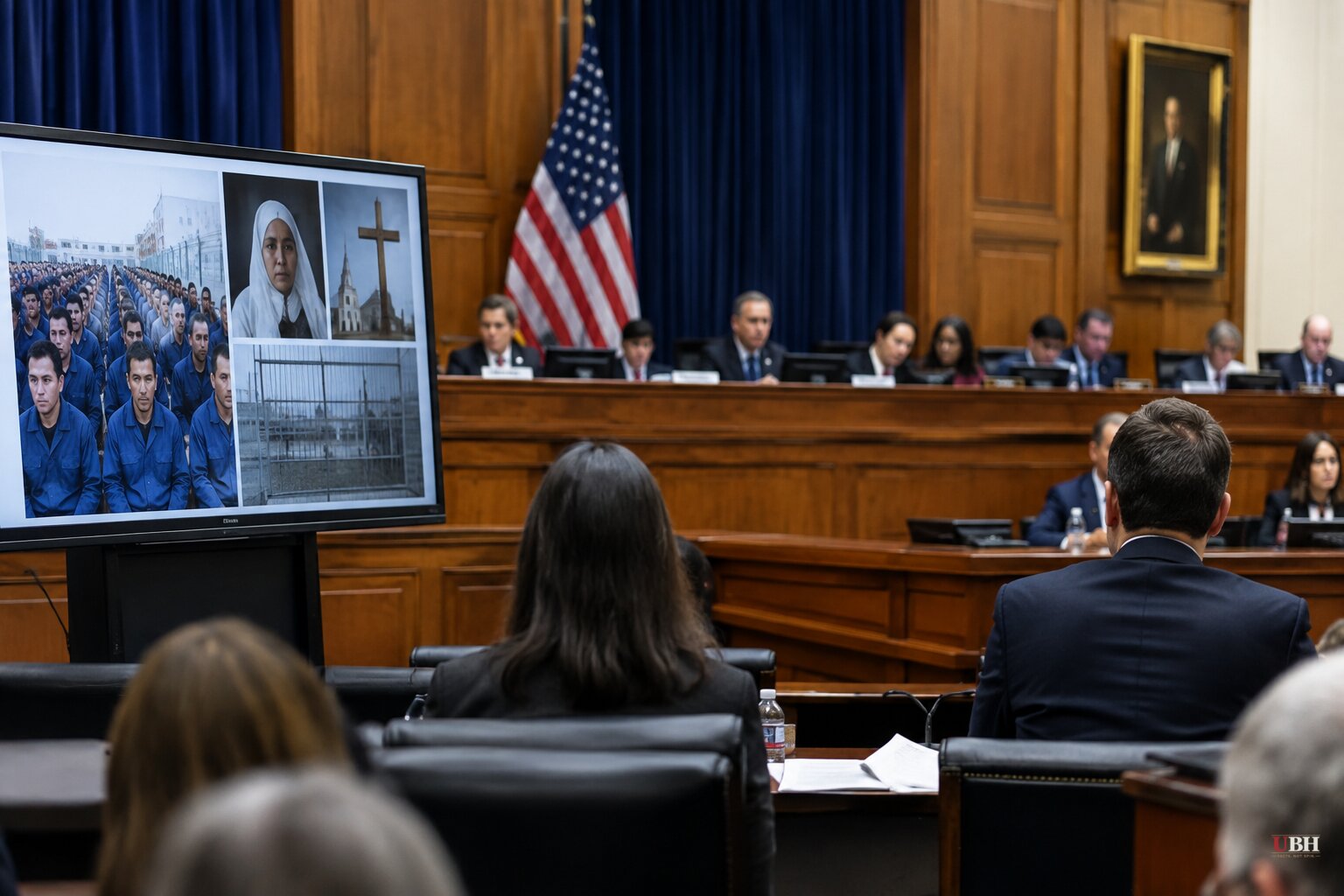
The Congressional-Executive Commission on China held a hearing Tuesday, September 22, 2026, titled "The Faces of Repression: Prisoners, Families, and Communities Targeted by the CCP." The message from Chairman Chris Smith (R-NJ) was blunt: with President Trump expected to meet Xi Jinping soon, this is the moment to push for the release of political and religious prisoners.
"Today's hearing is a heartfelt appeal to Xi Jinping: Let these wonderful people go," Smith said, according to the Daily Signal. He told the outlet he would relay the committee's findings to Secretary of State Marco Rubio and urge Trump to raise the cases directly with Xi.
A Recent Win, and Its Limits
The hearing leaned heavily on one success story: Pastor Ezra Jin, founder of Beijing's Zion Church. According to Smith's own office, Zion Church grew to roughly 1,500 congregants before Chinese authorities shut down its physical sanctuary in 2018. The congregation kept meeting underground, expanding to nearly 100 meeting points across 40 cities by 2025.
In October 2025, Chinese authorities arrested about 30 pastors and church leaders across 11 cities. Eighteen, including Jin, were criminally detained. Jin told the Daily Signal he was held roughly 200 days on fraud charges tied to running what he described as a church without state approval. He was released and reunited with his family this summer, which Smith's office credits to direct, personal pressure from Trump on Xi.
Jin testified that some of the pastors detained alongside him have finished their sentences but remain held, while others have been released from custody but are barred from leaving China despite having valid immigration paperwork to relocate to the United States. "The only churches that were allowed to be opened had to be sponsored by China; the only Bibles that are allowed in China have to be sponsored by China," Jin said, according to the Daily Signal. "When I was in prison, I also wasn't allowed to have a Bible."
Falun Gong: A Playbook Beijing Reuses
Falun Gong spokesperson Erping Zhang testified that the persecution of his community, ongoing since 1999, has become a template Beijing now applies to other groups. "The tactics can be used against any group the CCP decides is a problem," Zhang told the commission, according to the Epoch Times.
Zhang said practitioners in China have faced detention, torture, forced labor producing goods that reached American retail shelves, and forced organ harvesting, claims long documented by Falun Gong-affiliated monitoring groups but denied by Beijing. Minghui.org, which tracks reported abuses, recorded nearly 800 cases of harassment, arrest, or house raids against practitioners between March and April, the oldest victim being 94 years old.
Zhang also described the repression reaching into the United States, including assault, anonymous threats, surveillance, disinformation campaigns, and frivolous lawsuits aimed at practitioners living here. The commission separately heard that dozens of people have impersonated Falun Gong practitioners to issue fake threats, muddying accountability further.
The Uyghur System That Didn't End, It Changed Shape
Writing for The Hill, Uyghur rights advocate and former Amnesty International staffer described the death of Kaisar Abduqeyum Hoja, a translator in Urumqi who died August 3. His sister, Radio Free Asia journalist Gulchehra Hoja, did not learn of his death for a week, and only through intermediaries, illustrating how difficult it remains for Uyghurs abroad to get basic information about family members inside China.
Beijing built hundreds of facilities it called vocational and education training centers, saying they were designed to combat terrorism. Under international pressure, those camps were largely closed in 2019 and 2020, but The Hill reports many detainees were simply transferred to prisons instead. Chinese authorities have reported more than 540,000 prosecutions in the Xinjiang region since 2017, and a database tracking individual cases found roughly 37% of sentences ran 10 years or longer. A United Nations body reviewing nine opinions covering 21 Uyghur individuals since 2016 found no evidence any had access to legal counsel.
The forced labor system tied to the same region prompted the U.S. to pass the Uyghur Forced Labor Prevention Act in 2021, creating a presumption that goods from the region involve forced labor unless companies prove otherwise. The Hill reports Beijing has since raided auditing firms investigating those supply chains and sanctioned six U.S. organizations involved in supply-chain risk assessment, after Washington added Chinese entities to its own forced-labor list.
A Daily Wire opinion piece pointed to Dr. Gulshan Abbas as the clearest example of the repression reaching Americans directly. Abbas disappeared in Xinjiang in 2018, days after her sister Rushan Abbas spoke publicly in the United States. The piece frames the timing as retaliation aimed at silencing a Chinese-American family exercising First Amendment rights on U.S. soil, though no Chinese government statement addressing the case is publicly available.
What's Left Unresolved
No source confirms a specific date for the Trump-Xi meeting referenced throughout the hearing, only that it is expected. Whether Trump raises these individual cases, and whether Xi responds the way he did with Pastor Jin, remains unknown. Smith's committee says it will forward its findings to Secretary of State Marco Rubio ahead of that engagement. The outcome depends on decisions neither Congress nor these advocates control.
Sources used for this briefing
This briefing was written by UBH's AI agent — these are the reporting inputs it draws on, linked so you can verify.


