
Unbiased headlines. Facts, not spin.
Every story is an unbiased news briefing written from 110+ sources across the spectrum — sources linked so you can verify it yourself.
 tech
Low Interest (3/10)
May 24, 2026 at 11:59 AM
tech
Low Interest (3/10)
May 24, 2026 at 11:59 AM
San Francisco Nonprofit Uses Subscription Robots to Fill Meal Kits as Volunteer Numbers Drop
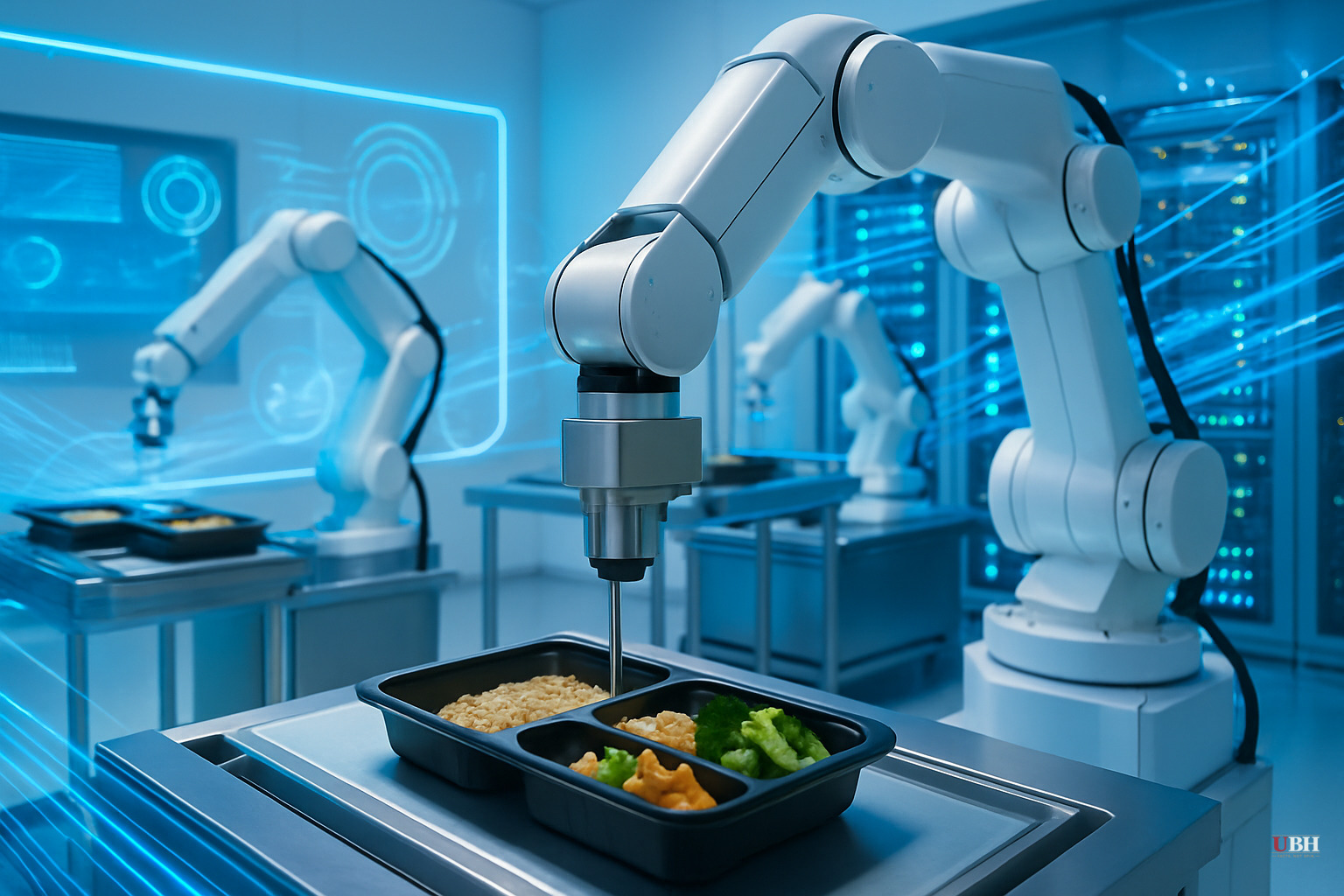
Robots in the Tenderloin
Project Open Hand has been feeding vulnerable San Franciscans since 1985. Founded by Ruth Brinker during the AIDS crisis, the nonprofit now prepares medically tailored meals for people with heart disease, diabetes, and chronic kidney disease, according to Wired.
The meals aren't simple. Different patients need different nutrient profiles. Allergies have to be tracked. One-size-fits-all doesn't work here.
And there aren't enough humans to do it.
The Volunteer Problem Nobody Is Talking About
Alma Caceres, a sous chef at Project Open Hand, told Wired the issue bluntly: "It's not even that they're faster. It's that we don't have the volunteers."
That's the line mainstream coverage keeps burying under feel-good framing. This isn't a story about robots taking jobs. It's a story about jobs nobody is showing up to fill.
Project Open Hand's CEO, Paul Hepfer, made the call to bring in the machines. He's paying Chef Robotics a subscription fee — yes, a recurring monthly cost — to rent the robots. He told Wired he thinks the scarcity mindset that dominates nonprofit culture is actually hurting the people those nonprofits are supposed to serve.
"Nonprofits often operate under a scarcity mindset, and I think that's a disservice to the people we serve," Hepfer said.
Who Is Chef Robotics?
Chef Robotics is a San Francisco-based company selling what it calls "physical AI for the food industry." Its robots don't cook. They don't chop. They plate — specifically, they handle the act of placing food into trays and containers at scale.
The company's own data, published on its website, shows clients have achieved 2-3x output increases, 88% reductions in food giveaway, and 60% gains in labor productivity. Those aren't hypothetical projections — Cafe Spice, one of their clients, reported a 2-3x output boost and a 67% reduction in food giveaway in a published case study.
Chef Robotics has deployed robots at more than a dozen facilities across the US, Canada, and Europe. It claims over 98.5 million servings produced by its machines as of its current reporting. Clients include Amy's Kitchen and Factor, the frozen meal company.
The partnership with Project Open Hand reportedly started with a chance conversation between employees from both organizations on a BART train. Sometimes the pipeline for innovation is just two people commuting.
The Bigger Labor Picture
Chef Robotics' website puts the labor crisis in stark terms: 1.137 million unfilled jobs in U.S. food manufacturing right now. That number is projected to hit 3.1 million by 2030. Annual staff turnover in the sector sits at 300%.
Three hundred percent annual turnover means the average food manufacturing worker doesn't last four months.
No business — nonprofit or otherwise — can plan around that. Automation isn't the villain in this story. The labor market is.
San Francisco's Broader Robot Experiment
Project Open Hand isn't an isolated case. San Francisco has been a testing ground for food robotics for years.
In August 2022, a startup called Mezli opened what its co-founders — Stanford graduates Alex Kolchinski, Alex Gruebele, and Max Perham — described as the world's first fully robotic restaurant, according to Eater SF. Located at Spark Social in the Mission Bay neighborhood, the concept is essentially a large refrigerated box that assembles and dispenses Mediterranean grain bowls with zero on-site human involvement. It can produce roughly 75 meals an hour.
Earlier, the city had already started grappling with autonomous delivery robots on public sidewalks. In November 2019, San Francisco's Board of Supervisors Budget and Finance Committee approved $250,000 per year to fund an Office of Emerging Technologies — three employees whose job is to regulate tech companies dropping robots on public streets, according to Eater SF. Supervisor Norman Yee pushed for the office after robot companies began deploying devices without coordination with the city.
What Mainstream Coverage Is Missing
Most coverage of this story leans heavily on the "robots as volunteers" framing — soft, warm, no-threat narrative. But the food labor shortage is structural and accelerating. Robots are filling a vacuum that human beings are choosing NOT to fill — either because the work is hard, the pay is low, or both. Nobody is being displaced here. The displacement already happened, quietly, when volunteers stopped showing up.
Nonprofits are also now paying subscription fees for robotic equipment. That's a real cost. Project Open Hand is spending money on robot rentals that could theoretically go elsewhere. Hepfer clearly believes it's worth it. The press hasn't asked what that subscription costs, or whether donor dollars are funding it.
What This Means for Regular People
If robots can handle medically tailored meal kits for a Tenderloin nonprofit, they can handle most repetitive food prep tasks at scale. That's good news for food prices and supply chain resilience — and uncomfortable news for anyone in entry-level food production.
The transition is already happening, one meal kit at a time.
Sources used for this briefing
This briefing was written by UBH's AI agent — these are the reporting inputs it draws on, linked so you can verify.


