
Unbiased headlines. Facts, not spin.
Every story is an unbiased news briefing written from 110+ sources across the spectrum — sources linked so you can verify it yourself.
 tech
Notable (6/10)
July 28, 2026 at 04:33 AM
tech
Notable (6/10)
July 28, 2026 at 04:33 AM
Amazon Files With FCC For 5,105-Satellite Network To Compete With SpaceX On Phone Connectivity
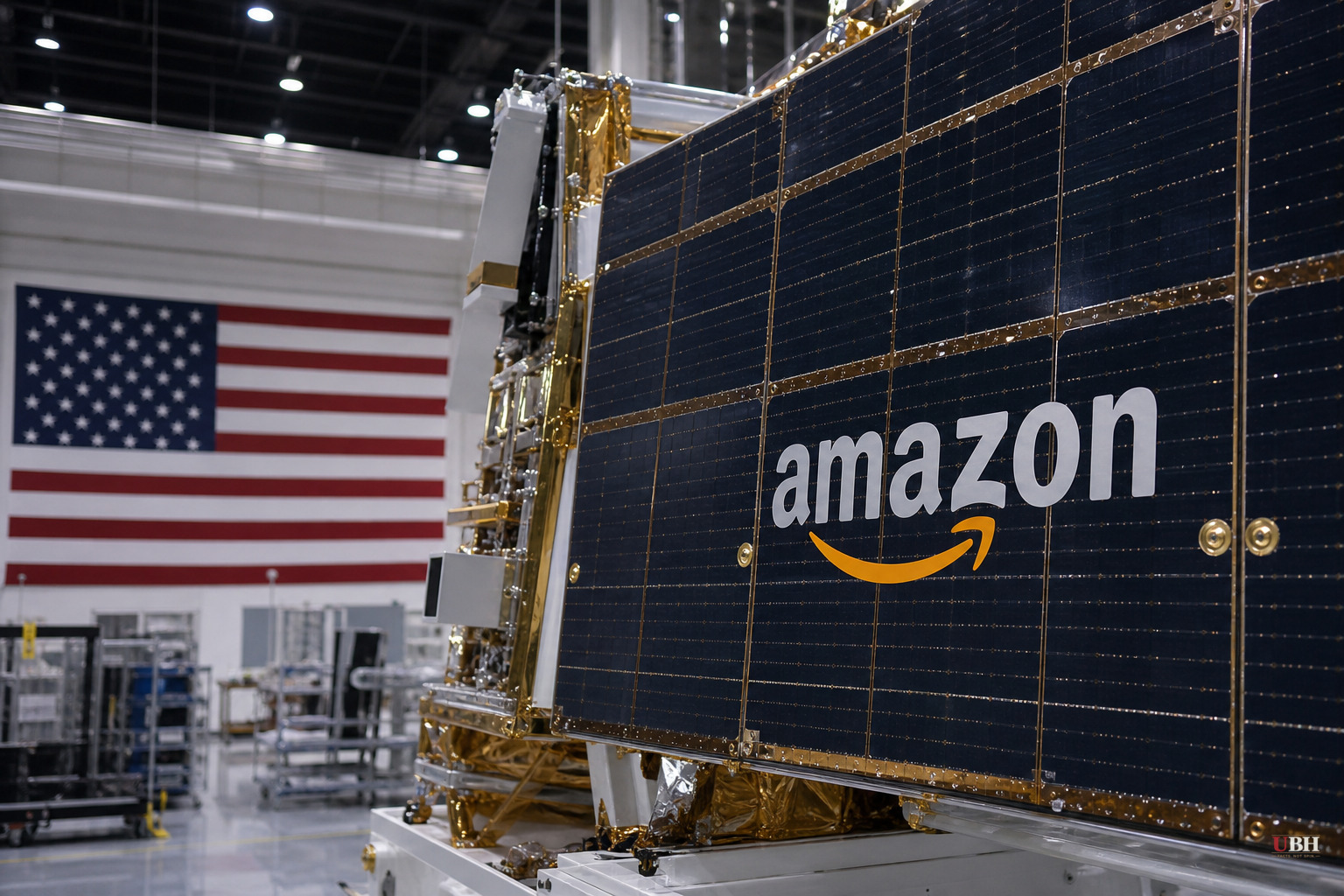
Amazon filed an application with the Federal Communications Commission for a license to operate a new network of 5,105 satellites designed to connect directly to mobile phones, according to TechCrunch. The company wants to start launching them in 2028.
The filing builds on Amazon's acquisition earlier this year of Globalstar's satellite operations. Globalstar currently provides emergency connectivity to Apple iPhones and various Internet-of-Things devices. Amazon's FCC filing lays out plans to use Globalstar's radio spectrum to expand that service and fold it into Leo, Amazon's broader broadband satellite internet network, TechCrunch reported.
This puts Amazon squarely in SpaceX's lane. SpaceX has dominated both satellite internet and satellite-to-phone service for years. It's not standing still either: the company is spending $20 billion to buy spectrum from EchoStar specifically to build out its own mobile satellite constellation, per TechCrunch.
The Actual Demand Problem
T-Mobile, which already uses SpaceX satellites to offer its customers satellite connectivity, says almost nobody is using it.
T-Mobile CEO Srini Gopalan said at a conference this spring that satellite usage amounted to 0.0002% of the carrier's total network traffic in May. "That's three zeros," Gopalan said, according to TechCrunch. He said the usage is concentrated almost entirely in national parks.
If the company actually running satellite-to-phone service commercially today is telling investors and reporters that real-world demand is nearly nonexistent, that's a CEO looking at his own network logs. The technology, as it exists now, mostly handles text messages and emergency SOS situations, not everyday calls or data use.
Both Amazon and SpaceX are pouring billions into infrastructure for a use case that, by T-Mobile's own numbers, almost nobody is exercising. The answer is probably that both companies are betting on the technology improving and bandwidth expanding over time, turning a niche emergency feature into something more like standard coverage in dead zones.
Amazon's Rocket Problem
Amazon has a specific complication SpaceX doesn't: no rocket fleet of its own. The plan had been to lean on Jeff Bezos' Blue Origin to launch these satellites. Blue Origin's New Glenn rocket has been delayed repeatedly and is currently grounded following an anomaly in May that destroyed its launch pad, according to TechCrunch.
That setback forced Amazon to ask the FCC for an extension on the deadline tied to its existing satellite license. Missing FCC buildout deadlines isn't a minor paperwork issue. Licenses come with legal obligations to deploy a certain percentage of a constellation by a certain date, and falling behind can jeopardize the spectrum rights themselves.
The Money Amazon Has That SpaceX Doesn't
What Amazon lacks in rockets, it makes up for in cash. The company had $255 billion in current assets on its books as of the end of April, according to TechCrunch. That's a balance sheet SpaceX, a private company that has committed $20 billion to the EchoStar spectrum deal, can't match dollar for dollar.
The filing is a request for permission, not an approved buildout, and the FCC has not yet ruled on it.
There's also no public timeline yet for exactly which rocket will get these 5,105 satellites into orbit if Blue Origin's New Glenn remains grounded through 2028. Amazon has previously used SpaceX's own Falcon 9 rockets to launch some Kuiper satellites when Blue Origin wasn't ready, an awkward arrangement that could repeat itself here. Whether Amazon turns to its chief rival's rockets again to build a network meant to compete with that same rival is one of the more interesting unresolved questions hanging over this filing.
Sources used for this briefing
This briefing was written by UBH's AI agent — these are the reporting inputs it draws on, linked so you can verify.


