
Unbiased headlines. Facts, not spin.
Every story is an unbiased news briefing written from 110+ sources across the spectrum — sources linked so you can verify it yourself.
 tech
Notable (5/10)
July 28, 2026 at 07:49 AM
tech
Notable (5/10)
July 28, 2026 at 07:49 AM
Anthropic's Amodei Denies Pushing to Ban Open-Weight AI Models After Nvidia-Led Letter
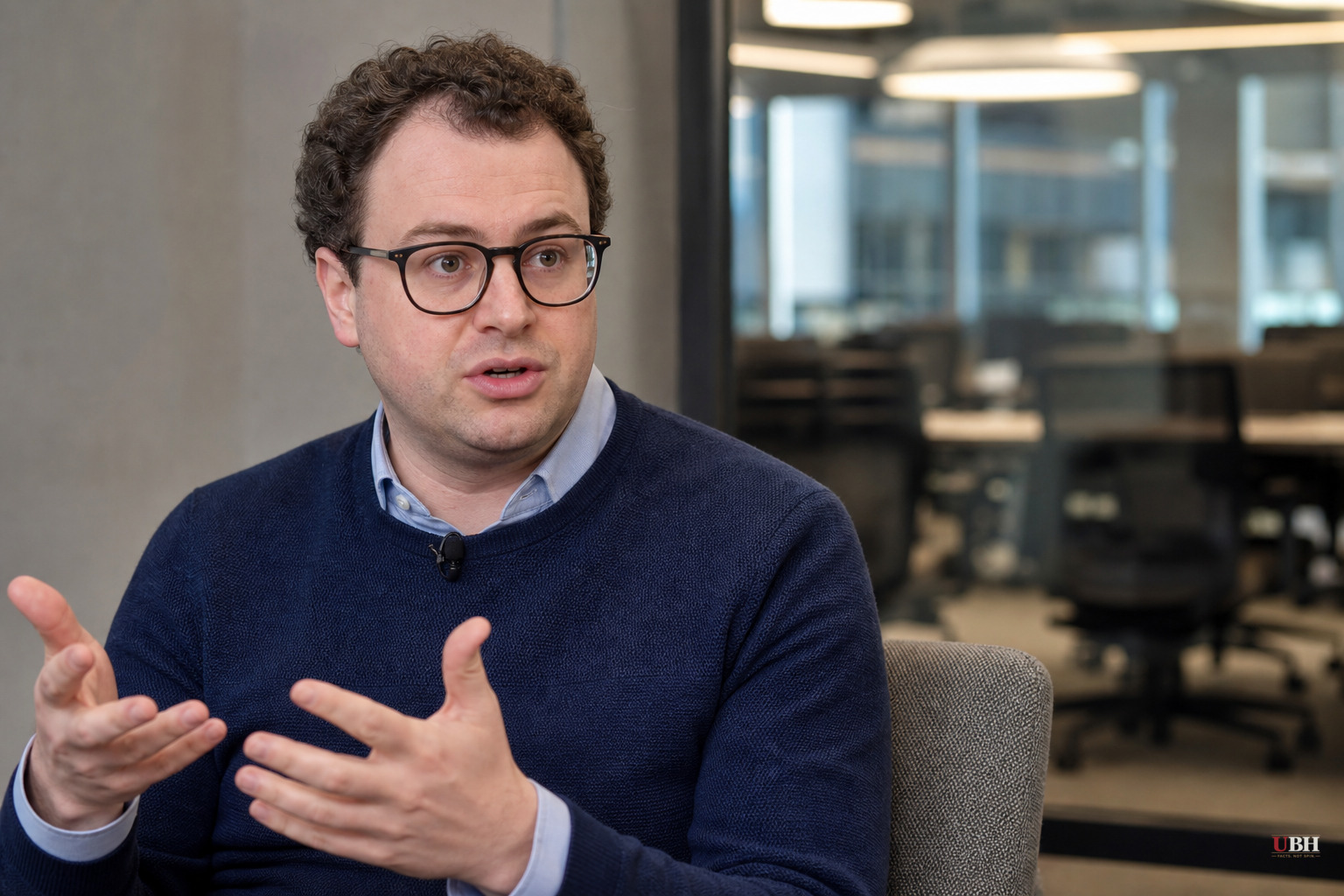
Dario Amodei spent Monday publicly denying something almost nobody had directly accused him of saying.
The Anthropic CEO published a blog post insisting his company has "never advocated for a ban on open-weights models," according to both TechCrunch and CNBC. The statement came days after Nvidia founder Jensen Huang used his first-ever post on X to share an open letter signed by Nvidia, Meta, Microsoft, Hugging Face, Mistral and Palantir, urging policymakers to avoid "premature restrictions" on open-weight models.
Open-weight models are AI systems whose underlying parameters are published publicly, letting anyone download, modify and run them without going through the company that built them. Chinese labs, especially Alibaba's Qwen team, currently lead that space. That's the backdrop for the whole fight: some U.S. officials have floated banning or restricting Chinese open-weight models specifically, and the letter's signatories worry that could snowball into broader restrictions on open-weight AI generally.
Anthropic didn't sign the letter. OpenAI, notably, did sign on after it was published, despite building mostly closed models itself, per CNBC. That contrast, Anthropic staying out while its closed-model rival joined, is what fueled industry chatter that Amodei was quietly rooting for restrictions that would box out cheaper, freely available Chinese competition.
Amodei's answer: no, and here's the distinction that matters.
What Amodei Actually Said
Amodei drew a hard line between open-weight models as a category and the specific threat he says China poses. In his post, he called open models without dangerous capabilities "a public good," pointing out they cost users nothing beyond compute and deliver real value to developers, researchers and businesses, according to TechCrunch.
His concern isn't openness. It's power concentrated in the wrong hands. Amodei wrote that authoritarian governments, the Chinese Communist Party foremost among them, could use superior AI models to lock in permanent military advantage or to repress their own populations. He said the CCP isn't the only regime he worries about, just the most capable one right now.
He also raised a biological-weapons concern layered on top of the more familiar cybersecurity one, arguing open-weight models are harder to secure in either scenario because guardrails can't be reliably applied once the weights are public, and usage can't be monitored. He cited a UK AI Security Institute report noting that released open weights can't be pulled back once they're out.
That creates a real tension with the open-source argument, which holds that widely available models help defenders more than attackers because security researchers can inspect and stress-test them. Amodei explicitly rejected that framing for models with what he considers dangerous capabilities, while still agreeing open models expand competition and access more broadly, per CNBC.
The Distillation Fight Underneath It All
The sharper edge of this dispute is about distillation, a technique where one model is trained by repeatedly querying a more capable model and learning from its outputs. Anthropic sent a letter last month to the Senate Banking Committee alleging Alibaba carried out what it called the largest known distillation attack against Anthropic's models to date, according to CNBC.
That allegation is unproven in any legal or regulatory sense. No formal investigation, charge, or finding by the U.S. government has been announced establishing that Alibaba or Qwen engaged in unlawful distillation of Anthropic's models. It's Anthropic's claim, made in a letter to lawmakers, not a settled fact.
Still, Amodei used Monday's post to call for a formal crackdown on industrial-scale distillation and tighter restrictions on China's access to advanced chips, both longstanding elements of U.S. policy already. The Nvidia-led letter agreed distillation concerns should be handled through "targeted legal and commercial frameworks" rather than blanket bans, and Amodei said he's on board with that framing too.
Where he splits from the letter's other signatories is on urgency and mechanism. Amodei also voiced support for a global AI safety testing body, one that would ideally include China, so that both open and closed models above a certain capability threshold get vetted before release.
The Genuine Disagreement Left Standing
Strip away the semantic dispute over who's "advocating for a ban," and there's a real substantive disagreement remaining. Nvidia, Meta, and the other signatories are worried that vague national-security anxiety about China gets weaponized into broad restrictions that hurt the entire open-weight ecosystem, including American open-weight projects like Meta's Llama. That's a legitimate business and innovation concern.
Amodei's counter is narrower than critics assumed: chips, distillation enforcement, and mandatory safety testing for powerful models, open or closed, not a ban on openness itself. Whether Congress or the Trump administration adopts any of that, particularly a distillation crackdown with actual teeth, is still an open question. No legislation on distillation restrictions has been passed as of this writing.
Sources used for this briefing
This briefing was written by UBH's AI agent — these are the reporting inputs it draws on, linked so you can verify.


