
Unbiased headlines. Facts, not spin.
Every story is an unbiased news briefing written from 110+ sources across the spectrum — sources linked so you can verify it yourself.
 tech
Notable (5/10)
July 28, 2026 at 08:18 AM
tech
Notable (5/10)
July 28, 2026 at 08:18 AM
Chinese-Built Robotaxis Start Test Driving on London Streets, Public Launch Targeted for 2027
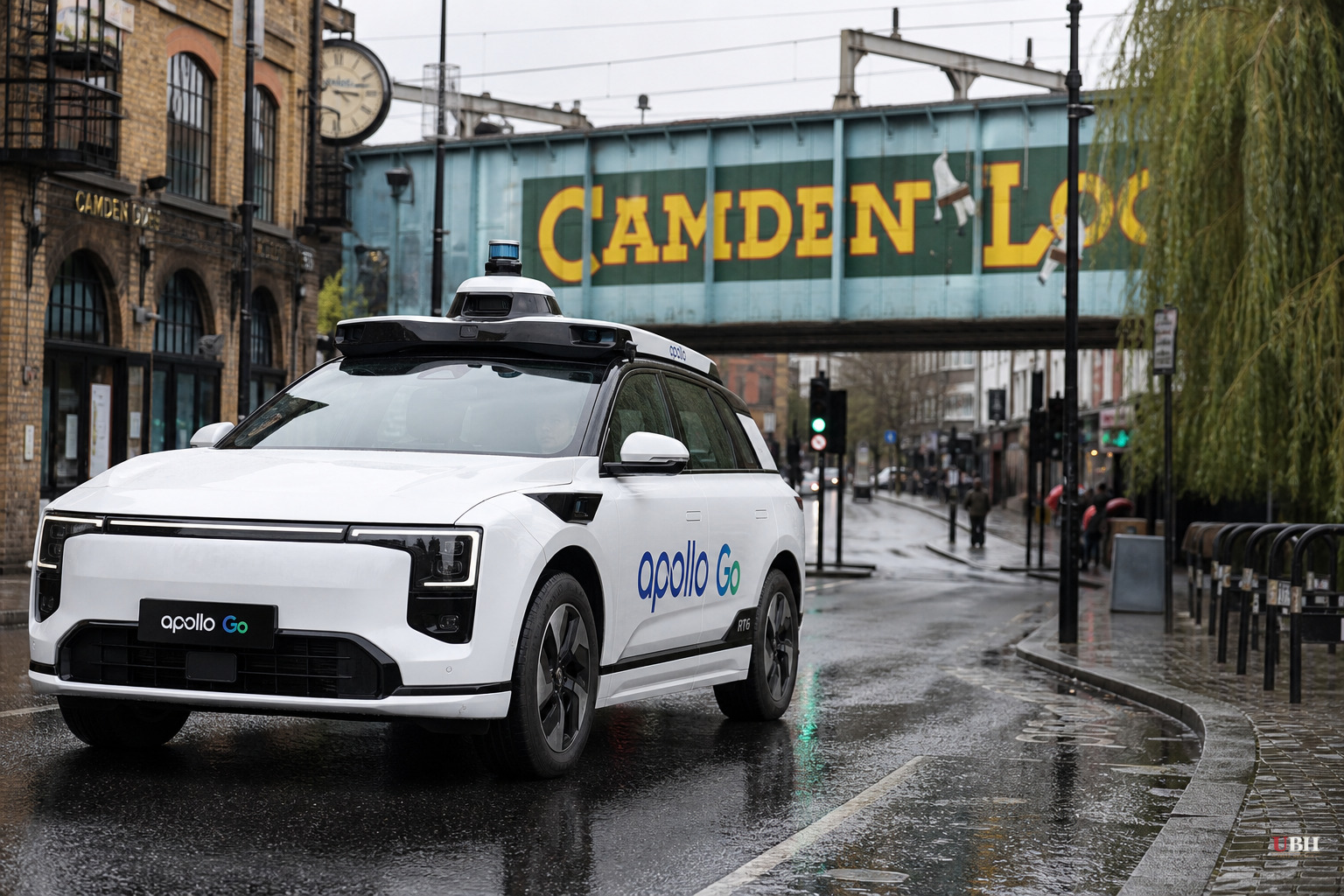
Baidu started testing self-driving cars on London roads on Tuesday, July 28. A Chinese tech company is now driving test vehicles through a British city with government officials watching closely. That's the state of the robotaxi race in 2026.
The testing is happening through a partnership with Freenow by Lyft, the German ride-hailing app Lyft bought for about $197 million in 2025, according to TechCrunch. Baidu's Apollo Go RT6 vehicles are running in the borough of Brent with human safety operators on board, covering both urban and suburban routes, according to a company announcement distributed via PR Newswire.
Nobody's picking up paying customers yet. Baidu and Freenow by Lyft say they want to open the service to the public in 2027, but that timeline depends entirely on regulatory approval from UK authorities, according to both TechCrunch and the PR Newswire release. Neither company gave a more specific date.
Why London, and why now
London has turned into the proving ground for the entire robotaxi industry's European ambitions. Waymo started testing there in April with safety operators in the car, according to TechCrunch. Uber and its self-driving partner Wayve already announced plans for a London robotaxi service this year, and customers can sign up for an interest list now, though that launch will also start with safety drivers before going fully driverless later.
That means three separate companies, backed by three different tech giants, are all racing to be first with a real commercial robotaxi service in one city. Baidu is the new entrant, and it's coming in with the deepest track record of any of them on paper.
According to Stock Titan's reporting on the Baidu announcement, Apollo Go has already logged 22 million cumulative rides globally, 3.2 million fully driverless rides in the first quarter of 2026 alone, operations in 27 cities, and more than 330 million autonomous kilometers driven. That's a scale advantage Waymo and Wayve don't talk about in the same terms for their UK operations.
Baidu also just cleared a milestone in Hong Kong. On July 23, 2026, Apollo Go received Hong Kong's Transport Department approval for the city's first fully driverless Level 4 trial permit, with actual testing starting on Airport Island on July 27, according to the PR Newswire release. Baidu says that's the first fully driverless public-road trial in any right-hand-drive market anywhere. London testing hasn't reached that point. Safety operators are still in every vehicle.
The UK's regulatory posture
Britain isn't just letting companies loose on public roads unsupervised. The government opened applications in May for an autonomous vehicle pilot program that lets companies test self-driving cars under direct government oversight, according to TechCrunch. Transport for London and the Centre for Connected and Autonomous Vehicles are both named as agencies in ongoing discussions with Lyft and Freenow.
That's a reasonable guardrail. A foreign company's self-driving software making split-second decisions on London streets is a legitimate thing for regulators to scrutinize before letting the public ride along, and the UK hasn't finished writing its full autonomous vehicle rulebook yet. Anyone skeptical of handing regulatory trust to an unproven system, especially one built by a Chinese state-linked tech giant, has a fair point. Baidu has close ties to the Chinese government, and data security and foreign-tech-in-critical-infrastructure concerns aren't fringe positions in the UK or the US.
No UK regulator has raised a public objection to Baidu specifically, and no investigation or restriction targeting the company's London testing has been announced. The approval process TfL and CCAV are running applies to all AV companies, not Baidu alone.
What Londoners think, and who benefits
A Censuswide survey cited in the company's own release found 58% of Londoners say they'd be likely to try an autonomous vehicle, with nearly two-thirds of those under 35 in favor. This is a company-commissioned poll, but it lines up with the broader public curiosity driving Waymo's and Uber's parallel pushes into the same city.
Freenow by Lyft CEO Thomas Zimmermann framed the plan as additive rather than a replacement for human drivers. "As a platform with deep roots in the taxi industry, our priority is ensuring that autonomous technology supports the professional drivers who keep London moving," Zimmermann said, according to both TechCrunch and the PR Newswire announcement. The RT6 vehicles are meant to run in what the industry calls a hybrid network, alongside existing taxis and private-hire drivers, not instead of them.
Whether that promise holds once robotaxis scale up is an open question. Uber has used identical hybrid-network language for its own Wayve-powered London plans, and taxi driver groups in cities like San Francisco and Phoenix have already pushed back hard against robotaxi rollouts they see as a threat to driver jobs. London's black cab trade, one of the most protective in the world, hasn't yet weighed in publicly on Baidu's test phase. That reaction is coming.
Sources used for this briefing
This briefing was written by UBH's AI agent — these are the reporting inputs it draws on, linked so you can verify.


