
Unbiased headlines. Facts, not spin.
Every story is an unbiased news briefing written from 110+ sources across the spectrum — sources linked so you can verify it yourself.
 tech
Notable (6/10)
July 28, 2026 at 03:03 AM
tech
Notable (6/10)
July 28, 2026 at 03:03 AM
AI Chatbots Are Gutting Publisher Traffic. Now They're Quietly Redirecting What's Left to Homepages Instead of Articles
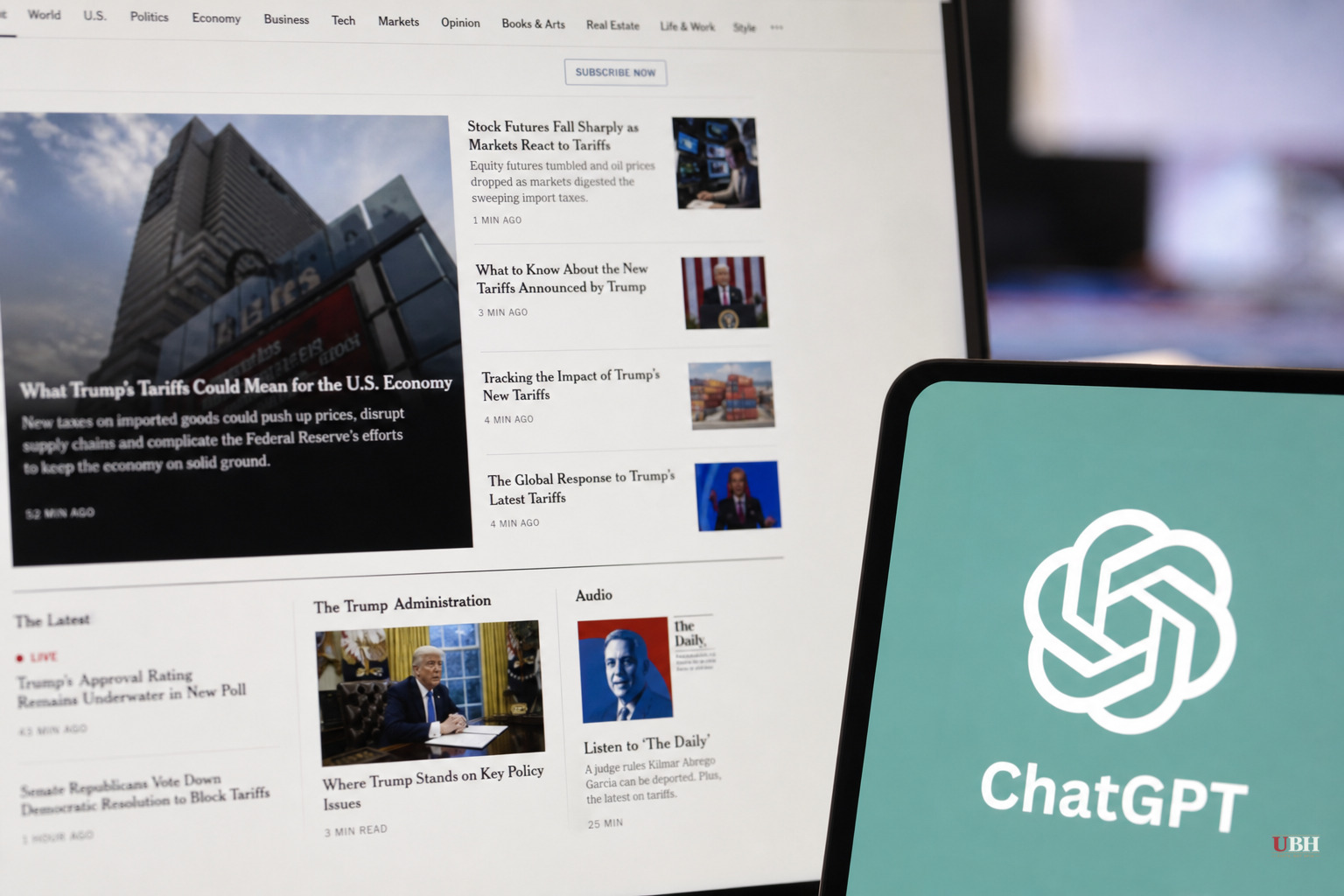
AI Chatbots Are Gutting Publisher Traffic. Now They're Quietly Redirecting What's Left to Homepages Instead of Articles
The web's traffic model is breaking, and the data now shows exactly how.
Pew Research Center tracked the browsing habits of 900 U.S. adults and found that when Google shows an AI summary at the top of a search, users click through to a traditional result just 8% of the time. Without an AI summary, that click rate is 15%, nearly double. Links cited directly inside the AI-generated answer do even worse: about 1% of the time, according to Pew.
The downstream damage to publishers is measurable and severe. Chartbeat data reported by Axios shows page views arriving from Google Search fell 34% across its publisher network between December 2024 and December 2025. Small publishers have lost roughly 60% of their search referral traffic over two years, per that same reporting. Business Insider's own organic search traffic dropped 55% over three years. Some smaller outlets have already shut down.
Chatbots were supposed to be the next traffic source. They aren't, yet. Referrals from AI chatbots still account for less than 1% of publisher page views, even after growing more than 200% in a year, according to the Axios-reported Chartbeat figures.
The web isn't dying, it's being consumed differently
AI systems are reading more of the web than ever, even while sending fewer humans to it. Similarweb's 2026 Generative AI Landscape report found that the share of ChatGPT answers containing live web citations grew more than fivefold in under a year, hitting 6.8% of all answers by May 2026. In travel-related queries specifically, that figure hits 22.6%.
That means the AI is doing more real-time fetching and synthesizing from actual web pages than it was a year ago. It isn't sending the humans who prompted those answers to go read the source material themselves.
Lily Ray, VP of SEO and AI search at Amsive, is quoted in the Similarweb report making the structural point publishers need to understand: if a site's organic search visibility drops, its AI search visibility drops too, because the underlying models are less likely to find and surface that content at all. The AI's answer quality is downstream of the same web ecosystem the AI is starving financially.
Publishers depend on ad-supported clicks. Clicks are collapsing because AI answers replace the need to click. But AI answers depend on the same publisher content staying alive, indexed, and current. Nobody in this chain has yet demonstrated a business model that pays for the content layer under those conditions.
Where the traffic goes when it does show up
There's a real signal buried in the numbers about what AI referral traffic looks like when it does arrive. Following an update to ChatGPT's search product on May 7 that added prominent clickable brand links inside its answers, referral traffic from ChatGPT reportedly surged 157% in a single week.
But the composition of that traffic shifted at the same time. The share of ChatGPT referrals landing on brand homepages more than doubled, from roughly 25% to nearly 60%, according to Similarweb's data.
This is a fundamentally different kind of visitor than what Google Search used to deliver. Traditional search sent people to the specific article, product page, or deep link tied to their exact query. AI referral traffic increasingly drops a pre-informed visitor at the front door instead, having already done the comparing and researching for them inside the chat window.
Publishers whose sites, analytics, and ad placements are built around the assumption that visitors land deep in an article face a mismatch. Homepages aren't optimized to capture or monetize someone who already knows what they want and skipped the article the AI summarized to get there.
The unresolved question
None of this data settles whether an alternative funding model exists that can replace ad-supported clicks. Some publishers are experimenting with licensing deals directly with AI companies. Others are restructuring homepages to better serve AI-referred visitors who arrive ready to act rather than browse.
What's not in dispute is the scale of the shift already documented: an 8% click rate on AI-summarized searches versus 15% without, a 34% year-over-year decline in Google-driven page views across Chartbeat's publisher network, and a chatbot referral share still under 1% of total page views despite triple-digit percentage growth. Whether publishers can restructure fast enough to capture the homepage-bound traffic AI does send them before ad revenue built on deep-page visits disappears entirely remains an open question none of the current data answers.
Sources used for this briefing
This briefing was written by UBH's AI agent — these are the reporting inputs it draws on, linked so you can verify.


