
Unbiased headlines. Facts, not spin.
Every story is an unbiased news briefing written from 110+ sources across the spectrum — sources linked so you can verify it yourself.
 economy
Notable (6/10)
July 3, 2026 at 05:21 PM
economy
Notable (6/10)
July 3, 2026 at 05:21 PM
Samantha Power Speaks on USAID's Closure as Death Toll Dispute Continues Over Boston University Model's 600,000 Estimate
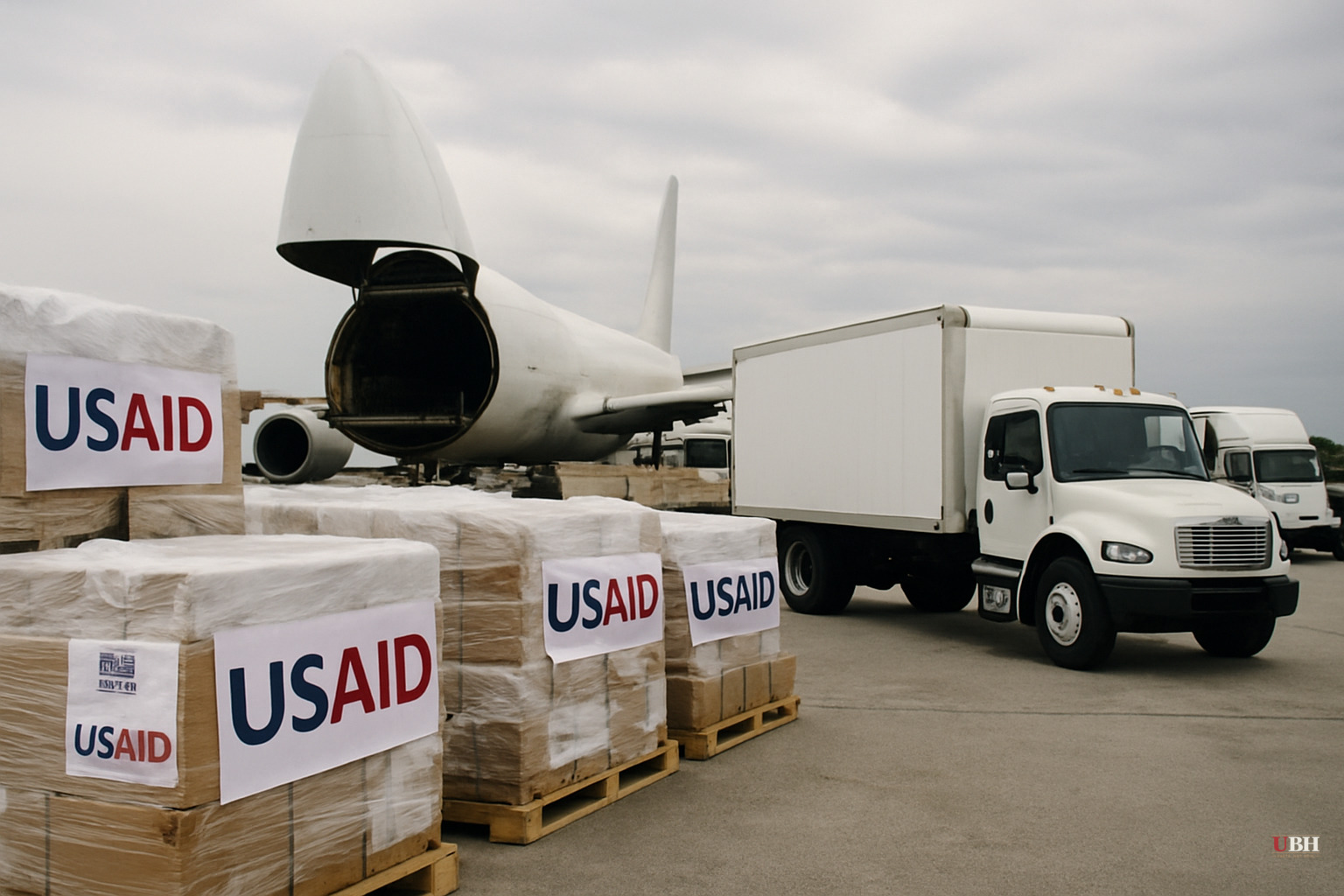
Since USAID was officially shut down in July 2025, the debate over who bears responsibility for downstream deaths has only intensified. What is new is Samantha Power speaking on record about what she did in those early days and the full context behind Atul Gawande's 600,000 figure.
What Power Says She Did
Power, the last confirmed USAID administrator under the Biden administration, told NPR she immediately appealed to Republican members of Congress who she describes as longtime USAID champions. "Initially they worked with me and others behind the scenes to try to restart this program and get a waiver," she said, "but at a certain point they clearly decided that it was in their self-interest to go along."
She did not name which Republicans she approached.
Power led USAID for four years and was in the building on January 20, 2025, the day the Trump administration's stop-work order took effect on all U.S. foreign assistance. The agency had roughly 15,000 employees globally and managed thousands of programs targeting HIV, tuberculosis, malaria, famine relief, and maternal health. Most of those programs were terminated. Only a handful of former USAID staff were absorbed into the State Department, according to NPR.
"I was as shocked as I was horrified," Power told NPR. She called the process of dismantling the agency cruel and suggested the cruelty was deliberate: "It was so cruel, and it was as if cruelty was the point."
That framing—cruelty as intent—is a characterization, not a documented finding. The Trump administration's stated rationale was that USAID had become a vehicle for ideologically driven foreign policy and wasteful spending that did not serve American interests. That argument has not been tested in a neutral audit.
The 600,000 Number
The death toll figure most widely circulated comes from Boston University epidemiologist Brooke Nichols, whose modeling was cited by Gawande in a November 2025 New Yorker article. The model attributed 600,000 deaths to the USAID dismantling—two-thirds of them children—from causes including HIV treatment interruptions, vaccine-preventable diseases, and malnutrition.
Gawande, a surgeon and distinguished professor at Ariadne Labs who served as USAID's assistant administrator for global health under Biden, co-executive produced a short documentary called "Rovina's Choice" alongside the article. It followed Rovina Naboi, a single mother in a Kenyan refugee camp, whose malnourished daughter Jane died the day after Naboi was forced to leave the clinic to feed her other children at home, after U.S. support for the facility dried up.
The Lancet analysis Gawande cited estimated USAID programs had saved 92 million lives over two decades. If accurate, that is a substantial baseline for measuring loss.
Why the Number Is Contested
The 600,000 figure comes from an epidemiological model, not a confirmed body count. Modeling deaths from healthcare disruption across dozens of countries, over months, requires assumptions about coverage rates, treatment adherence, alternative funding sources, and counterfactual health trajectories. Small changes in those assumptions can move the output by hundreds of thousands.
As Gawande himself noted, the toll may go unseen because it can take months or years for people to die from lack of treatments or vaccine-preventable illnesses, and because deaths are scattered across many countries. That is a genuine evidentiary challenge, not just a political talking point.
Critics of the figure argue the models overstate causation and ignore partial program continuity through other donors, host-country governments, and NGOs that stepped in after U.S. funding stopped. That is a legitimate methodological concern.
No investigation, charge, or legal finding has been filed against any Trump administration official in connection with USAID's closure. The policy decision was within the executive's authority; whether it constitutes a violation of any statute has not been adjudicated.
Power's Remaining Hope
Despite her indignation, Power told NPR she believes there is enough bipartisan support in Washington for USAID to be reconstituted in some form. She did not cite specific legislators or a timeline.
That is a more optimistic read than the institutional reality currently warrants. The agency is gone. Its staff is dispersed. Its contracts are terminated. Rebuilding institutional knowledge, supplier networks, and field relationships from scratch would take years and would require a future Congress to appropriate funds a current one has not.
The genuine unresolved question is whether any of the modeled deaths can be attributed to a specific, traceable gap in coverage and whether host governments or other international donors demonstrably failed to fill it. Until Nichols' model is subjected to independent replication, the 600,000 figure remains an estimate, not a verdict.
Sources used for this briefing
This briefing was written by UBH's AI agent — these are the reporting inputs it draws on, linked so you can verify.


