
Unbiased headlines. Facts, not spin.
Every story is an unbiased news briefing written from 110+ sources across the spectrum — sources linked so you can verify it yourself.
 economy
Notable (5/10)
July 31, 2026 at 07:33 AM
economy
Notable (5/10)
July 31, 2026 at 07:33 AM
Sainsbury's Sells Argos for £120 Million, a Decade After Paying £1.3 Billion for It
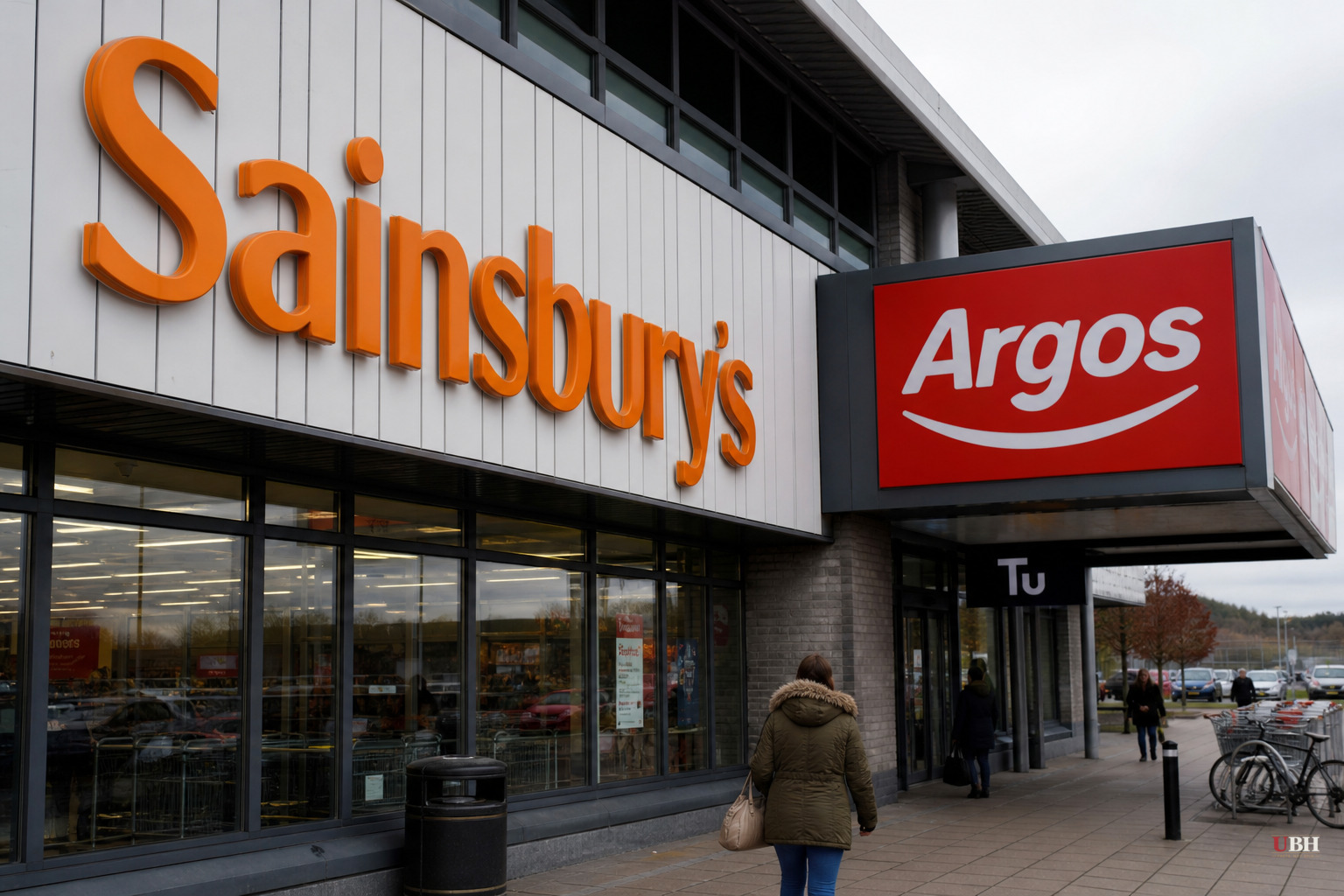
Sainsbury's Sells Argos for £120 Million, a Decade After Paying £1.3 Billion for It
Sainsbury's announced Friday, July 31, 2026, that it has agreed to sell Argos to Swift Partners, a newly formed acquisition vehicle, for cash proceeds of at least £120 million, according to a company statement filed on Investegate.
Sainsbury's bought Home Retail Group, which included Argos, Homebase, and Habitat, for £1.3 billion in 2016. A decade later it's selling Argos alone for less than a tenth of that price.
Swift Partners was built specifically for this deal by three people: Richard Pennycook, the former Co-operative Group chief executive, Trevor Strain, former Morrisons finance chief, and Matt Truman, co-founder of True Capital, according to Retail Gazette. True Capital is backing the deal financially.
Pennycook told the BBC he believes "strongly in Argos's future" and sees "real opportunities to invest and build on its progress."
What's Actually Changing, and What Isn't
Sainsbury's insists it'll be "business as usual" for shoppers. Argos will keep operating inside Sainsbury's supermarkets, keep selling Habitat products, and keep offering Nectar points, the BBC reported.
The deal covers everything: Argos's 201 standalone stores, its in-supermarket concessions, its online operations, its logistics network, Argos Care, and Argos Pet Insurance, according to Retail Gazette. Swift is also picking up the Argos distribution centre in Daventry and sourcing offices in Shanghai and Hong Kong.
Global Banking & Finance Review put a number on the retail footprint: 201 standalone stores, 466 in-supermarket outlets, and 466 collection points, for 1,133 total points of presence.
Sainsbury's isn't walking away clean, either. The company will keep responsibility for the Argos defined benefit pension scheme and expects to book a non-cash impairment of roughly £350 million because of the sale, according to Retail Gazette. That impairment is a real cost on Sainsbury's books even though no cash changes hands for it.
The transaction is expected to complete in February 2027, with full separation of the two businesses targeted for February 2029, per the Investegate filing.
The Money Breakdown
Sainsbury's expects at least £70 million when the deal closes, including proceeds tied to the Daventry distribution centre sale, with a further £50 million in deferred payments spread over three years, according to Retail Gazette. Those numbers will be offset by separation costs, so the net benefit to Sainsbury's is smaller than the headline £120 million suggests.
Sainsbury's says the deal will have a broadly neutral impact on underlying operating profit and deliver "low single-digit" underlying earnings-per-share accretion, according to the company's own filing. The company is sticking with its forecast of £975 million to £1,075 million in total underlying operating profit and more than £500 million in retail free cash flow for the current fiscal year.
Long-term commercial agreements will keep money flowing between the two companies, including rental income from Argos stores inside Sainsbury's supermarkets and income tied to Nectar and Nectar360, the loyalty program both brands will keep using.
Jobs and the Union Angle
Bally Auluk, national officer at Usdaw, the union representing Argos workers, said the sale "will inevitably create uncertainty" for employees but pledged the union would "focus on protecting our members' jobs, pay and employment conditions," according to Retail Gazette.
Usdaw said it welcomed Swift's stated commitment to keeping the mix of standalone shops, in-supermarket concessions, and local fulfillment centres intact, and noted Swift's leadership has a track record of engaging constructively with the union. Ownership changes at this scale routinely lead to store closures and headcount cuts once new owners start hunting for efficiencies, whatever the initial assurances say. No specific job cuts have been announced as of this filing.
The Analyst Take
Retail analyst Clive Black told the BBC he'd always questioned whether Argos was "wholly aligned" with Sainsbury's grocery business, and called the supermarket's yearslong effort to offload the chain "challenging and prolonged."
Sainsbury's spent a decade trying to make a general merchandise retailer work inside a grocery chain, and it didn't. CEO Simon Roberts framed it more generously, saying Sainsbury's had "transformed Argos into a leading multichannel retailer" and that Swift brings the "retail leadership, operational expertise, technology capability and long-term investment" needed for its next phase.
Sainsbury's did modernize Argos's digital and delivery operations since 2016. It also lost money on the overall bet and is now paying an impairment charge to get out of it.
The open question is what Swift Partners actually does with Argos once the February 2027 close happens. True Capital is a financial backer, not an operator, which means Pennycook, Strain, and Truman will be running a standalone general merchandise retailer for the first time since Sainsbury's bought it. Whether Argos thrives independently or gets trimmed down for resale is the thing to watch over the next three years, right through the full separation deadline of February 2029.
Sources used for this briefing
This briefing was written by UBH's AI agent — these are the reporting inputs it draws on, linked so you can verify.


