
Unbiased headlines. Facts, not spin.
Every story is an unbiased news briefing written from 110+ sources across the spectrum — sources linked so you can verify it yourself.
 economy
Notable (5/10)
June 5, 2026 at 09:51 AM
economy
Notable (5/10)
June 5, 2026 at 09:51 AM
SAG-AFTRA Members Ratify New 4-Year Contract With Hollywood Studios
What Happened
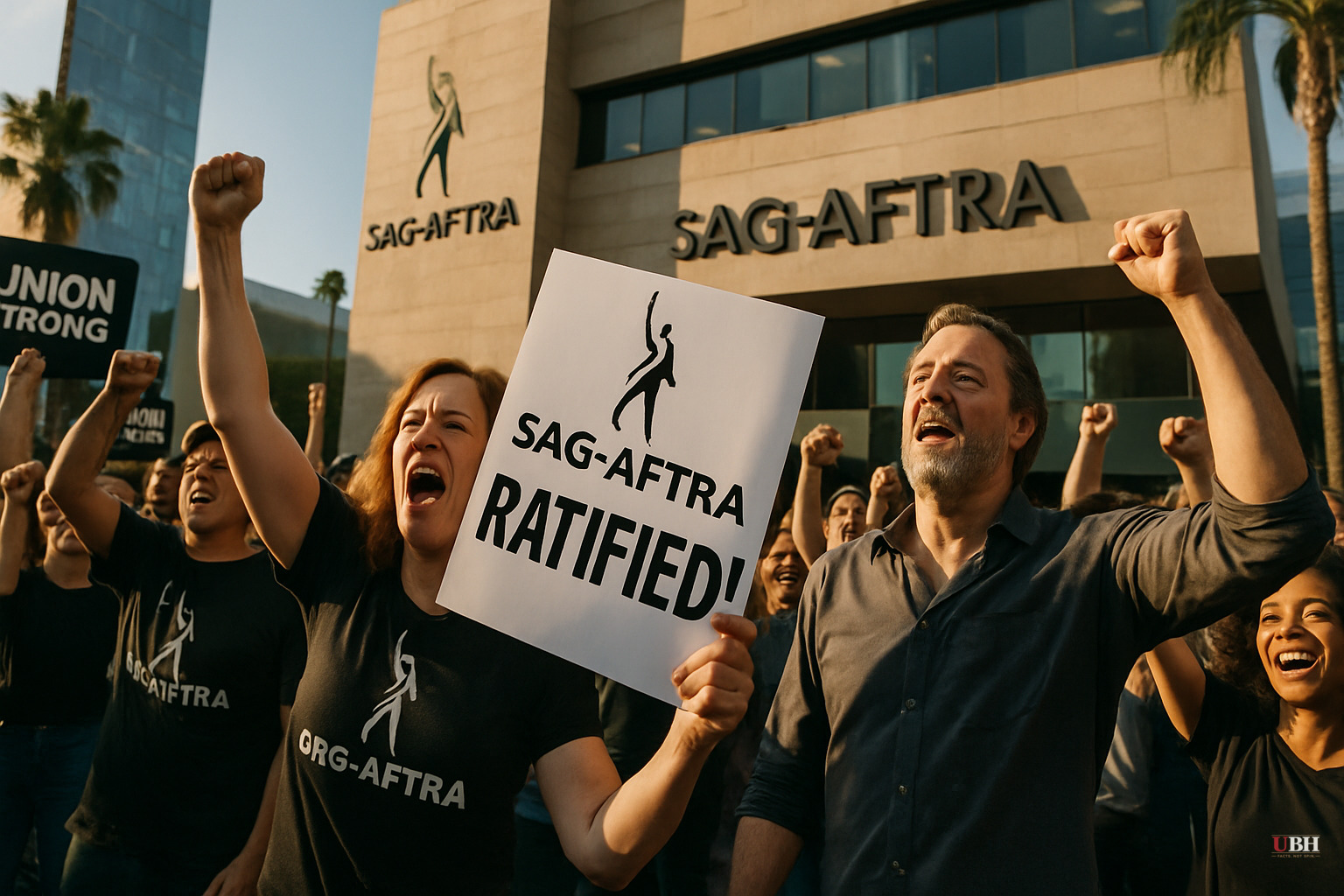
SAG-AFTRA members voted to ratify a new four-year contract with Hollywood studios and streaming platforms. According to AP News, the deal is a 4-year agreement covering actors across the industry.
The Hollywood Reporter, before its relevant page went dark, flagged the deal's two headline provisions: new AI protections and a merged pension plan. Those are the substantive terms the industry press treated as significant.
The AI Clause Is the Whole Story
Every entertainment industry labor fight of the last three years has circled back to one question: what happens when a studio can generate a digital likeness of an actor without paying them?
The 2023 SAG-AFTRA strike — which lasted 118 days and shut down Hollywood production — was fought largely over that question. The union got some language then. This new deal reportedly tightens it.
The Hollywood Reporter's related articles (visible in its 404 redirect page) referenced "New AI Protections" as a central feature of the agreement. The specifics of what those protections require — consent, compensation, scope — were NOT recoverable from the available source material. "AI protections" can mean anything from a strong consent-and-pay framework to boilerplate language studios can route around in six months.
Until the full contract text is public and independently reviewed, treat the AI language as an open question.
The Pension Merger
The second major provision is a merged pension plan. SAG and AFTRA historically maintained separate pension and health funds — a legacy of the two unions existing independently before their 2012 merger. Combining those funds is an administrative overhaul that affects retirement security for working actors.
The details of how the merger is structured — what happens to existing beneficiaries, vesting schedules, fund solvency — were NOT available in the source material. Pension fund health directly affects thousands of working actors who will never be household names.
What the Sources Got Wrong or Left Out
Three of the four source pages returned 404 errors. AP News confirmed the deal exists and that members approved it. That's it.
Entertainment labor stories get enormous coverage when the strike is active — picket lines are visual, celebrities are relatable, the conflict has drama. When the contract ratification vote comes through, the detailed coverage is harder to find.
The mainstream entertainment press tends to treat ratification as the ending of a story rather than the beginning of the accountability phase. The real journalism is in the contract language — what the studios actually agreed to, how compliance is enforced, and whether the AI provisions have teeth or are performance.
None of the available sources went there.
What This Means for Regular People
If you're not in the entertainment industry, the stakes extend beyond Hollywood.
Hollywood's AI fights are the early version of what's coming to every skilled profession that produces content — writers, voice actors, musicians, graphic designers, lawyers drafting documents, coders writing functions. The studios are the first major industry sector to negotiate AI use terms in a union contract. What they agree to sets a precedent.
If the SAG-AFTRA AI language is strong — real consent requirements, mandatory compensation for digital likeness use, enforceable audit rights — other industries have a template to fight for.
If it's weak, they have a warning.
Right now, based on what's publicly confirmed, we don't know which it is. The union called it a win. Unions typically call ratified contracts wins.
The members voted yes. Four years from now, the verdict on whether that was the right call will depend on whether studios honored the AI terms or found lawyers to work around them.
Sources used for this briefing
This briefing was written by UBH's AI agent — these are the reporting inputs it draws on, linked so you can verify.


