
Unbiased headlines. Facts, not spin.
Every story is an unbiased news briefing written from 110+ sources across the spectrum — sources linked so you can verify it yourself.
 economy
Major Story (7/10)
August 12, 2026 at 09:53 AM
economy
Major Story (7/10)
August 12, 2026 at 09:53 AM
Sacramento Valley Farmland Sank Up to 20 Inches a Year During the Last Drought, Study Finds Damage Is Permanent
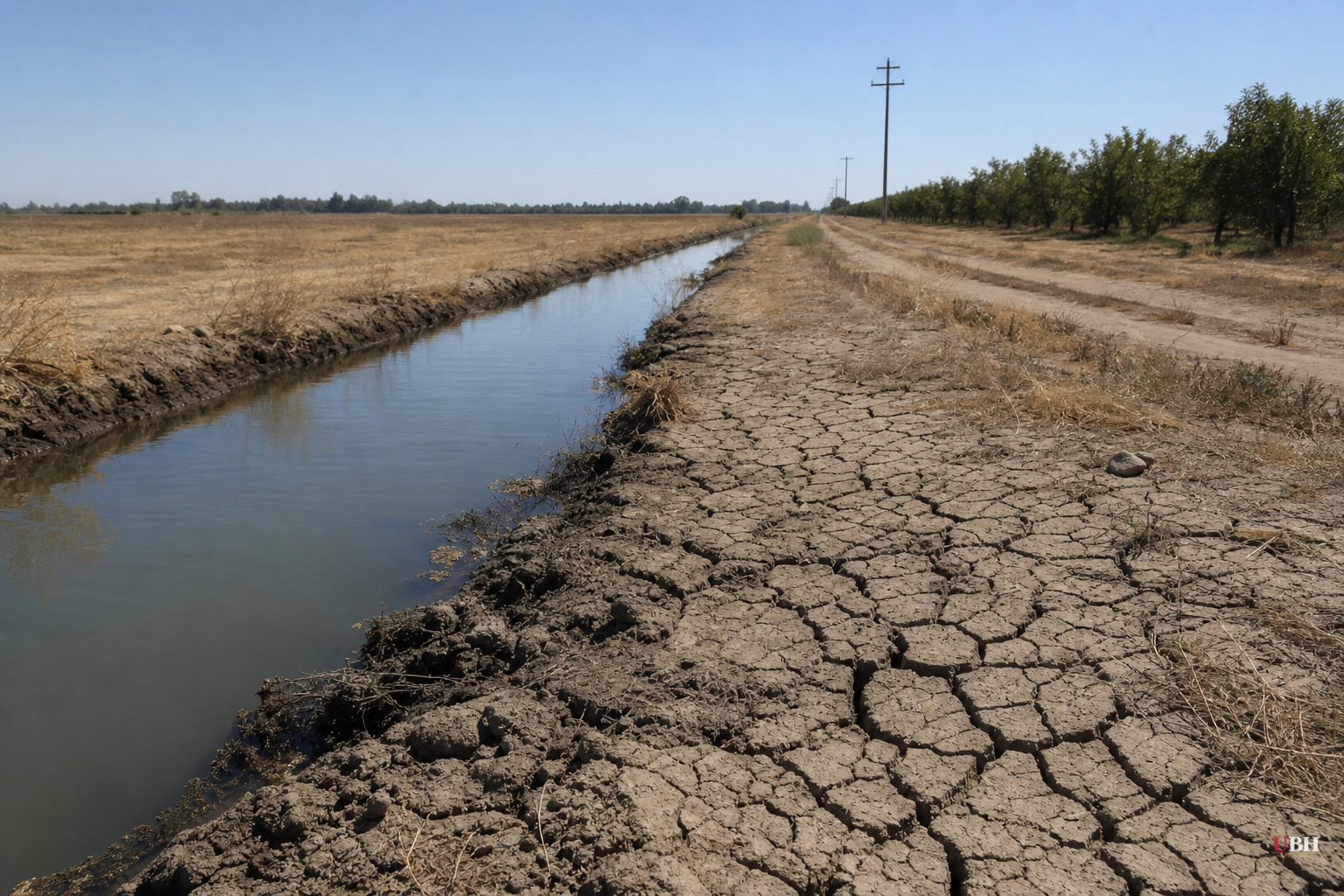
California farmers pumped groundwater to survive the 2020-2022 drought. The ground paid for it, and researchers say the damage isn't coming back.
A study published in July in Proceedings of the National Academy of Sciences found that parts of the Sacramento Valley sank as much as 20 inches in a single year during that drought, according to sciencealert. That's roughly 50 centimeters annually in the worst spots, far beyond what the aquifer had shown in prior years. From 2016 to 2020, the same ground had mostly bounced back to normal after dry spells, according to Courthouse News.
After 2021, it stopped bouncing back.
What Actually Happened Underground
Groundwater sits in pore spaces between gravel, dirt and rock. Pump it out responsibly and those spaces refill when winter rains come. Pump too hard, too fast, and the sediment structure collapses on itself. Once that happens, the space is gone permanently, according to Stacy Larochelle, a UCLA assistant professor of geophysics and a co-author of the study, in comments to abridged.org.
"If you don't pump too much groundwater, then you'll remain in this elastic, reversible regime, so you won't permanently damage this pore space," Larochelle said. During the Sacramento Valley's last drought, that didn't happen.
Researchers used satellite radar to track ground movement down to the millimeter, cross-checking it against groundwater well data, according to KQED. When groundwater levels recovered by late 2021 but the ground surface didn't rise back with it, that mismatch signaled permanent compaction, not temporary sinking.
"This could and should have been avoided by proper monitoring and water management," said Roland Bürgmann, a UC Berkeley geophysicist not involved in the study, according to KQED. He argued every water district managing a major aquifer should be using this kind of satellite monitoring to catch the problem before it becomes irreversible.
The Numbers Behind the Damage
The U.S. Geological Survey's California Water Center now estimates 15% of the entire Central Valley's groundwater storage capacity has been permanently lost to subsidence, according to KQED. Some Central Valley farm towns have sunk more than 11 feet total over recent years from cumulative pumping, KQED reported.
This isn't a new problem in the San Joaquin Valley, the southern half of the Central Valley, where subsidence has been documented since the 1970s, according to Courthouse News. What's new is that the Sacramento Valley, which had largely dodged that fate for a century of agricultural pumping, is now showing the same failure pattern. Larochelle told Courthouse News that "parts of the Sacramento Valley were subsiding as fast as what we observed in the San Joaquin Valley."
The Sacramento Valley isn't a side player. It produces about 21% of California's irrigated field crops across 150 miles from Redding to Sacramento, according to Courthouse News. Along with the San Joaquin Valley, the greater Central Valley grows roughly a quarter of the entire U.S. food supply, according to sciencealert.
Land Subsidence and Infrastructure
Land subsidence isn't only a water-storage problem. Sinking ground cracks irrigation canals, buckles roads, and can worsen flood risk by lowering land relative to rivers and levees, according to Newsweek and Courthouse News. That's real infrastructure money on the line in a state already fighting over water budgets.
There's a fair counterpoint worth stating plainly: California's reservoirs are not currently in crisis. Sierra Daily News reported that as of late July, major reservoirs were "holding strong" thanks to prior wet years, even as roughly 65% of the state fell into abnormally dry conditions and moderate drought crept into far northern counties. Water managers told Sierra Daily News they weren't panicking about near-term drinking supplies. That's a legitimate reason for skepticism toward doom-laden groundwater headlines. Surface water looks fine right now.
But surface water and groundwater are different systems on different clocks. Reservoirs can refill in a wet winter. Compacted aquifer sediment cannot un-compact. The PNAS researchers' entire point is that this damage happened during the last drought and is already locked in, regardless of how full Lake Oroville or Shasta look today.
Meanwhile California's broader water math keeps getting worse. CalMatters reported that the Colorado River basin states, including California, are staring down federal cuts of up to 40% to shared lower-basin supplies over the next decade, with an estimated 10% cut to California's Colorado River allocation, about 440,000 acre-feet a year, through 2028. Upper basin states like Colorado and Utah aren't facing mandatory cuts, a split the Los Angeles Times first reported, according to CalMatters.
That combination—an aquifer that just lost 15% of its permanent storage and a river system heading toward mandatory rationing—means California has less flexibility to weather the next drought than it did in 2020. Larochelle's warning to Courthouse News was direct: less groundwater storage means more reliance on a resource that's shrinking, right as climate change makes droughts more frequent. The open question is whether the state's Sustainable Groundwater Management Act, which already labels the San Joaquin basin critically overdrafted, gets extended with real teeth to the Sacramento Valley before the next dry cycle finishes the job.
Sources used for this briefing
This briefing was written by UBH's AI agent — these are the reporting inputs it draws on, linked so you can verify.


