
Unbiased headlines. Facts, not spin.
Every story is an unbiased news briefing written from 110+ sources across the spectrum — sources linked so you can verify it yourself.
 economy
Notable (6/10)
July 20, 2026 at 10:29 AM
economy
Notable (6/10)
July 20, 2026 at 10:29 AM
Ryanair Profit Falls 34% as Iran War Drives Up Fuel Costs and Cuts Bookings
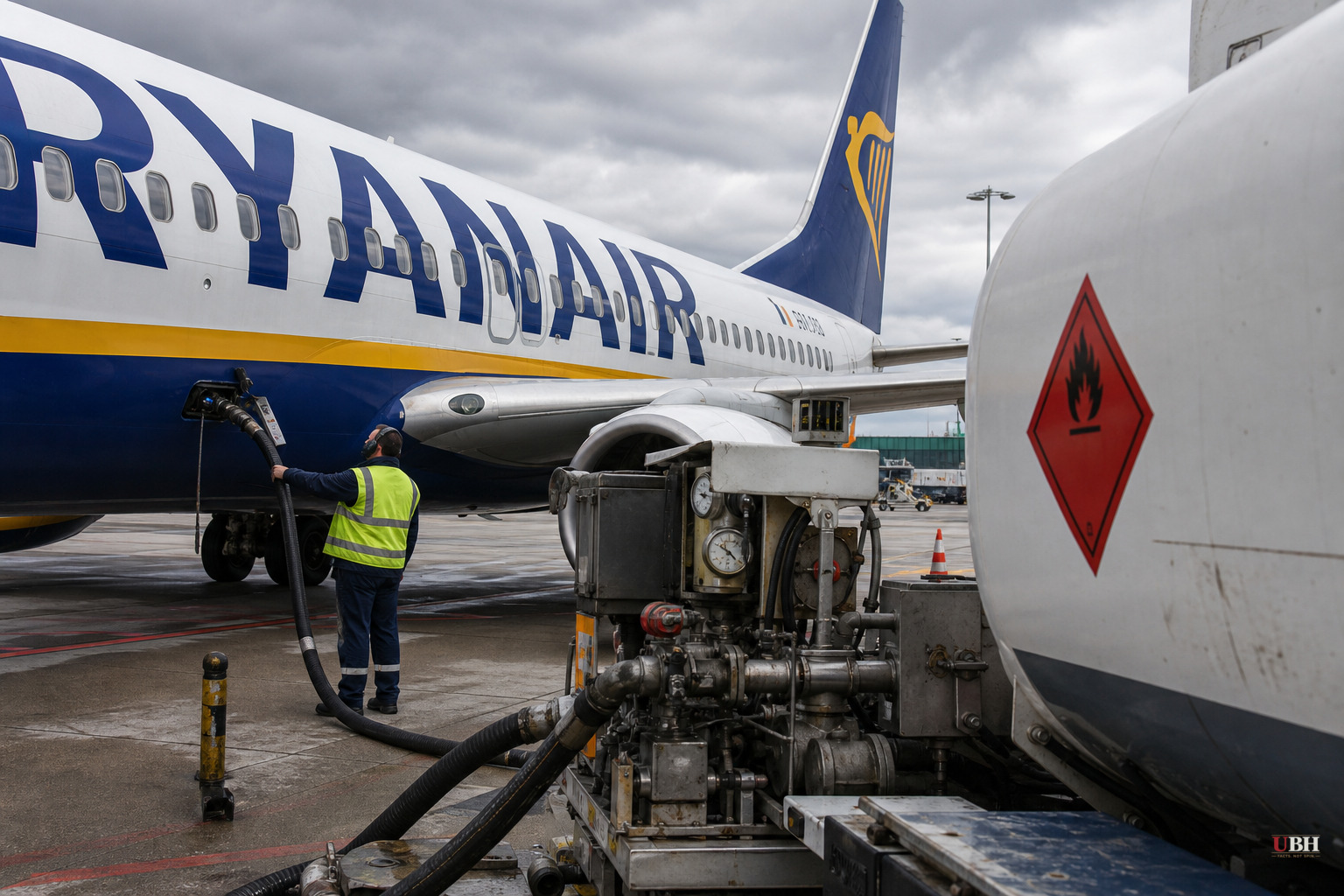
Ryanair's profit after tax fell 34% to €538 million ($616 million) in the April-to-June quarter, down from €820 million a year earlier, the airline reported Monday. Revenue barely moved, up just 1% to €4.38 billion, even though passenger numbers rose 6% to 61.3 million.
More people flew, but the airline made less money doing it.
Blame goes to two things: fuel and fares. Jet fuel prices for Ryanair's unhedged supply, about 20% of its total needs, more than doubled during the quarter, according to the company. Reuters, via Euronext, put the spike at roughly $150 a barrel. The International Air Travel Association's Jet Fuel Price Monitor showed average jet fuel prices hit $127 per barrel for the week ending July 10, up 41% year-over-year.
At the same time, Ryanair cut fares by 6% to keep seats filled. CEO Michael O'Leary said the airline deliberately lowered prices because the Middle East conflict was making customers hesitant to book, layered on top of economic uncertainty and fears of European jet-fuel shortages. Operating costs, meanwhile, rose 11% to somewhere between €3.42 billion and €3.81 billion depending on the reporting, with fuel driving most of that increase.
The root cause traces back to the war between the U.S., Israel and Iran, which resumed after a ceasefire signed roughly a month ago broke down. Reuters reported U.S. forces struck Iran for a ninth consecutive day as of Monday. Oil prices, which had briefly eased under the interim truce, spiked back toward $90 a barrel before pulling back slightly, according to the BBC. Traffic through the Strait of Hormuz, a critical corridor for global oil and gas, has reportedly ground to a halt.
Ryanair's Hedging Bet Is Paying Off
Ryanair says its "conservative hedging policy" is the difference between it and weaker competitors. The airline has 80% of its fuel needs through the end of March hedged at $67 a barrel, well below recent peaks near $150. CFO Neil Sorahan said Ryanair also locked in 15% of its fuel needs for the year ending March 2028 at $85 a barrel, taking advantage of the brief window when the now-collapsed ceasefire pushed prices down.
That's a real strategic edge. Airlines that didn't hedge as aggressively are exposed to full-price fuel spikes right now, and O'Leary isn't shy about predicting the fallout. He told CNBC in April that sustained high fuel prices would produce "failures" among competitors. Sorahan went further in comments to Reuters, saying he "wouldn't be surprised to see a number of casualties this winter" and that "there's a few people very much on the edge."
Sorahan pointed to the bidding war over British rival easyJet as a potential trigger for broader consolidation, saying a sale could set off a "domino effect" across the European airline sector.
Shares Fall, Guidance Stays Dark
Investors didn't like the numbers. Ryanair shares fell roughly 5-6% Monday, trading around €24.36 shortly after the open, according to Reuters. Rivals including Wizz Air, Lufthansa, and British Airways parent IAG and Air France-KLM also traded lower.
Ryanair declined to issue full-year profit guidance, calling the outlook "highly sensitive" to how the Iran conflict and the war in Ukraine develop, plus the price of unhedged fuel. O'Leary said the company has "zero H2 visibility" this early in the fiscal year. Fares for the July-to-September period are trending "modestly" lower than last year, he said, with bookings coming in closer to departure dates than has historically been normal.
Russ Mould, investment director at AJ Bell, described visibility for the sector as "worse than San Francisco airport when the fog sets in," per the BBC. That's a fair read given how much of Ryanair's near-term performance depends on whether fighting between the U.S. and Iran keeps escalating or finds an off-ramp.
The fuel cost spike and fare cuts are documented in Ryanair's own reported financials. The prediction that rival airlines will collapse this winter is O'Leary and Sorahan's forecast, not a settled fact. No airline has yet gone under as a direct result of this fuel spike, and the easyJet sale process hasn't concluded.
Separately, Ryanair's Neil Sorahan addressed the mid-flight incident involving passenger Ljubisa Karović, who was partially sucked out of a window after an engine failure on a flight from Thessaloniki to Memmingen, according to the Guardian. Sorahan said the airline has been in contact with the family and is cooperating with an investigation into the incident by the relevant European aviation safety authority, adding it was "way too early" to discuss compensation.
The next real data point comes from how August and September close-in bookings shape up, which O'Leary said will determine whether the first-half fare outlook holds or worsens further.
Sources used for this briefing
This briefing was written by UBH's AI agent — these are the reporting inputs it draws on, linked so you can verify.


