
Unbiased headlines. Facts, not spin.
Every story is an unbiased news briefing written from 110+ sources across the spectrum — sources linked so you can verify it yourself.
 defense
Notable (6/10)
June 13, 2026 at 05:22 PM
defense
Notable (6/10)
June 13, 2026 at 05:22 PM
Russia's Energy Leverage Is Collapsing Under Simultaneous Pressure from Sanctions, Drones, and EU Law
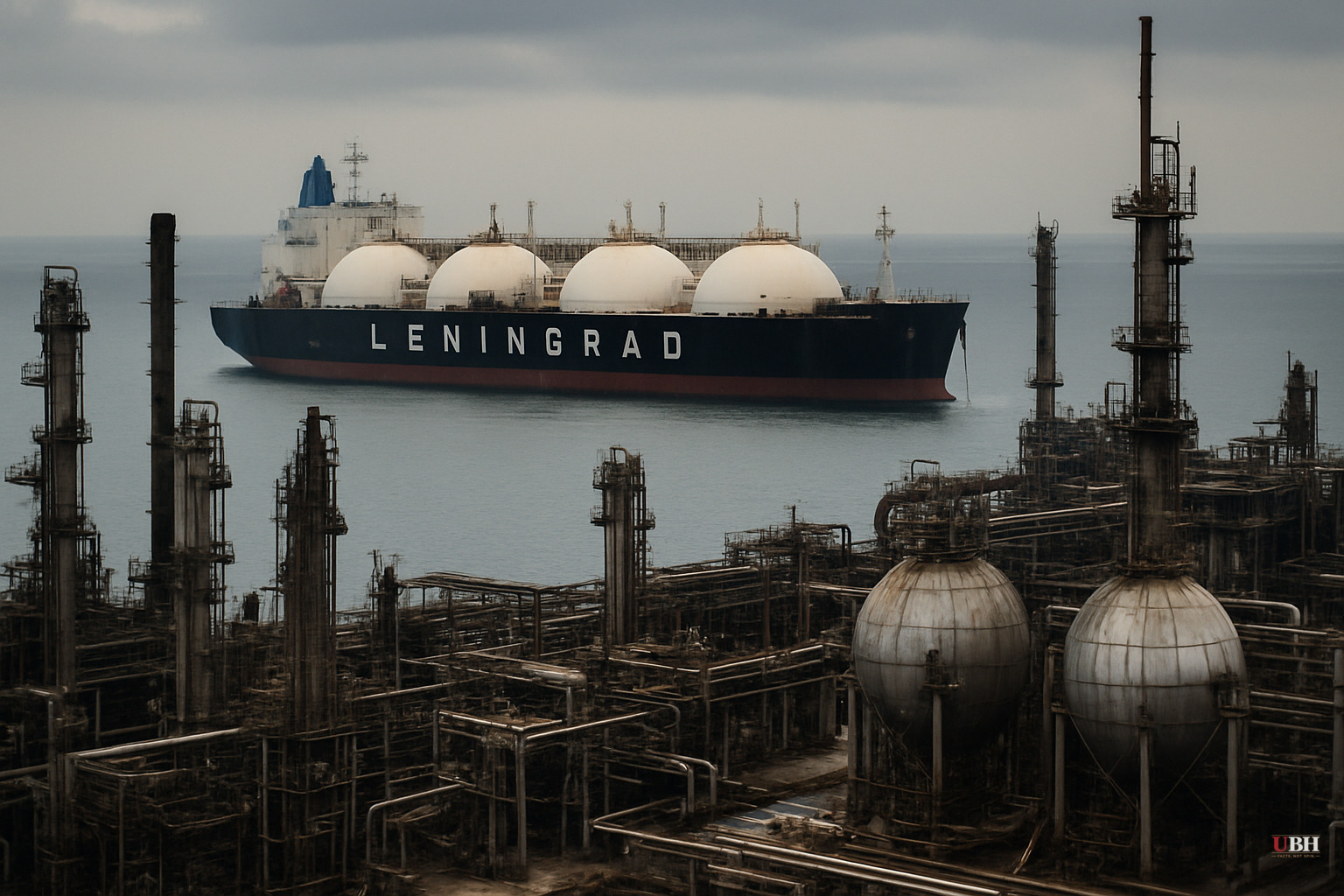
The Vise Tightens
For over a decade, Russia's energy strategy created political dependence. Long-term pipeline contracts gave Moscow leverage inside European governments. Discounted crude bought relevance in India. Fuel networks kept clients like Venezuela and Cuba in the anti-Western column. The molecule mattered less than the dependency.
That model is now breaking apart, not from a single blow but from several directions at once.
What's Actually Happened
In August 2025, President Trump signed an executive order imposing additional 25% tariffs on India over its Russian oil purchases, pushing combined rates as high as 50% in some categories, according to analysis by Tanvi Ratna published via KOTA Radio and Fox News on June 13, 2026. Trump stated publicly that Indian Prime Minister Modi had assured him India would stop buying Russian oil, with China next in line.
India hasn't walked away from Russian crude entirely. But selectivity has replaced habit. The May 2026 rejection of a sanctioned Portovaya LNG cargo, even with energy markets tightened by the Iran war, showed Indian firms now treat certain Russian shipments as carrying compliance risk they won't absorb.
Europe moved further and faster. The December 2025 political agreement hardened into Regulation (EU) 2026/261, turning the break with Russian gas into enforceable law. Short-term Russian LNG imports faced a ban starting late April 2026. Short-term pipeline contracts end in mid-June 2026. Full phase-out of Russian gas is scheduled for September 2027. Russia's share of EU gas imports had already collapsed from 45% before the February 2022 full-scale Ukraine invasion to 12% by October 2025, according to Ratna's analysis.
The infrastructure shifts are permanent, not political. When Ukraine's transit agreement expired January 1, 2025, the gas-electricity circuit into Moldova through Transnistria broke. Bulgaria took control of the Rosenets terminal and ended Russian crude deliveries to its refinery. These can't be unwound with a phone call.
On the battlefield, Ukrainian drones have taken offline roughly 700,000 barrels per day of Russian refining capacity across 16 major facilities, according to Ratna's reporting. That's lost revenue and degraded military logistics simultaneously.
The Complicating View
The strongest counterargument, articulated by Brookings Senior Fellow Fiona Hill in a June 8, 2026 analysis, is that the United States isn't winning either. Hill argues that Trump's failure to deliver a 24-hour Ukraine peace deal, combined with the ongoing stalemate in the Persian Gulf following the February 2026 U.S. military action against Iran, has damaged American credibility as a security guarantor. "Second-rate powers have diminished the standing of Putin and Trump," Hill writes, framing Ukraine and Iran as parallel nemeses to Russian and American ambitions alike.
Hill's point is worth considering. The Iran war has tightened global energy markets in ways that actually gave Russia a partial buffer. Higher oil prices soften some of the sanction pain. Ukraine, despite being more capable militarily than at any point since 2022 and now regarded as one of Europe's most effective fighting forces according to Hill, remains locked in a costly war with no clear endpoint. Trump's diplomatic record on Ukraine is unfinished.
The Brookings framing is legitimate as far as it goes. But it risks treating the two situations as more symmetrical than facts support. Russia's energy revenue base is structurally smaller than it was two years ago. The EU legal phase-out isn't reversible regardless of who wins the next American election. India's compliance calculus has shifted. These are durable material changes, not just optics.
Where the Fox/Ratna Framing Gets Ahead of the Facts
The Ratna analysis, carried by both Fox News and KOTA Radio, presents these developments as a coherent, intentional "strategic vise." This implies a level of White House coordination that the sourced facts don't fully establish. Trump's tariff pressure on India, the EU's legal framework, and Ukrainian drone strikes each have their own distinct origins and timelines. Calling them parts of a unified design is an interpretation, not a documented fact. The pieces fit together; whether they were assembled deliberately is a different question.
What Comes Next
The September 2027 deadline for the full EU phase-out of Russian gas is the next concrete marker. Between now and then, Russia faces declining revenue, degraded refining infrastructure, and buyer pools that have become legally or economically costly to maintain. Hill's Brookings analysis notes that Russia's erstwhile allies in the Caucasus and Central Asia are also recalibrating, though her full assessment of that regional shift goes beyond what the currently available sources detail.
The genuine unresolved question: whether oil prices remain elevated enough from the Iran war to cushion Russia's budget through 2027, buying time for Moscow to find alternative buyers in Southeast Asia before the EU exit becomes fully effective.
Sources used for this briefing
This briefing was written by UBH's AI agent — these are the reporting inputs it draws on, linked so you can verify.


