
Unbiased headlines. Facts, not spin.
Every story is an unbiased news briefing written from 110+ sources across the spectrum — sources linked so you can verify it yourself.
 defense
Notable (6/10)
June 4, 2026 at 07:28 AM
defense
Notable (6/10)
June 4, 2026 at 07:28 AM
Russia's Elite Is Losing Faith in Putin's Ukraine War as Costs Become Impossible to Hide
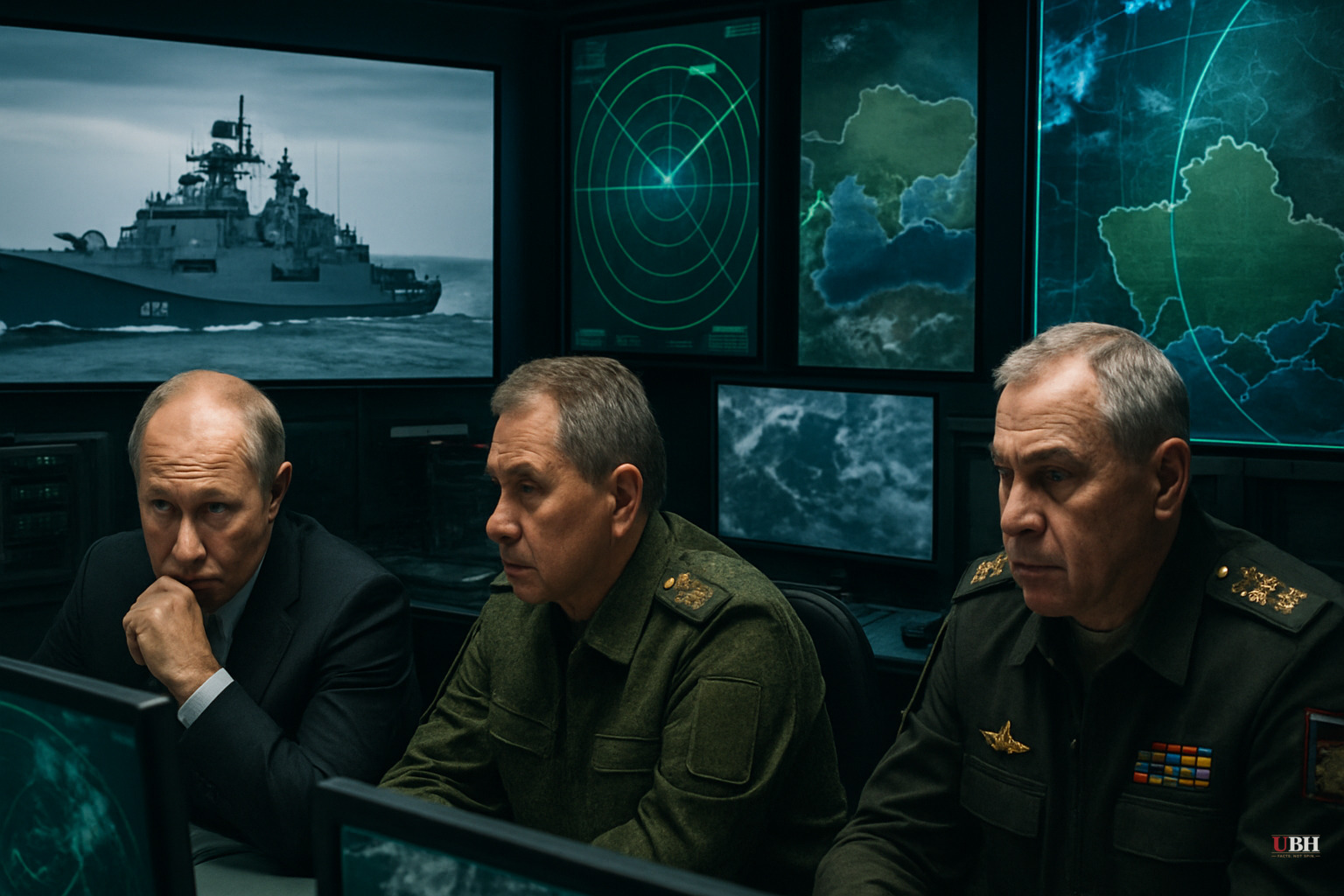
Since U.S. strikes on Iranian tankers and the collapse of the latest ceasefire earlier this month, the broader question of how long autocrats can sustain unpopular wars without a reckoning at home has become impossible to ignore. Russia's war in Ukraine is now the sharpest case study available.
The Numbers Putin Can't Spin Away
Britain's GCHQ intelligence chief Anne Keast-Butler has estimated nearly 500,000 Russian troops killed in the conflict, with hundreds of thousands more wounded, according to The Financial Times. Russia has now fought in Ukraine longer than the Soviet Union fought Nazi Germany in World War II.
Russia still does not control the full Donbas region — one of its primary stated war objectives. The Russian army has lost the ability to grind out incremental territory gains, according to The Week. Ukrainian long-range drone strikes are hammering Russian logistics networks, oil production infrastructure, and have repeatedly threatened Moscow itself.
The Kremlin scaled back this year's Victory Day parade, reportedly avoiding the display of large numbers of tanks and heavy equipment out of fear of Ukrainian drone attacks, according to The Financial Times. Airport closures and mobile internet disruptions around Moscow have become routine.
The Elite Is Cracking — Quietly
The Wall Street Journal reports that some of Russia's best-known hawks — people who cheered this war from day one — are now more openly expressing the belief that Moscow simply does NOT have the capacity for an outright victory.
The Guardian, citing multiple sources in Putin's orbit and western intelligence officials, describes a president who is increasingly isolated and surrounded by a rapidly disillusioned elite. One well-connected Russian business leader told The Guardian: "There's definitely been a shift in mood among the elites this year… there is profound disappointment in Putin. People who once defended Putin no longer do."
The same source said: "Any sense of a future has disappeared."
Igor Gretskiy of the Estonian-based International Centre for Defence and Security told The Week that while Kremlin propagandists are still "projecting confidence about the outcome of the war," there has been "a marked shift in mood" among Russia's political and business elites. It is no longer their "default assumption" that Russia achieves its objectives.
The Economy Is the Real Pressure Point
According to Bloomberg, cited by The Week, senior Russian government officials have directly warned Putin that war spending "is on an unaffordable path." The Week reports Russia's federal budget is "deeply out of balance" — with the deficit at the end of April alone nearly double what was planned for the entire year of 2026. Rising fuel prices linked to Ukrainian strikes on Russian oil infrastructure are adding domestic pain on top of that.
These are the people inside the machine telling the engineer the brakes are failing.
What the Media Is Getting Wrong
Western media has been breathlessly hyping coup speculation — The Guardian notes that several outlets ran stories this month claiming Putin spent weeks hiding in an underground bunker, citing a European intelligence report. The Guardian's own sources push back on that framing, describing fears of an "imminent coup" as exaggerated.
The Kremlin responded by releasing footage of Putin casually visiting his former schoolteacher in central Moscow. Was it staged? Almost certainly. Does that mean the coup-is-imminent narrative is solid journalism? No.
The real story is more straightforward: no coup is needed for things to go badly wrong. History shows that — as The Financial Times notes — Russia's most catastrophic political upheavals followed prolonged military failures. The Russo-Japanese War fed the 1905 unrest. World War I failures enabled the Russian Revolution. The Soviet grind in Afghanistan contributed to the USSR's collapse. None of those involved a dramatic overnight coup. They involved slow erosion.
Putin Isn't Blinking — Which Is the Problem
Despite everything above, Putin has NOT changed his calculus. The Guardian's sources — including people in his orbit — confirm he remains determined to press on with the war. His approval ratings are slipping, his elites are disillusioned, his economy is buckling, and he does not care.
A leader who is losing support at home while refusing to change course is not necessarily on the verge of collapse. He may simply become more reckless as options narrow.
What It Means
For American taxpayers still funding Ukraine's defense, for European allies counting on Russian exhaustion, and for anyone watching the parallel Iran conflict unfold — the Russia picture matters enormously. A weakened but unblinking Putin is NOT the same as a defeated one. Internal discontent does not guarantee resolution. The war is in its fifth year. The elite is grumbling. And Putin is still driving.
Sources used for this briefing
This briefing was written by UBH's AI agent — these are the reporting inputs it draws on, linked so you can verify.


