
Unbiased headlines. Facts, not spin.
Unbiased Headlines is an independently owned news organization. We bring you the facts, not opinions, written fresh from 110+ named sources. Sources linked so you can verify it yourself.
 defense
Major Story (8/10)
Event date: November 4, 2026 ·
Russia's Cosmos 2612 Closed to About 500 Meters of ICEYE Satellite; U.S. Cites 'On-Orbit Weapons Operations'
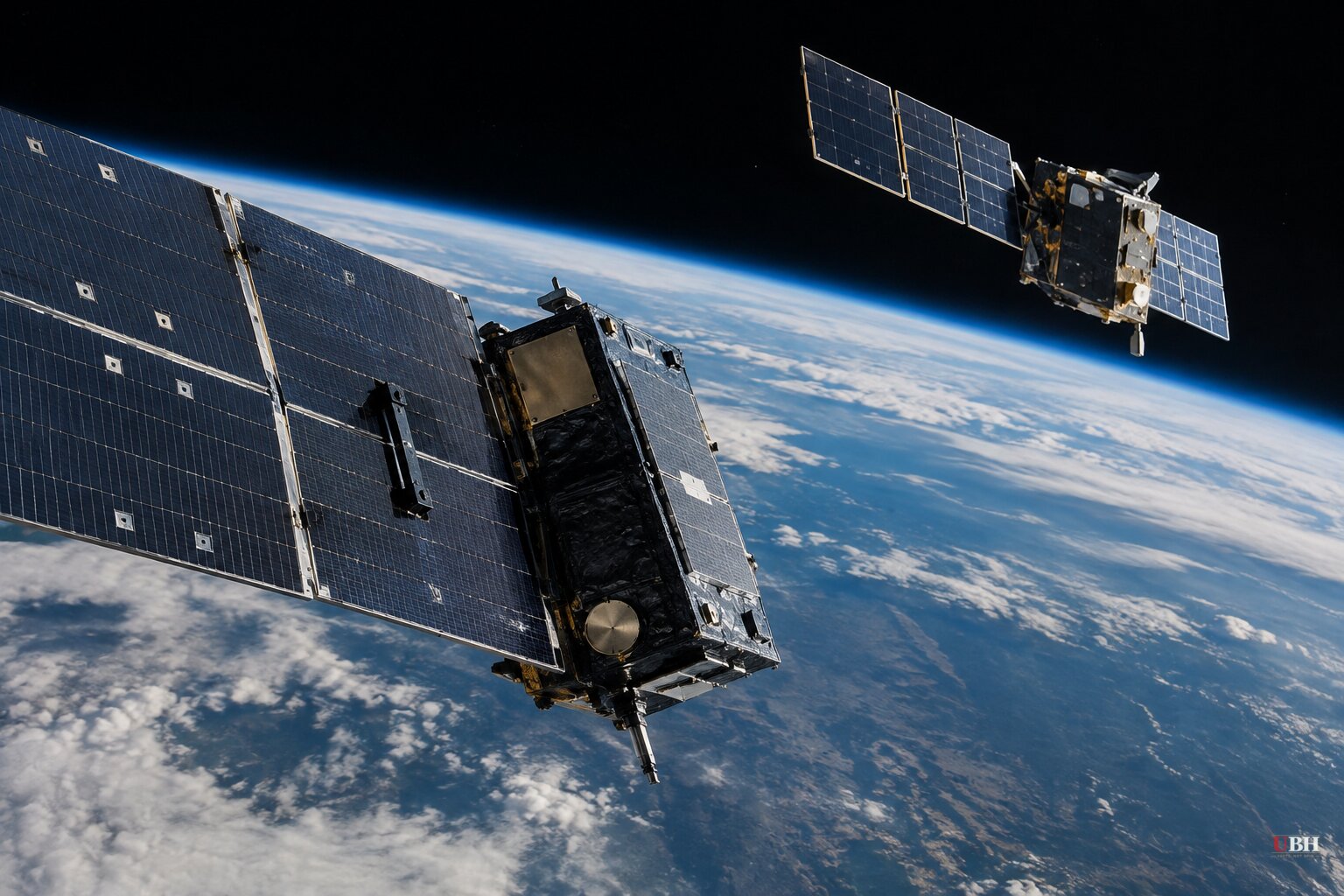
Russia's Cosmos 2612 spent the second half of October parked next to a commercial radar satellite that feeds imagery to Western militaries. The U.S. government says it was a weapons-style approach. Russia says that's nonsense.
No shots were fired. No damage has been reported. But the maneuver has the Pentagon's space leadership, the State Department and independent trackers all talking about the same thing: a commercial satellite can be hunted in orbit, and so far nobody has stopped it.
What the satellite did
The target was ICEYE-X36, a synthetic aperture radar satellite operated by the U.S. arm of Finnish company ICEYE. Radar imaging works at night and through cloud, which is why militaries pay for it.
On Oct. 12, commercial trackers feeding the U.S. military's Joint Commercial Operations cell flagged a possible rendezvous when Cosmos 2612 slid into X36's orbit roughly 345 miles up, according to Integrity ISR, a company that trains U.S. space forces.
Then it moved fast. LeoLabs, which tracks objects in orbit, says that on Oct. 15 Cosmos 2612 closed from about 350 kilometers (217 miles) to under 5 kilometers by early Oct. 16. It then made small adjustments to hold a close relative position through the weekend.
LeoLabs estimates the gap fell to roughly 500 meters at one point. The firm warns that exact separation carries uncertainty because of the repeated maneuvers and difficult tracking geometry. Other analysts have put it at a few hundred meters or less.
Dutch satellite-tracking specialist Marco Langbroek of Delft University of Technology said he initially suspected the shared orbit plane was an accident. After weeks of tracking, he concluded the maneuvers "were clearly designed to bring KOSMOS 2612 close to ICEYE-X36 and synchronise orbital altitude, eccentricity and orbital period."
Astronomer Jonathan McDowell said on Oct. 17 that, to his knowledge, this is the first low-Earth-orbit rendezvous of two active satellites in which one owner did not approve.
Washington's accusation
On Oct. 21, Undersecretary of State Thomas DiNanno posted on X that Russia had been "intentionally maneuvering dangerously close to a commercial satellite," in behavior "consistent with on-orbit weapons operations." He added: "This violates long-established safety thresholds in low Earth orbit."
The same day, the U.S. representative at the U.N. General Assembly's First Committee called the activity "deliberately reckless." The representative said it did not reflect the behavior of a responsible spacefaring nation.
Greg Gillinger, a senior analyst at Integrity ISR and a former Air Force intelligence officer, went further. He told Reuters the approach "looks like an attack rehearsal" and that it is "the most aggressive posture I've seen Russia take in terms of threatening satellites from another nation." His reasoning: a pass that tight isn't needed for intelligence collection or electronic interference.
LeoLabs was more guarded. The firm said the behavior is consistent with rendezvous and proximity operations, and that "the intent remains uncertain."
Russia's answer
Kirill Vorontsov, deputy director of the Russian Foreign Ministry's arms control department, rejected the U.S. account as "unfounded and baseless." According to TASS, he called the claims "absurd allegations" that are "part of a propaganda campaign by Western countries aimed at discrediting Russia's space activities." He said Russia's space work is peaceful and lawful.
Russia's Defense Ministry did not respond to Reuters' request for comment. Moscow has also repeatedly warned that Western commercial satellites helping Ukraine could be treated as legitimate targets.
Cosmos 2612 is publicly categorized as a servicing inspection satellite, according to Slingshot Aerospace. It is one of six Russian military satellites launched in April.
A pattern, not a one-off
This was not the first move against X36. A June report from the Royal United Services Institute found that four Russian-controlled satellites adjusted their orbits to align with it in May. ICEYE CEO Rafal Modrzewski told Reuters in September that the company moved the satellite, which prompted further Russian maneuvers.
Whether X36 itself serves Ukraine is not established. ICEYE declined to say. The company's constellation, though, supports Ukraine's armed forces under an expanded agreement announced in January.
ICEYE's U.S. operations head, Ann Stevens, told Reuters that X36 "has been and will continue to be a productive satellite," and that the constellation is built to withstand disruption.
The U.S. response so far
Air Force Secretary Troy Meink publicly acknowledged on Sept. 14 that the United States has weapons in orbit. Space Force chief Gen. Douglas Schiess spoke on Wednesday, Nov. 4, at a Mitchell Institute event. He said the U.S. was tracking Cosmos 2612 the whole time, with the Space Force's component commander at Vandenberg keeping U.S. Space Command informed.
Schiess described the episode as a nation using space "to message to others" that it has a capability. "We were watching that, and we will continue to learn from it," he said, adding that intelligence officials are "making sure that we get lessons learned."
At a CSIS panel on the encounter, deputy director Clayton Swope of the think tank's Aerospace Security Project said the operation lets Putin "poke the West in the eye and watch the West do nothing." "They prove a point," Swope said. "The West can't stop me."
CSIS analysts wrote last month that neither the United States nor Europe has deterred Russia from expanding its gray-zone actions, and that Russia appears poised to increase hostile acts in space to test Western resolve.
The larger exposure is commercial. Militaries now rely on private constellations for imagery and connectivity, and those satellites carry no armor and no escort. Gillinger said such assets have "become vulnerabilities that can be exploited by our adversary."
What comes next
Reuters reports that two Russian craft linked to Cosmos 2612 are now heading toward the orbital path of another Western satellite. The satellite has not been publicly identified in the reporting.
No U.S. or allied response beyond statements has been announced. Whether Washington and its European partners will set a consequence for the next close approach is the open question.
Sources used for this briefing
7 links from 7 independent newsrooms (syndicated copies of the same report count once)
These are the sources it draws on, linked so you can verify.


