
Unbiased headlines. Facts, not spin.
Unbiased Headlines is an independently owned news organization. We bring you the facts, not opinions, written fresh from 110+ named sources. Sources linked so you can verify it yourself.
 defense
Major Story (8/10)
Poland Deploys Police and GROM Special Forces Along Kaliningrad Border After Warnings of Provocation
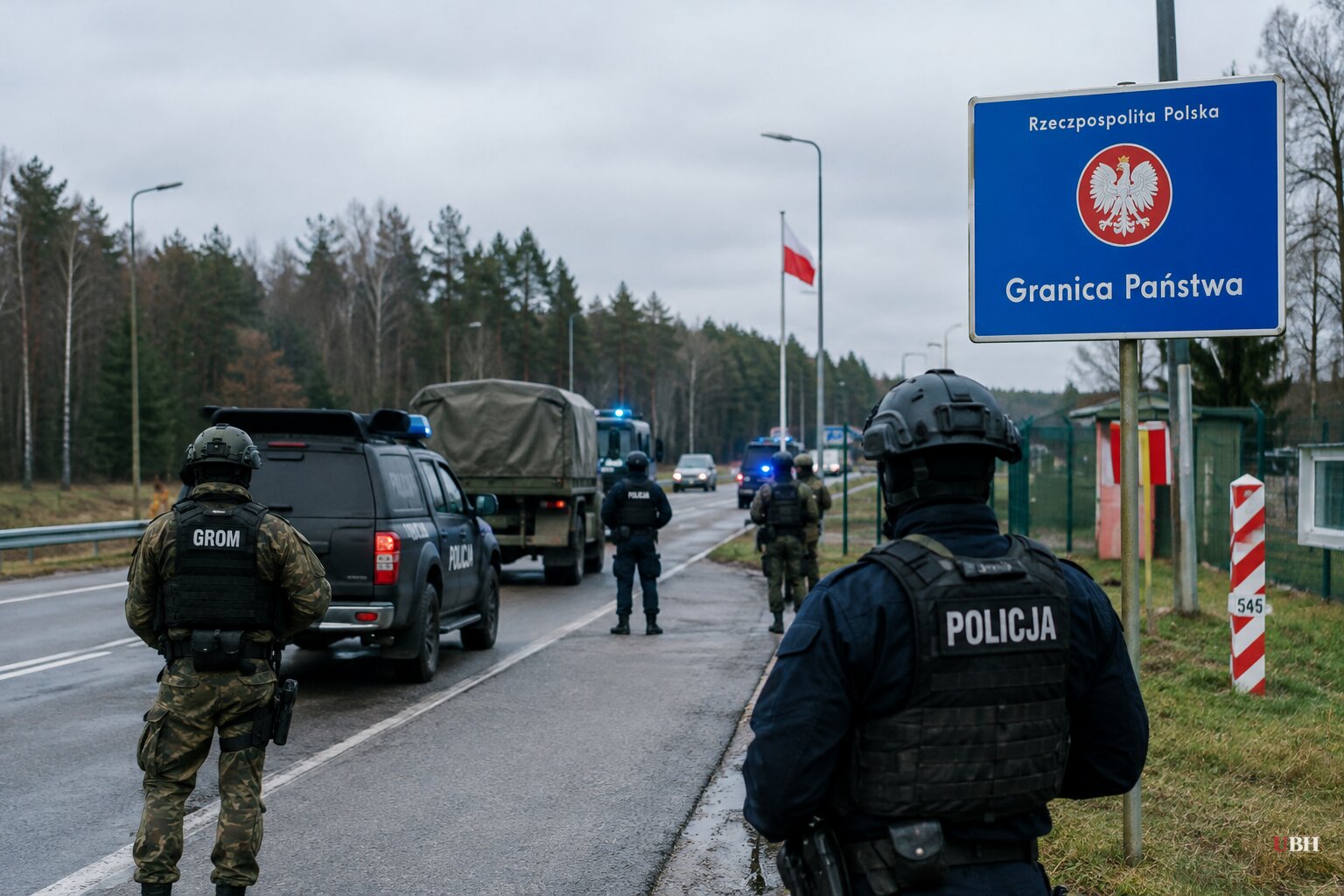
Poland is running a large-scale security operation along its border with Russia's Kaliningrad exclave, and the window Warsaw's intelligence services flagged is still open.
National police chief Marek Boro said the operation began Monday, Nov. 2, and will run until at least Nov. 8. Extra police, counterterrorism units and troops from the elite GROM special forces unit have been sent to the northeastern regions of Warmia-Masuria and Podlaskie. Guards and intelligence officers are positioned near Sepopol, and a special command center has been set up at National Police Headquarters.
Police said the goal is to protect the public, spot suspicious activity early and prevent attacks on critical infrastructure.
What Tusk Says Happened
Prime Minister Donald Tusk said Tuesday, Nov. 3, that suspicious movements were observed overnight near the Kaliningrad border, including people carrying flashlights close to the frontier. He said intelligence had pointed for weeks to possible "acts of diversion or more serious provocation," including "the intrusion of armed individuals into Polish territory."
Tusk credited the fast deployment. "We very quickly mobilized the necessary security forces and means on site, and we successfully prevented any attempted acts of provocation, if that was the intention," he said. He added: "Of course, we will never be able to completely confirm that."
As of Tuesday afternoon, Polish authorities had published no evidence of specific plans for sabotage or an attack coming out of Kaliningrad. Flashlights at a border are an observation. They are not proof of an operation.
The Wider Pattern
The alert comes after months of sabotage, airspace violations and other low-level incidents across Europe that have been blamed largely on Russia. Moscow has repeatedly denied conducting hybrid warfare, which mixes military and non-military methods below the threshold of open conflict.
Armed Conflict Location & Event Data (ACLED), a conflict-monitoring group, has recorded 20 suspected Russian events in Poland this year, covering sabotage, intrusions, drone surveillance and arson. Half targeted transportation and defense infrastructure.
ACLED's Eastern Europe analyst, Maksym Beznosiuk, said the border events "follow the broader pattern of intensified Russian hybrid operations against NATO's eastern flank, particularly Poland." He expects more of the same: "Poland is likely to be increasingly targeted by Russian hybrid activities against military, aviation, and overall critical infrastructure, particularly in border regions, over the next six months."
ACLED's report covering Jan. 1 to Oct. 22 found Russia carried out more destructive events across Europe than the year before, including strikes on defense and communications infrastructure. ACLED also points to suspected Russian sabotage in Estonia, Slovakia and Germany in recent months.
Other Incidents Across the Alliance
Romania's intelligence service said it identified a Russia-coordinated "sabotage network" tied to a Sept. 14 fire in Brasov County that damaged several commercial premises. Romanian President Nicusor Dan called the alleged plot a "grave violation" of his country's sovereignty and security.
Starlink equipment has been a recurring target. An attempted arson hit a Lithuanian company storing Starlink gear in October, following similar incidents in Bulgaria and Poland. Polish officials called a blaze at a Starlink satellite station in central Poland a "deliberate act of sabotage" and said it reflected a "new Russian doctrine of attack." An Atlantic Council analysis links those incidents to Russia and describes the August attempted bombing of Leipzig airport as a watershed.
The same analysis says U.S. intelligence officials warned in August that a Russian incursion into NATO territory could come within months. It also notes that skeptics doubt Putin's overstretched army would risk a new war against NATO, though few dispute that the gray-zone threat is real and growing.
Why Kaliningrad
The exclave sits between Poland, Lithuania and the Baltic Sea. It is widely believed to host FSB and GRU presence along with Russian military infrastructure. Just to the east lies the Suwalki Corridor, the only land link between the Baltic NATO states and the rest of the alliance, squeezed between Russian and Belarusian territory.
Reuters reported last month that Moscow warned NATO it would use nuclear weapons if the alliance enforced a blockade of Kaliningrad. German media have reported that a radar complex there, with a range of roughly 1,800 miles, is almost complete. Newsweek said it contacted the Kremlin for comment on ACLED's assessment.
What Comes Next
The operation is scheduled to run through at least Nov. 8, but Polish and allied intelligence agencies have warned of possible sabotage and provocations during the first half of November, particularly along the Kaliningrad border. Whether Warsaw extends the deployment, and whether it releases any evidence of what its forces say they deterred, are the open questions.
Sources used for this briefing
7 links from 4 independent newsrooms (syndicated copies of the same report count once)
These are the sources it draws on, linked so you can verify.


