
Unbiased headlines. Facts, not spin.
Unbiased Headlines is an independently owned news organization. We bring you the facts, not opinions, written fresh from 110+ named sources. Sources linked so you can verify it yourself.
 defense
Major Story (7/10)
Event date: November 3, 2026 ·
Lebanese Pack Bags as Israel Reportedly Presses Beirut to Block Hezbollah Ahead of Possible Iran Strike
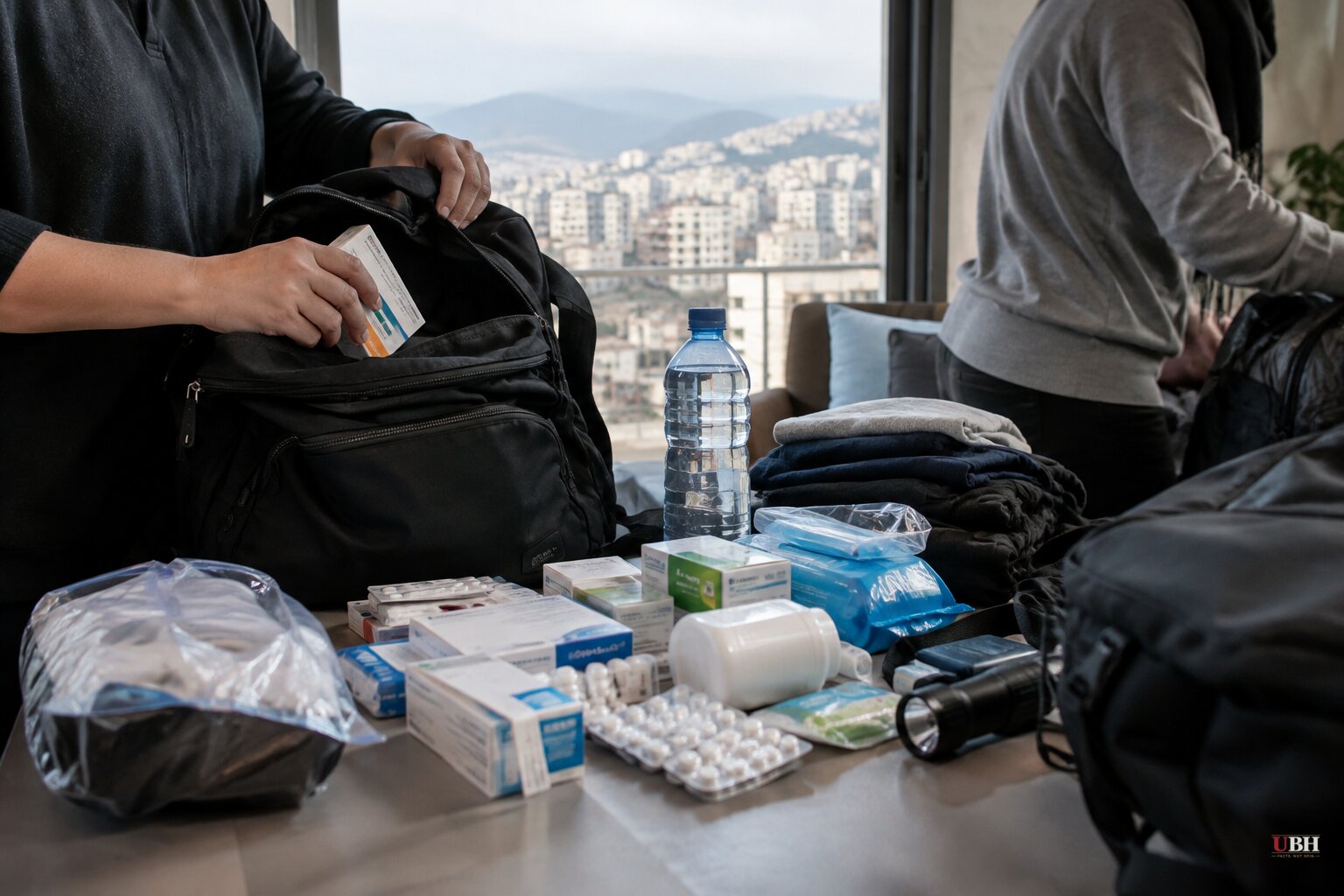
Since Hezbollah fired on Israel on March 2, two days after the regional war began on Feb. 28, Lebanon has lived through a second full-scale war in under two years. An April ceasefire stopped the worst of it. It did not stop the drones, the demolitions or the fear. As of today, Nov. 6, residents are preparing for a third round.
The toll so far
The Lebanese Health Ministry said Israeli military action between March 2 and Oct. 30 killed 4,389 people and wounded 12,428. Counting both rounds since Oct. 8, 2023, the ministry puts the total at 8,956 dead and 30,664 wounded.
Lebanon says Israel still occupies about 700 square kilometers of its territory. Lawmaker Fouad Makhzoumi says the occupation grew from five points to 68 villages, roughly 600 square kilometers. Israeli forces hold a so-called "Yellow Line" in the south and keep destroying towns below it.
The Arab News account says Israeli officials have threatened to push the incursion as far as Nabatieh and Tyre and drive residents north toward the Awali River. Israeli airstrikes hit towns in the south on Nov. 2, and drones flew low over Beirut.
Bags packed, backup flats rented
Aya, who lives in Abbasiyeh in the south, has stocked extra medication for her grandparents. She says she will leave if attacks intensify, which she did not do in March. "I don't have the energy for this anymore," she told Al Jazeera.
A Beirut resident who asked to be identified only as Ramez keeps power banks charged, holds a months-long water supply and keeps his petrol tank full. He has not moved back into his home since a neighboring building collapsed on it in July 2024. Karim Safieddine of the Tahrir Institute for Middle East Policy says residents have been mapping escape routes for months.
Asharq Al-Awsat reports that many people who fled Dahieh, Beirut's southern suburbs, are not rushing back, and some families keep backup apartments in safer areas. Elderly residents in the south are relocating north. The money is tight: the World Bank projected in August that Lebanese inflation would hit 17.5 percent this year. Analyst Jad Dilati of Nabatieh notes that paying rent elsewhere is not an option for everyone.
Pressure from Israel and Washington
Israeli broadcaster Kan reported that Israel asked Lebanon, via U.S. mediators, to deploy troops and set up checkpoints in areas where Hezbollah members live. The aim is to keep the group out of any renewed fighting with Iran. Jerusalem also warned that clashes could flare again if Hezbollah attacks Israel.
Lebanese channel Al-Jadeed cited diplomatic sources describing a warning to Beirut that Israel could repeat the heavy strikes Beirut saw in the last war, "but this time it will not be limited to one day."
Israeli media have reported that Israel could cite Hezbollah's acknowledgment of an explosives shipment bound for Dahieh to justify further action. The shipment was allegedly meant to help rebuild the group's military capabilities.
Secretary of State Marco Rubio reportedly warned President Joseph Aoun by phone of devastating consequences if Hezbollah intervenes further. U.S. media have reported that President Trump is weighing a strike on Iran after the midterms, which were held Nov. 3.
Diplomacy is stalled. An official Lebanese source said there has been no progress in direct talks with Israel and no contacts are underway. The source described an "election-related diplomatic freeze" with both Washington, the sole sponsor of the talks, and Israel heading into elections.
Hezbollah's position, and a challenge from the south
Hezbollah Secretary-General Naim Qassem has repeated that he will not discuss disarmament. Makhzoumi calls Hezbollah "an Iranian faction receiving instructions from Iran" and says its March 2 missile fire "dragged us into a devastating war." Hezbollah has not accepted that framing, and it has not publicly committed either way on joining a new Iran war.
Some in the south are saying no in advance. More than 200 residents of the Sour and Nabatieh districts have signed the "Jabal Amel Call," according to Lebanese American University professor Hatem Halawi, a signatory. It rejects "turning southern Lebanon into a geographical fallback for Iran's failures on the battlefield."
The appeal demands full Israeli withdrawal, an end to attacks, removal of all unauthorized weapons, deployment of the national army, and war-and-peace decisions resting solely with the state. It also asks for a reconstruction plan and guarantees that displaced people can return.
Similar petitions in May calling Nabatieh and Sour "open cities" angered Hezbollah supporters, who read them as indirect criticism of the group's military actions.
Ali Al-Amin, editor of the Janoubia news website, told Arab News that using Hezbollah's weapons again would hand Israel "a free gift" and a pretext to destroy what remains of southern towns. He called a new support front "a suicidal operation" and said the group is unlikely to intervene if a U.S.-Iran confrontation stays limited.
That is the open question. Aoun is reportedly in cautious talks with Hezbollah's leadership, and the Lebanese army has not been told publicly whether it will take up positions Israel is asking for. If a U.S. strike on Iran comes and stays limited, Lebanon may be spared. If it does not, the people packing bags in Dahieh and the south are betting on the worst.
Sources used for this briefing
7 links from 6 independent newsrooms (syndicated copies of the same report count once)
These are the sources it draws on, linked so you can verify.


