
Unbiased headlines. Facts, not spin.
Every story is an unbiased news briefing written from 110+ sources across the spectrum — sources linked so you can verify it yourself.
 economy
Notable (6/10)
June 19, 2026 at 06:07 PM
economy
Notable (6/10)
June 19, 2026 at 06:07 PM
Russia's Central Bank Cuts Key Rate to 14.25%, Signals Slower Easing Ahead
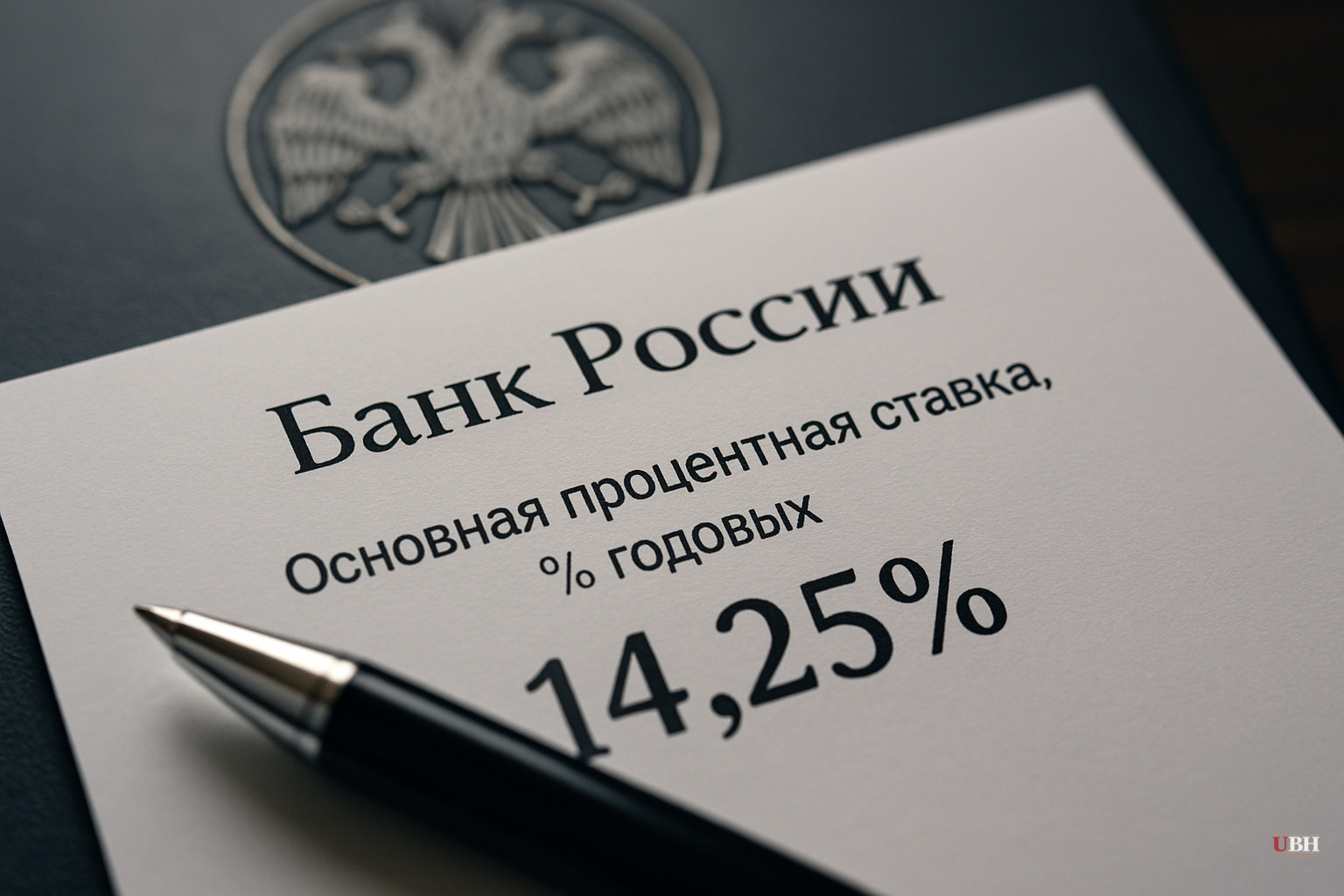
Since Russia's central bank began its easing cycle after hiking rates to a two-decade high, it has now made nine consecutive cuts. Friday's reduction to 14.25% was the most modest of the series, and policymakers made clear it may not come as routinely in the months ahead.
Smaller Cut Than Expected
Analysts had broadly anticipated a 50-basis-point cut going into Friday's decision. The Bank of Russia delivered half that, according to The Moscow Times. The deliberate downshift was a signal, not an accident.
Governor Elvira Nabiullina said at a post-decision press conference that stronger credit growth in both corporate and retail segments, combined with a more expansionary fiscal trajectory, had "significantly increased pro-inflationary risks." She was direct: future cuts could be fewer, smaller, or paused entirely.
"This can limit the room for a further key rate reduction," Nabiullina said, as reported by Anadolu Ajansı.
What's Driving Inflation Pressure
Russia's annual inflation stood at 5.6% as of June 15, according to the central bank's own statement. That is above target, and the path back to 4% is not a straight line.
Fuel prices are a specific problem. Average gasoline prices have climbed 6.6% since January, reaching 69.11 rubles per liter — approximately $3.56 per gallon — as of June 15, per Rosstat data cited by local media and reported by The Moscow Times. Nabiullina said rising fuel costs were "one of the main factors" behind the decision to cut only 25 basis points, and warned the recent price spike would show up in June inflation data.
The disruption traces back to Ukrainian drone strikes on Russian oil refineries and supply lines. Some parts of Russia are experiencing fuel shortages. Nabiullina acknowledged that government measures to restore supply "may take time."
The central bank also flagged structural inflation risks: wage growth outpacing productivity, elevated consumer inflation expectations, and temporary declines in domestic motor fuel production, according to Anadolu Ajansı.
Fiscal Policy Complicates the Picture
The Bank of Russia's statement pointed to fiscal policy as a major wildcard. The central bank said directly that "fiscal policy over the three-year horizon will be more accommodative than previously expected," and that persistent budget deficits "may require a higher key rate path than assumed in the April baseline scenario."
Russia has been running a wider deficit than projected, driven by weaker oil and gas revenues and elevated wartime government spending. The government missed its budget targets by a wide margin last year, according to The Moscow Times. That spending pressure is functioning as a countervailing force against monetary tightening. The government is pumping money into the economy while the central bank tries to pull it back.
The central bank's own forecast holds that inflation will cool to between 4.5% and 5.5% later in 2026 and reach its 4% target in 2027. But the bank also acknowledged that medium-term inflation risks remain "tilted to the upside."
Economy Is Contracting
The rate cuts are happening against a backdrop of genuine economic weakness. Latest Update Live reported that Russia's economy contracted during the first quarter of 2026, driven by high borrowing costs carried over from the prior tightening cycle, weaker business investment, tax changes, and external pressure. That contraction is part of why the easing cycle began in the first place.
The strongest case for moving faster on rate cuts is straightforward: a contracting economy with declining consumer confidence needs cheaper credit. Small businesses, mortgage borrowers, and corporate investors all face higher costs as long as rates stay elevated. Critics of Nabiullina's cautious approach would argue she is allowing the real economy to absorb unnecessary pain while the central bank waits for inflation data that may never reach a clean clearing level, particularly given ongoing wartime fiscal spending that the bank cannot control.
That concern is legitimate. But it runs directly into the counterargument the bank itself is making: looser monetary policy on top of a looser fiscal stance, in an economy already dealing with fuel supply disruptions and elevated inflation expectations, risks reigniting the very inflation surge the last round of rate hikes was meant to extinguish. The bank's cautious 25-basis-point move reflects that tension honestly.
Nabiullina's Absence, Now Explained
Nabiullina had not appeared publicly in two weeks before Friday's press conference, missing the annual St. Petersburg Economic Forum in early June. The Financial Times, citing anonymous sources, had reported she suffered a serious respiratory infection. On Friday, she addressed the speculation directly: "I had a cold and lost my voice for a while," according to The Moscow Times. She said she was grateful for those who expressed genuine concern.
What Comes Next
Nabiullina said neither the timing nor the size of future cuts has been predetermined, and that the bank may pause at upcoming meetings to assess the cumulative effect of the nine cuts already delivered. The next scheduled Bank of Russia rate decision will be the concrete test of whether Friday's cautious language translates into an actual pause, or whether softening economic data pushes policymakers back toward a larger move despite the inflation signals.
Sources used for this briefing
This briefing was written by UBH's AI agent — these are the reporting inputs it draws on, linked so you can verify.


