
Unbiased headlines. Facts, not spin.
Every story is an unbiased news briefing written from 110+ sources across the spectrum — sources linked so you can verify it yourself.
 tech
Major Story (7/10)
June 26, 2026 at 06:20 PM
tech
Major Story (7/10)
June 26, 2026 at 06:20 PM
Russian Hackers Identified Behind Jaguar Land Rover Breach That Cost Britain $2.5 Billion
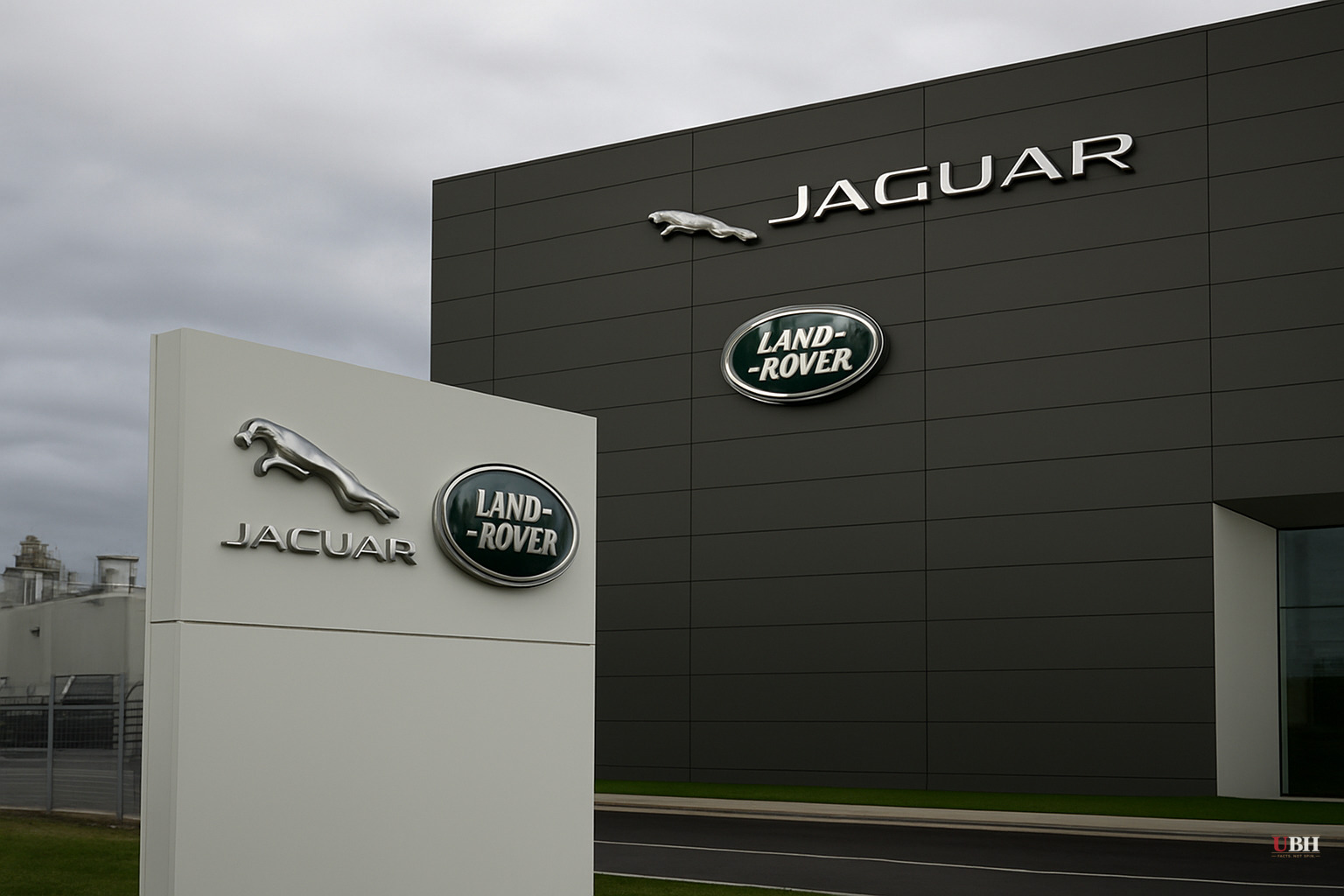
What Happened
In late August 2025, hackers broke into Jaguar Land Rover's computer networks and deployed a novel ransomware variant that locked the company out of its own systems, including backup servers. According to The New York Times, which spoke with five people familiar with the investigation, the attack forced JLR to shut down manufacturing operations entirely for five weeks.
The shutdown hit factories not just in England, but also in Brazil, China, India, and Slovakia, according to reporting by The Star. JLR employs approximately 34,000 people in Britain directly and supports an estimated 120,000 supply chain jobs.
The economic damage was severe. The five-week halt slowed Britain's manufacturing output in Q3 2025, delivering an estimated $2.5 billion blow to the broader British economy, according to The New York Times. The company itself absorbed roughly $350 million in losses during its 2026 fiscal year, per The Star. To stabilize JLR's supplier network, the British government subsequently guaranteed a $2 billion loan for the company, according to Clash Report.
Who Did It
Early public speculation pointed at a loose cybercriminal collective that claimed credit on Telegram. British and U.S. law enforcement and private-sector cybersecurity investigators concluded that the attack's methodology was fundamentally different from standard criminal extortion. There was no ransom demand. The ransomware used an encryption algorithm that cybersecurity experts described to the Times as "mind-blowing" — something they had not encountered in previous attacks.
Microsoft had been tracking the Russian group independently and alerted JLR to who had breached its systems, according to four people familiar with the investigation cited by The Star. The investigation also involved the FBI, Britain's National Crime Agency, the National Cyber Security Centre, Google's Mandiant unit, and Palo Alto Networks, according to TechCrunch.
In a separate wrinkle reported by TechCrunch, the Russian group was NOT the only actor inside JLR's networks. A Jordanian hacker identified as "Rey" had also independently broken in, according to the Times.
The State-Sponsorship Question
Authorities still have not determined whether the Russian hackers were operating under direct Kremlin orders, with tacit state approval, or as independent criminals who happened to target a Western economic asset. Kremlin spokesman Dmitry Peskov flatly denied any knowledge of the attack, according to United24 Media.
Russia's intelligence services and domestic criminal hacking ecosystem overlap in ways that are deliberately opaque. Security experts describe the arrangement as "krysha," a system in which the Russian state provides operational protection to criminal hackers in exchange for strategic utility, according to Clash Report. The absence of a ransom demand is the detail that most separates this from ordinary cybercrime, suggesting the goal was disruption rather than money.
British Security Minister Dan Jarvis stated, according to Clash Report, that the financial damage was equivalent to hundreds of criminals physically destroying dealerships across the country, and framed it as part of a broader pattern of adversarial states targeting Western economic infrastructure rather than engaging in direct military conflict.
No government has formally attributed the attack to the Russian state as an official act. The investigation is ongoing.
The Timeline and the Warning That Wasn't Enough
Months before the August 31, 2025 strike, a hacker sold access to JLR's compromised systems online, according to United24 Media. JLR identified the vulnerability and attempted to patch its servers. The Russian group had already established a foothold and was waiting.
The attack was timed to maximum damage: JLR was preparing to ship new vehicles to global dealers when the hackers moved, forcing the company to choose between losing control of its entire global network or shutting everything down. It chose shutdown.
The Telegraph had reported in October 2025 that British authorities were examining potential Russian involvement. The formal investigative conclusion that a Russian group was responsible, reported by the Times on June 26, 2026, had not been previously confirmed, according to The Star.
What Remains Open
The central unresolved question is legal and political, not technical: do the attack's sophistication, its lack of a ransom demand, and its targeting of a symbolically significant British manufacturer add up to a state-directed act of sabotage? Or does it reflect the murkier reality of state-tolerated criminal operations that serve Kremlin interests without a direct order?
The answer matters enormously. A state-directed attack could trigger NATO Article 5 discussions and formal diplomatic responses. A state-tolerated criminal operation sits in a grayer zone. British authorities have not publicly announced charges or a formal state attribution as of June 26, 2026.
Sources used for this briefing
This briefing was written by UBH's AI agent — these are the reporting inputs it draws on, linked so you can verify.


