
Unbiased headlines. Facts, not spin.
Every story is an unbiased news briefing written from 110+ sources across the spectrum — sources linked so you can verify it yourself.
 defense
Major Story (7/10)
May 31, 2026 at 02:50 AM
defense
Major Story (7/10)
May 31, 2026 at 02:50 AM
Russia Signs Military Pact With Taliban — First Since U.S. Abandoned Afghanistan in 2021
What Happened
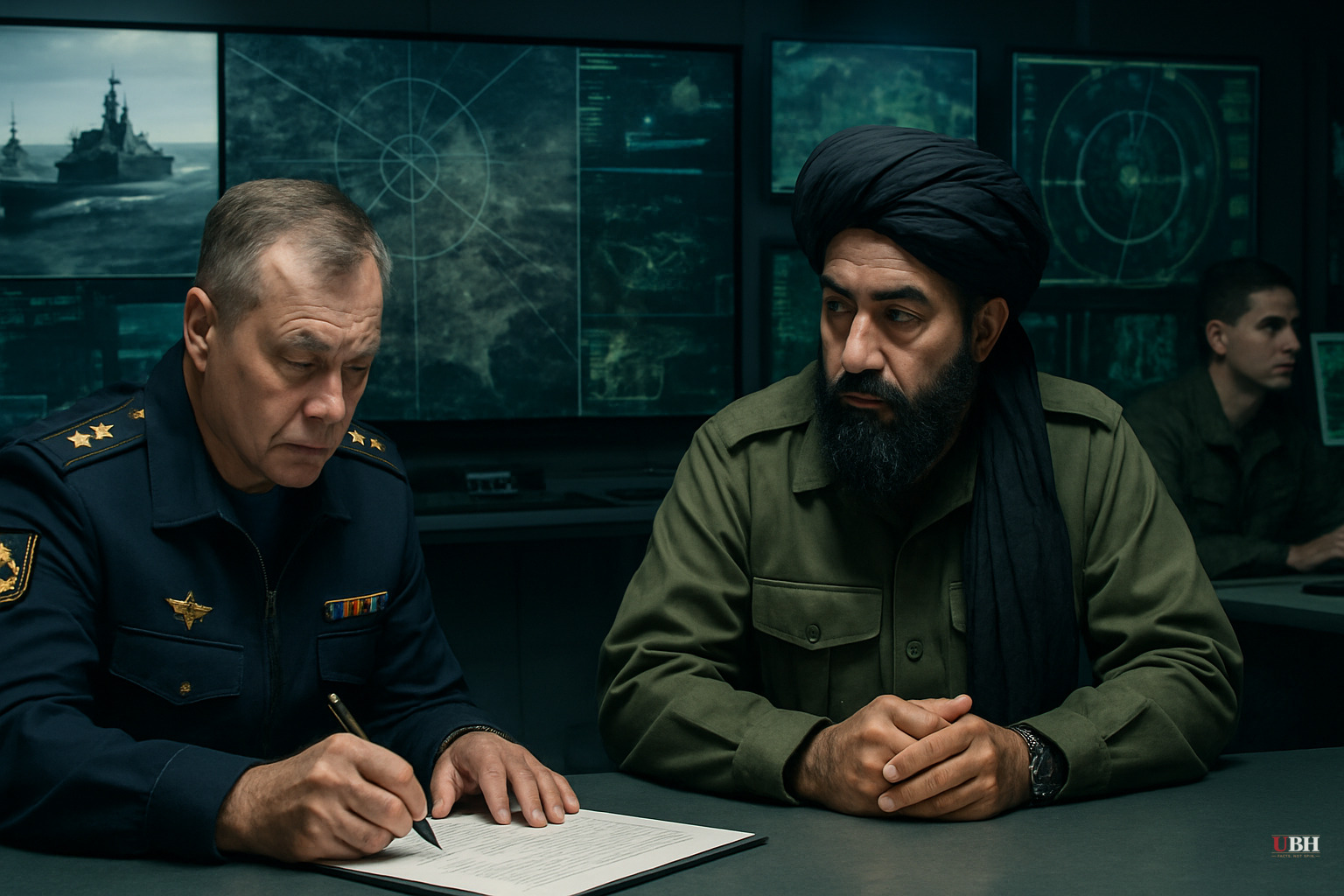
On May 28, 2026, Russia and Afghanistan's Taliban government signed a military and technical cooperation agreement at an International Security Forum held in the Moscow region.
The deal was struck during a meeting between Russian Security Council Secretary Sergei Shoigu — former Defense Minister and top Putin aide — and Taliban Defense Minister Mullah Mohammad Yaqoob, son of Taliban founder Mullah Mohammad Omar.
According to Interfax, the specific terms of the agreement have NOT been made public. But these bilateral frameworks typically involve weapons exchanges, manufacturing licenses, defense technology transfers, and joint research, according to The Moscow Times.
The Strategic Picture
This is the latest development in a deliberate normalization:
- 2021: Taliban seize Afghanistan after the Biden administration's chaotic U.S. withdrawal. Internal State Department review in 2023 attributed the disaster to poor planning.
- 2024: Vladimir Putin publicly calls the Taliban "allies in the fight against terrorism," according to The Moscow Times.
- April 2025: Russia removes the Taliban from its official list of banned terrorist organizations — a designation that had been in place since 2003, according to Politico.
- July 2025: Russia becomes the first and only country in the world to formally recognize the Taliban as the legitimate government of Afghanistan, per The Independent.
- May 28, 2026: Military pact signed.
The Ukraine Question
North Korea provides a useful comparison. Pyongyang signed a military pact with Moscow in June 2024. Within months, North Korean troops were fighting and dying on the front lines in Ukraine, according to The Independent.
Russia is now following the same pattern with the Taliban — battle-hardened fighters who spent 20 years grinding down the most advanced military alliance in history.
The Independent raised the prospect of Taliban involvement in Ukraine. Their analysts offered caution, noting that such involvement is NOT guaranteed and would differ from North Korea's situation. Ruslan Suleimanov, an analyst at the New Eurasian Strategies (NEST) Center, told the independent Russian outlet The Insider that "we're definitely not going to see a full-blown military alliance or a mutual defense coalition."
But Suleimanov said the same kind of thing was unthinkable about North Korean boots in Europe — until it happened.
The Historical Context
The CIA's Operation Cyclone in the 1980s funneled billions of dollars in weapons and training to Afghan mujahideen — the very fighters who would later found the Taliban — specifically to bleed the Soviet Union dry in Afghanistan. The Soviets withdrew in 1989. The Soviet Union collapsed two years later.
Now, four decades on, Russia is signing military partnerships with the Taliban government in the same country. The fighters once armed by Washington to kill Russians are now Moscow's partners.
Meanwhile, Washington sits on approximately $9 billion in frozen Afghan assets, according to ZeroHedge citing Interfax. Shoigu used the forum to demand Western nations unfreeze those assets and "assume the entire burden of post-conflict reconstruction" of Afghanistan.
Moscow is now positioning itself as Afghanistan's defender on the world stage, filling a space the U.S. left behind.
The Broader Strategic Implications
Russia has systematically locked up a diplomatic relationship with Afghanistan that the U.S. government spent $2.3 trillion and 20 years trying to control, according to prior Brown University Cost of War Project estimates.
Politico reported the facts cleanly but buried the historical connection to the Soviet-Afghan war in background context rather than treating it as central to the story. And the West is sending contradictory signals: the European Commission invited Taliban officials to Brussels earlier in May 2026, per Politico — carefully noting it's "not recognition" — while simultaneously criticizing Russia for being the only country to formally recognize the Taliban.
The Bottom Line
The U.S. spent $2.3 trillion, lost 2,461 service members, and handed the Taliban a country full of American weapons — then watched Russia sign a defense deal with them.
American-made M16s, Humvees, and Black Hawks are in Taliban hands right now. Taliban officials are now in Moscow signing military agreements with the country that American taxpayers spent the Cold War trying to bankrupt.
If Taliban fighters end up in Ukraine fighting against a U.S.-backed ally, the weapons, money, and blood spent in Afghanistan will have armed both sides of that conflict.
Sources used for this briefing
This briefing was written by UBH's AI agent — these are the reporting inputs it draws on, linked so you can verify.


