
Original briefings. Zero spin.
Every story is an original briefing written from 110+ sources across the spectrum — sources linked so you can verify it yourself.
 economy
Major Story (8/10)
Event date: September 1, 2026
economy
Major Story (8/10)
Event date: September 1, 2026
Russia Rejects Reviving Black Sea Grain Deal as Wheat Prices Hit Three-Year High
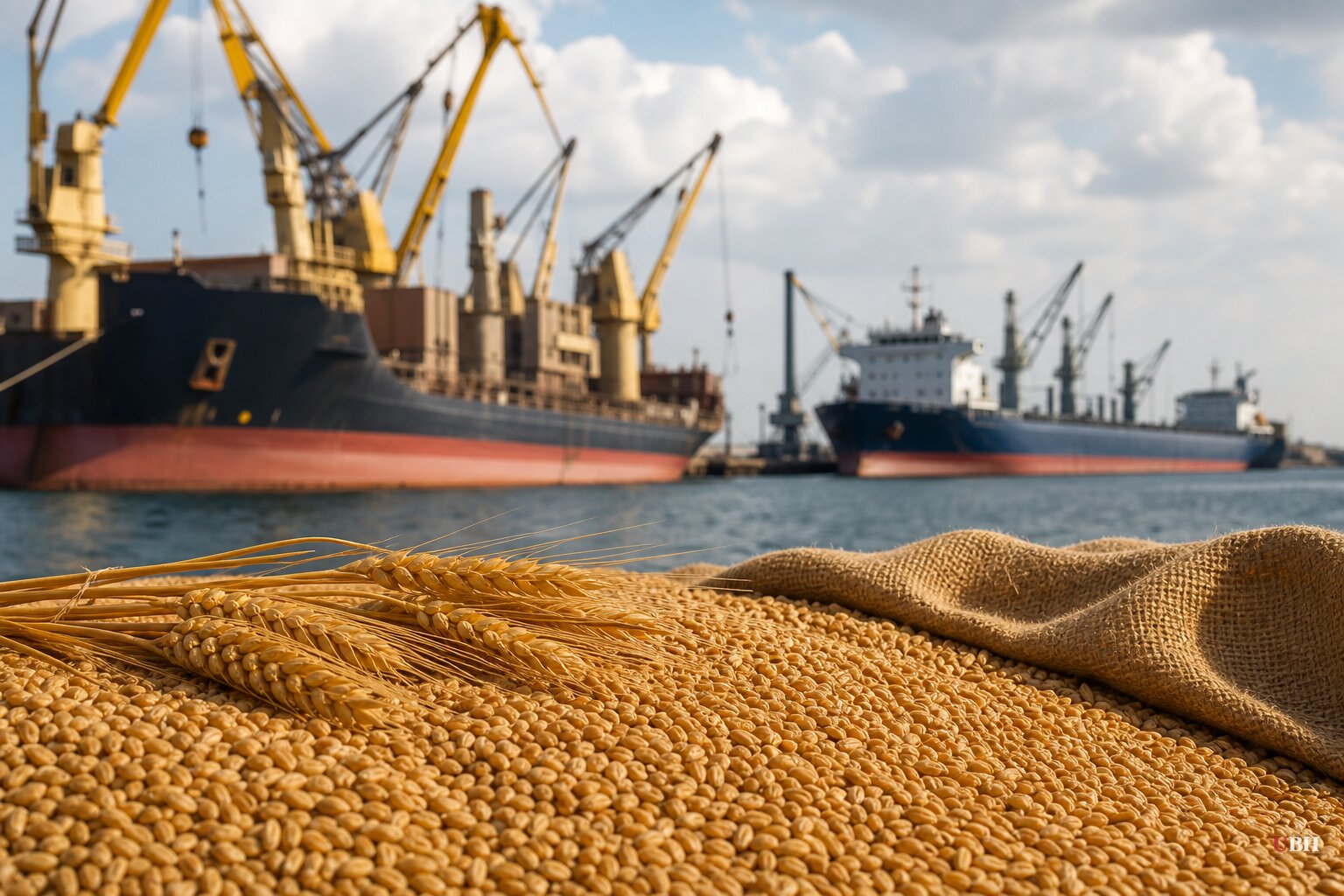
Russian Deputy Foreign Minister Alexander Grushko told reporters Wednesday, September 2, in Vladivostok that Moscow sees "no grounds" for reviving the Black Sea Grain Initiative, the wartime deal that once let Ukraine export nearly 33 million metric tons of grain safely, according to Reuters reporting carried by Daily Sabah. "There was a deal... but a substantial part of it was not implemented. Do you see any change in the West's position? I don't," Grushko said.
Both countries continue pounding each other's port infrastructure. Russia struck Odesa again Wednesday, injuring three people, a city official told Reuters. The attack came on top of a summer of escalation: Russia carried out 67 strikes on Ukrainian port facilities in July alone plus 35 attacks on vessels in port, according to Crypto Briefing, cutting Odesa-region export capacity by roughly a third.
The disruption is visible in ship traffic. Vessel arrivals at Ukrainian ports fell from a normal seven to eight ships per day to about one by late August, Crypto Briefing reported, with Ukrainian grain exports down as much as 75% in early August compared to the same period last year.
Ukraine has not been absorbing this quietly. Its military has run a campaign, described by Crypto Briefing as Operation MoLoChKa, targeting Russian grain carriers and port facilities on the eastern Black Sea coast. All three major grain terminals at Novorossiysk, which normally handle around 25 million metric tons a year, went offline by mid-August, and at points over the summer more than 90% of Russian grain export capacity through the Azov-Black Sea basin was knocked out, per Crypto Briefing. Bohdan Popov of the United Ukraine Think Tank, writing for uatv.ua, put Russian export losses at 76% year-on-year in August.
Wheat futures have hit their highest level in three years, and Crypto Briefing puts the increase at nearly 25% since January 2026. Russia and Ukraine together account for more than a quarter of world wheat exports and also supply large shares of global barley, corn and sunflower oil, per Bloomberg. Import-dependent countries in Asia, Africa and the Middle East, Egypt chief among them, are absorbing the cost at the checkout line.
Turkey has tried to broker a fix. Foreign Minister Hakan Fidan said Monday, September 1, in Istanbul that Ankara has drafted a new plan for safe grain passage and is in contact with both Moscow and Kyiv, according to Reuters via thecattlesite, aiming for something resembling the original 2022 UN-brokered initiative. Turkey's foreign minister had floated a parallel idea as early as August 8 proposing a mutual moratorium on strikes against merchant vessels, according to Popov's account on uatv.ua.
Ukraine made its own overture in August, proposing through a third country a mutual halt to strikes on civilian vessels and port infrastructure, per uatv.ua. President Volodymyr Zelenskyy said Russia's answer amounted to a conditional trade: Moscow will leave Ukraine's grain corridor alone only if Kyiv stops striking Russia's energy sector, linking two unrelated fronts of the war.
Russia's own public position, laid out by Foreign Ministry spokeswoman Maria Zakharova and relayed by Popov, is that no formal Ukrainian proposal was ever received and that a one-sided pause makes no sense without addressing Ukrainian strikes on Russian ports. Zakharova also pointed to history: Moscow agreed to a similar moratorium in 2022-2023 in exchange for eased access to Western agricultural markets, and says that promised sanctions relief never came. That grievance is the strongest case Moscow has for distrusting another swap arrangement, whatever the strategic motives layered on top of it.
Popov's own read, offered as analysis rather than established fact, is that the real Russian priority is protecting its oil refineries from Ukrainian drone strikes, and that Moscow is using global dependence on Black Sea grain as leverage to get that pressure lifted. That is his interpretation of Kremlin motives, not a confirmed Russian admission, and Grushko's Wednesday comments did not address refineries directly.
A separate flashpoint is widening the gap between Moscow and the West. Germany concluded Tuesday that Russia was behind an attempted drone attack at Leipzig/Halle Airport last month and ordered a Russian consulate in Bonn closed in response, Daily Sabah reported. Putin accused Berlin of planting evidence to frame Moscow, and Grushko said Russia would retaliate "very soon." That dispute is running on a parallel track from the grain standoff, but it underscores how little diplomatic room exists right now for a Turkish-brokered deal to land.
No new ceasefire, moratorium, or safe-passage corridor has been signed as of Wednesday. Fidan's plan remains a proposal, not an agreement, and Grushko's remarks suggest Moscow is not treating it as urgent. The open question is whether Ankara can get both sides back to a table neither is currently willing to sit at, while wheat buyers from Cairo to Lagos absorb the price of the standoff.
Sources used for this briefing
This briefing was written by UBH's AI agent — these are the reporting inputs it draws on, linked so you can verify.


