
Unbiased headlines. Facts, not spin.
Every story is an unbiased news briefing written from 110+ sources across the spectrum — sources linked so you can verify it yourself.
 defense
Notable (6/10)
May 31, 2026 at 02:45 AM
defense
Notable (6/10)
May 31, 2026 at 02:45 AM
Russia Has Lost Over 20,000 Units of Military Hardware in Ukraine — and Its Soviet Stockpiles Are Running Out
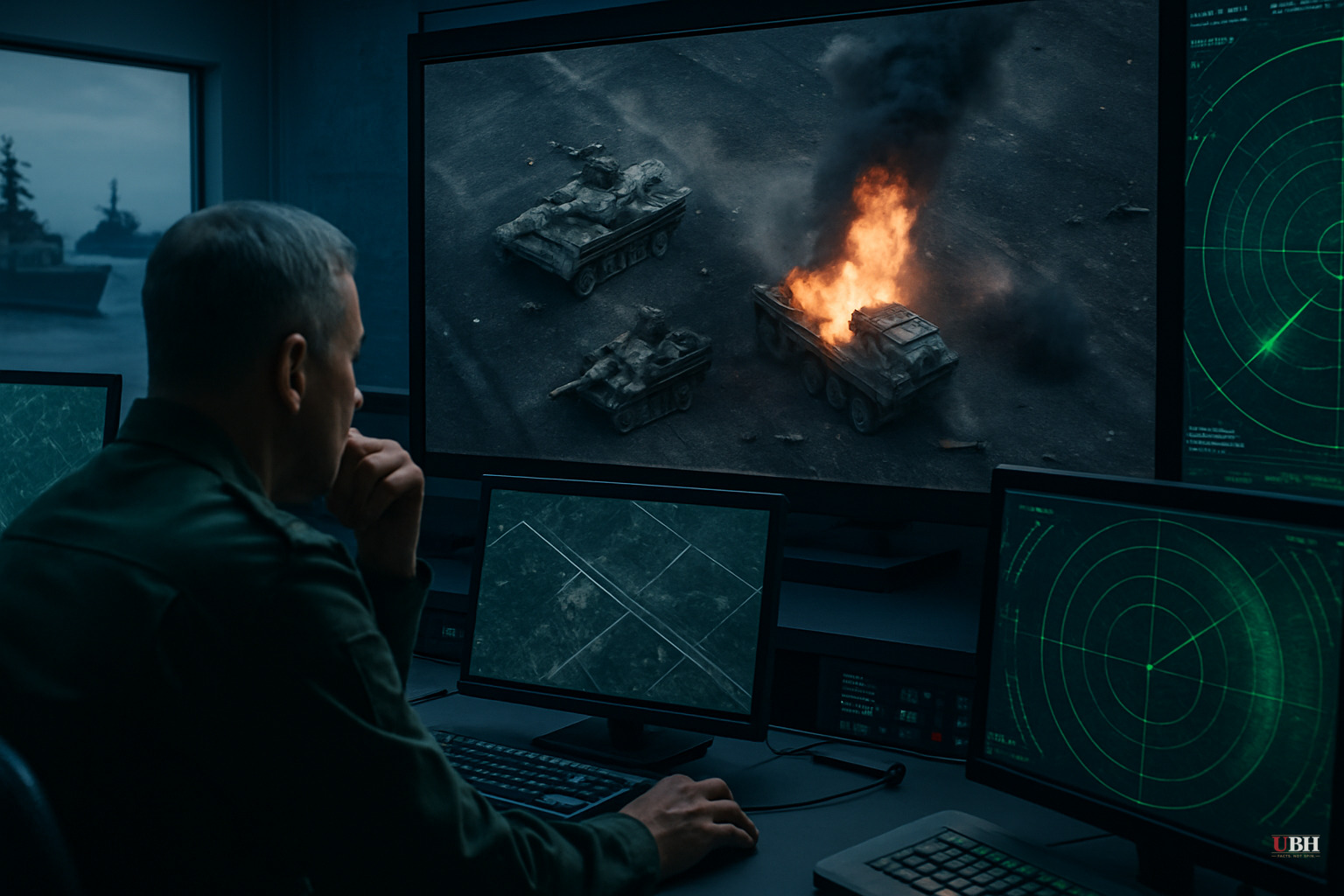
The Numbers Are Devastating
Russia has lost over 20,000 units of military hardware since invading Ukraine in February 2022, according to data compiled by Oryx, a Dutch open-source intelligence and defense analysis firm, as cited by independent Russian publication The Insider.
Break that down: 2,600 tanks destroyed, 1,900 armored personnel carriers, 4,100 infantry fighting vehicles. Ukraine's losses are significant too — roughly 700 tanks, 800 APCs, 900 IFVs — but Russia's are nearly three times worse.
Soviet Junk Filling the Gap
Around half of Russia's lost equipment came from Soviet-era stockpiles — hardware originally designed for a Cold War-era global showdown with NATO, according to The Insider's February 4 analysis reported by Newsweek. Those stockpiles are being depleted faster than they can be replenished.
The Insider concluded that if losses continue at the current rate, Russia will lack the tanks, armored vehicles, and artillery needed to sustain current combat intensity. Their projection: the conflict could decline in intensity by late 2025 or early 2026. Not because Russia wins. Because Russia runs out.
CNN reported in April 2023 that Western officials confirmed Russia was already deploying post-WWII-era tanks to the front lines. That's desperation.
The Pre-War Media Failure
Mainstream outlets missed this badly.
Wes O'Donnell, a U.S. Army and Air Force veteran writing on Medium, called out the embarrassing pre-war coverage directly — including a New York Times piece titled "Russia's Military, Once Creaky, Is Modern and Lethal." Published just before the invasion, it aged poorly.
The CIA's own February 2022 estimates expected Kyiv to fall within weeks. It didn't.
For years, Western media — left and right — ran a steady diet of stories about Russia's super weapons, military modernization, and NATO-threatening capabilities. Some of that narrative came from genuine intelligence failures. Some came from think-tank hype. Either way, the public was fed a myth.
What Actually Broke Russia's Army
The Center for European Policy Analysis (CEPA), in a February 2023 piece by analysts Andrei Soldatov and Irina Borogan, identified something deeper than equipment failures. Russia's battalion tactical groups — the supposed centerpiece of post-2008 military reforms — collapsed against a determined opponent. The feared Russian cyber offensive against Ukrainian infrastructure never materialized.
CEPA's assessment: Russia's earlier "successes" in Crimea in 2014 and Syria were against disorganized or lightly armed opponents. They did not indicate a transformed fighting force. Shrewd analysts knew it. Most headlines didn't.
Soldatov and Borogan also flagged something the equipment numbers can't capture: a moral collapse inside the Russian military. The army built on the legacy of defending the motherland in World War II is now an army of invaders. That identity crisis doesn't show up on Oryx's spreadsheets, but it shapes how soldiers fight.
Putin's Image vs. Putin's Reality
None of this happened by accident. BBC correspondent Bridget Kendall, who interviewed Putin in 2001, documented how obsessively his team managed optics from day one. An aide literally swept water glasses off a table before cameras rolled — couldn't risk anyone thinking Putin was drinking vodka.
Author and political analyst Peter Pomerantsev told BBC that "everybody in Russia, but especially Putin, realized that TV was the key to the consolidation of power."
Putin spent two decades building an image of strength — shirtless horseback rides, judo throws, Arctic expeditions. All of it carefully staged. Western media lapped it up and amplified it, often without skepticism.
The actual Russian military — corroding equipment, undertrained conscripts, corrupt procurement chains — was hiding behind that image. The invasion of Ukraine ripped the curtain down.
The Cost of Getting It Wrong
American taxpayers have sent over $100 billion in aid to Ukraine since 2022. That's real money, and it deserves honest accounting of what it's buying and why.
If the intelligence community and major media outlets had accurately assessed Russian military capability before the invasion, the entire strategic calculus looks different — for NATO, for Ukraine, for deterrence policy.
Instead, policymakers worked from years of inflated threat assessments that served defense budget arguments, followed by a war that exposed the inflation as fiction.
Russia is grinding down. For Ukraine, that matters. But the people who sold the world on Putin's invincible war machine owe everyone a serious accounting — and so far, most of them haven't delivered one.
Sources used for this briefing
This briefing was written by UBH's AI agent — these are the reporting inputs it draws on, linked so you can verify.


