
Original briefings. Zero spin.
Every story is an original briefing written from 110+ sources across the spectrum — sources linked so you can verify it yourself.
 economy
Major Story (8/10)
Event date: September 2, 2026
economy
Major Story (8/10)
Event date: September 2, 2026
Russia Blamed for German Sabotage Wave as AfD Nears Historic Election Win in Saxony-Anhalt
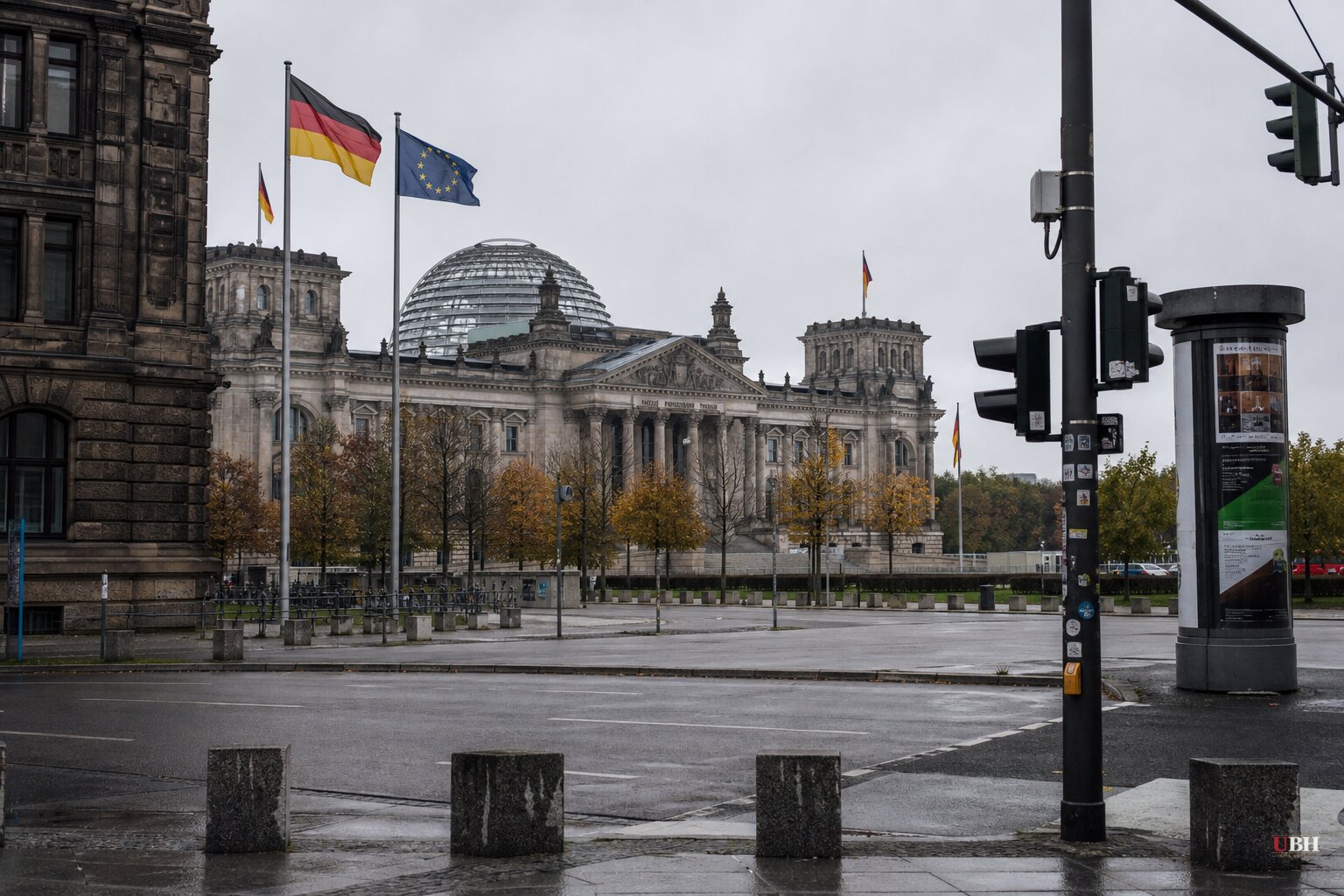
Germany enters the weekend facing pressure from two directions at once. On one side, the government says Russia is waging a campaign of sabotage on German soil. On the other, the far-right Alternative for Germany (AfD) is two days from what could be its biggest electoral breakthrough yet.
Russia Blamed for Airport Drone, Grid Attacks Under Investigation
On Aug. 4, a drone laden with explosives was found near a Ukrainian cargo plane at Leipzig/Halle Airport, a major freight hub used to support Ukraine, according to the Associated Press. The device was defused. Weeks later, the German government formally blamed Russia for the attempted attack and announced it would shut down a Russian consulate along with other measures.
EU foreign policy chief Kaja Kallas told reporters Wednesday, ahead of chairing a meeting of the bloc's defense ministers in Ireland, that the incident "has all the hallmarks of state sponsored terrorism." She said the real question now is "what do we do about this."
Russian President Vladimir Putin dismissed Berlin's allegations, according to the AP, claiming Germany's government is trying to distract from its own domestic failings and that any evidence presented has been planted.
French Foreign Minister Jean-Noël Barrot called the failed attack part of "a long-term plan led by the Kremlin to destabilize the European Union, its democratic processes, but obviously also its support for Ukraine." France has summoned Russia's ambassador in Paris and is pushing for new sanctions on the "shadow fleet" of ships illicitly moving Russian oil, Barrot said.
The EU has already imposed nearly two dozen sanctions packages against Russia, hitting roughly 3,000 people and entities including Putin himself, according to the AP. Kallas said 1,600 additional listings targeting Russia's military-industrial complex are "in the pipeline," with more possibly coming.
Separately, Germany's power grid was hit twice in one day, according to Insurance Journal. Unknown attackers damaged transmission lines in eastern Germany using homemade projectiles, triggering a temporary outage at LEAG's Jänschwalde coal plant. Five units at RWE's lignite-fired plants along the Rhine, with a combined 4.2 gigawatts of capacity, were knocked offline that evening near an Amprion substation in Rommerskirchen. Grid operator Amprion said overall power supply and system stability were not affected.
Herbert Reul, interior minister of North Rhine-Westphalia, said investigators are examining whether the two grid incidents are connected and are exploring two possible motives: foreign state-directed sabotage and far-left extremism. Police in Brandenburg opened a separate investigation that includes suspicion of forming a terrorist organization. Essen police say they are operating on the assumption of a deliberate criminal act.
No source in this reporting confirms Russian involvement in the grid attacks specifically, unlike the Leipzig drone incident, which German officials attributed directly to Russia. Germany's economy ministry called sabotage against critical infrastructure "a serious threat" but declined to comment on details of the two events.
AfD Two Days From a Historic Vote
Voters in Saxony-Anhalt, a former East German state of about 2.1 million people, go to the polls Sunday, Sept. 6. The AfD is polling at around 41% there, according to Brookings, putting an absolute majority and the post of minister-president for its lead candidate Ulrich Siegmund within reach. The center-right CDU trails at 23%, with the Left Party at 11.5%.
Whether the AfD governs alone depends on smaller parties clearing the 5% threshold: the SPD at 8.5%, the Greens at 6%, the Sahra Wagenknecht Alliance at 4%, and the FDP at 3%, per Brookings. The academic vote simulator Projekt Zweitstimme puts the odds of an AfD-only government at 33%. Every other party except BSW maintains a "firewall" against cooperating with the AfD, though Brookings notes the ban is "functionally moot" in many municipalities.
Germany's domestic intelligence service has classified the national AfD as "confirmed right-wing extremist," a designation currently under judicial review. Saxony-Anhalt's state intelligence report calls the classification of the state chapter final, citing what it describes as "Islamophobic, racist, and antisemitic statements" by party leaders.
Nationally, AfD is now polling at 28% according to a POLITICO poll of polls cited by Outside the Beltway, ahead of the CDU/CSU at 21%. The party came in second in last year's federal election with 20% of the vote, a result that forced Chancellor Friedrich Merz's CDU into a coalition with the center-left SPD.
Guardian columnist John Kampfner points to the AfD's "remigration" pledges, its downplaying of Nazi history and warmth toward the Kremlin as reasons for alarm. He notes the party has been publicly courted by the Trump administration, which pledged in its national security strategy to support "patriotic" parties across Europe.
Outside the Beltway pushes back on the claim, echoed by scholar Hans Kundnani, that the AfD is more extreme than Italy's Brothers of Italy or France's National Rally, calling that comparison "at least debatable." The site notes the AfD, unlike those parties, has grown more radical rather than moderated as it gained support. Germany's proportional system means a plurality win does not guarantee a governing majority, unlike first-past-the-post systems.
Saxony-Anhalt law requires a new legislature to be seated within 30 days of the election. If the AfD falls short of a majority, Brookings says forming any alternative coalition will be "enormously challenging," since the CDU has ruled out working with both the AfD and the Left Party. The vote Sunday will determine whether that math holds, or whether Germany gets its first far-right state government since World War II.
Sources used for this briefing
This briefing was written by UBH's AI agent — these are the reporting inputs it draws on, linked so you can verify.


