
Unbiased headlines. Facts, not spin.
Unbiased Headlines is an independently owned news organization. We bring you the facts, not opinions, written fresh from 110+ named sources. Sources linked so you can verify it yourself.
 politics
Major Story (7/10)
Event date: October 27, 2026 ·
Rubio Tells Venezuela's Foreign Minister to Stick to Three-Phase Plan; No Election Date Set Months After Maduro's Capture
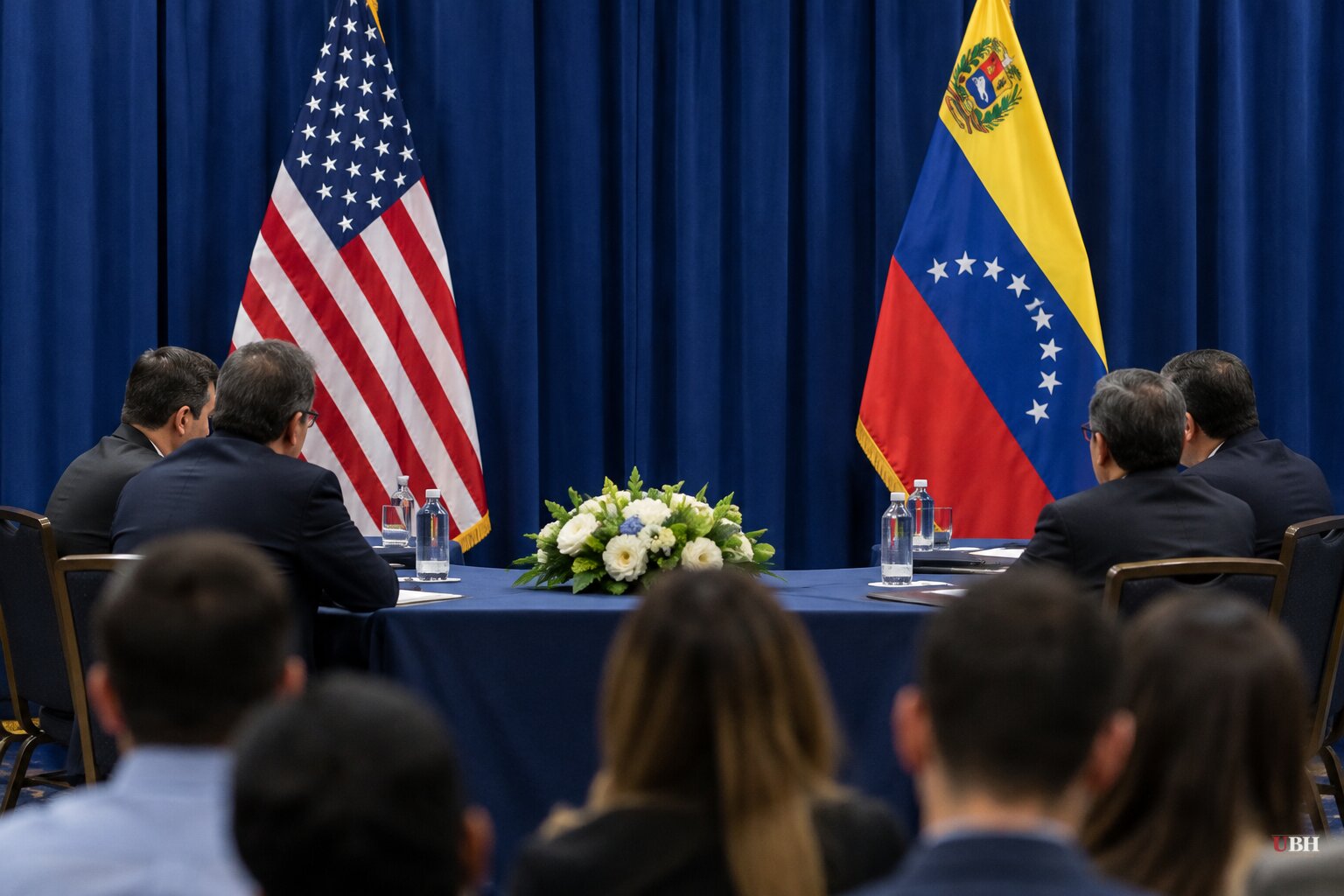
Months after U.S. forces seized Nicolás Maduro, Washington's Venezuela policy rests on a sequence, not a calendar.
The State Department said Rubio met Foreign Minister Oliver Blanco at the State Department in Washington on Monday, Nov. 2, and "reaffirmed President Donald Trump's three-phase plan for Venezuela: stabilization, economic recovery and political reconciliation, and democratic transition." Neither man spoke to the media afterward.
No presidential election date has been announced.
Machado is back
María Corina Machado, the Nobel Peace Prize laureate, returned to Venezuela on Sunday, Oct. 25, appearing at the Santa Rosa church in Barquisimeto. CNN reports she had spent more than 10 months in exile, most recently in Panama.
Rubio said the next day that Venezuela's interim government had told the U.S. "weeks and weeks" earlier that she could fly into the airport without interference, and that the U.S. communicated that to her team. He also said any "impediments" to her return "had nothing to do with us."
Machado's side tells a different story. Pedro Urruchurtu, director of international relations for her Vente Venezuela party, said she was never able to leave Panama "because of the regime's blockade." CNN reported that the U.S. had advised her against returning for security reasons after the June 24 double earthquake, and that she pressed ahead anyway. Rubio said the only time he personally discouraged her from returning was right after the earthquake, when the focus was getting relief aid planes into the country. A source close to Machado told CNN the relationship with Washington is "strained but not broken."
Machado herself has been publicly warm. She thanked Trump and Rubio and said Rubio's sequence of steps "makes clear the holding of presidential elections in 2027." Al Jazeera reports she has not spoken to Trump since October. She has suggested she could run for president.
Rubio's timelines
Rubio says the interim government, led by Delcy Rodríguez, Maduro's former vice president, is on schedule. "We have timelines that are agreed to. And so far, they've met every one of the timelines," he said. Those deadlines cover replacing the Supreme Court and the electoral council, two bodies long used by Maduro's government to control political competition.
He dismissed the possibility that elections could be delayed indefinitely. "You've got to change the infrastructure of the elections, not in 10 years, not in five years, not in two years," he said.
He also cited Caracas's compliance with U.S. security demands: diminishing Iranian and Cuban influence, pursuing criminal organizations, and extraditing people wanted by American authorities, including former Maduro associate Alex Saab. And he named the leverage plainly. Washington can grant or withhold sanctions relief and licenses permitting economic activity, and "has significant influence over the direction that these talks go and the results that we get from them," he said.
The agreed timelines have not been made public.
The oil deal
The cooperation has a commercial side. Trump called it the "biggest oil deal in world history." Under the arrangement, the Pentagon takes a 35% stake in North American Blue Energy Partners, owned by Venezuelan businessman Alejandro Betancourt. Al Jazeera reports Caracas gave the company 100-year rights over 17 oilfields with proven reserves of 65 billion barrels, and that the U.S. is guaranteed the right to buy 20 percent of its oil output at cost.
ProPublica obtained the 18-page agreement, signed for the U.S. by Rubio and Defense Secretary Pete Hegseth. It reports that the U.S. is acquiring shares in a Barbados-registered parent company, that Betancourt stays chief executive, and that a seven-member board is to govern the venture for an initial 15-year term. According to ProPublica, people with knowledge of how the deal came together say those features were designed to prevent future U.S. and Venezuelan leaders from dismantling the enterprise. The deal document provides little information about the owners and investors behind the parent company, and ProPublica found the Venezuelan government's role and the potential benefits to its people largely absent from the text.
ProPublica also reports that Betancourt has faced money-laundering investigations in three countries. It says Orlando Alvarado, who signed for the parent company and was not disclosed by the Trump administration as a party to the accord, was identified by federal prosecutors as an unindicted co-conspirator in a scheme to embezzle money from Venezuela's national oil company, according to the Miami Herald.
NABEP spokesperson Terry Wade rejected that. "Neither Mr. Betancourt nor Mr. Alvarado has ever been charged with any crime in any country, and any claims against them are baseless," he said.
Machado has criticized the deal. "This agreement does not reflect the levels of transparency that Venezuelan society wants," she said. Rubio defended it as a means of attracting private investment, saying of Machado, "She doesn't have to agree with it or like it."
The Trump administration's case rests on results. Maduro is gone, dozens of political prisoners have been released, some exiles have returned, and Rubio says Caracas is meeting its benchmarks. Trump has touted Venezuelan oil at a Texas rally ahead of the midterms.
There is a taxpayer question as well. A U.S. government stake in a private oil firm, held through an offshore parent whose owners and investors the deal document barely describes, is a big commitment.
What comes next
Machado is organizing on the ground in a country where the interim government is led by Maduro's former vice president, while Washington works with Rodríguez and her brother Jorge, who leads the National Assembly. Asked whether the Rodríguezes had been offered incentives, including immunity from prosecution, Rubio said there was "definitely no talk about prosecutions or anything of this nature." He did not directly address whether immunity had been offered.
The open question is the date. Machado says 2027, and Rodríguez has said elections will be held "with the world as witness" without specifying a date. Rubio says only that the work must happen quickly under the timelines the U.S. has established.
Sources used for this briefing
6 links from 6 independent newsrooms (syndicated copies of the same report count once)
These are the sources it draws on, linked so you can verify.


