
Unbiased headlines. Facts, not spin.
Every story is an unbiased news briefing written from 110+ sources across the spectrum — sources linked so you can verify it yourself.
 defense
Major Story (8/10)
July 15, 2026 at 01:57 AM
defense
Major Story (8/10)
July 15, 2026 at 01:57 AM
Rubio Runs Venezuela's Oil Money From Washington While Trump Pulls Troops Out Of Iraq
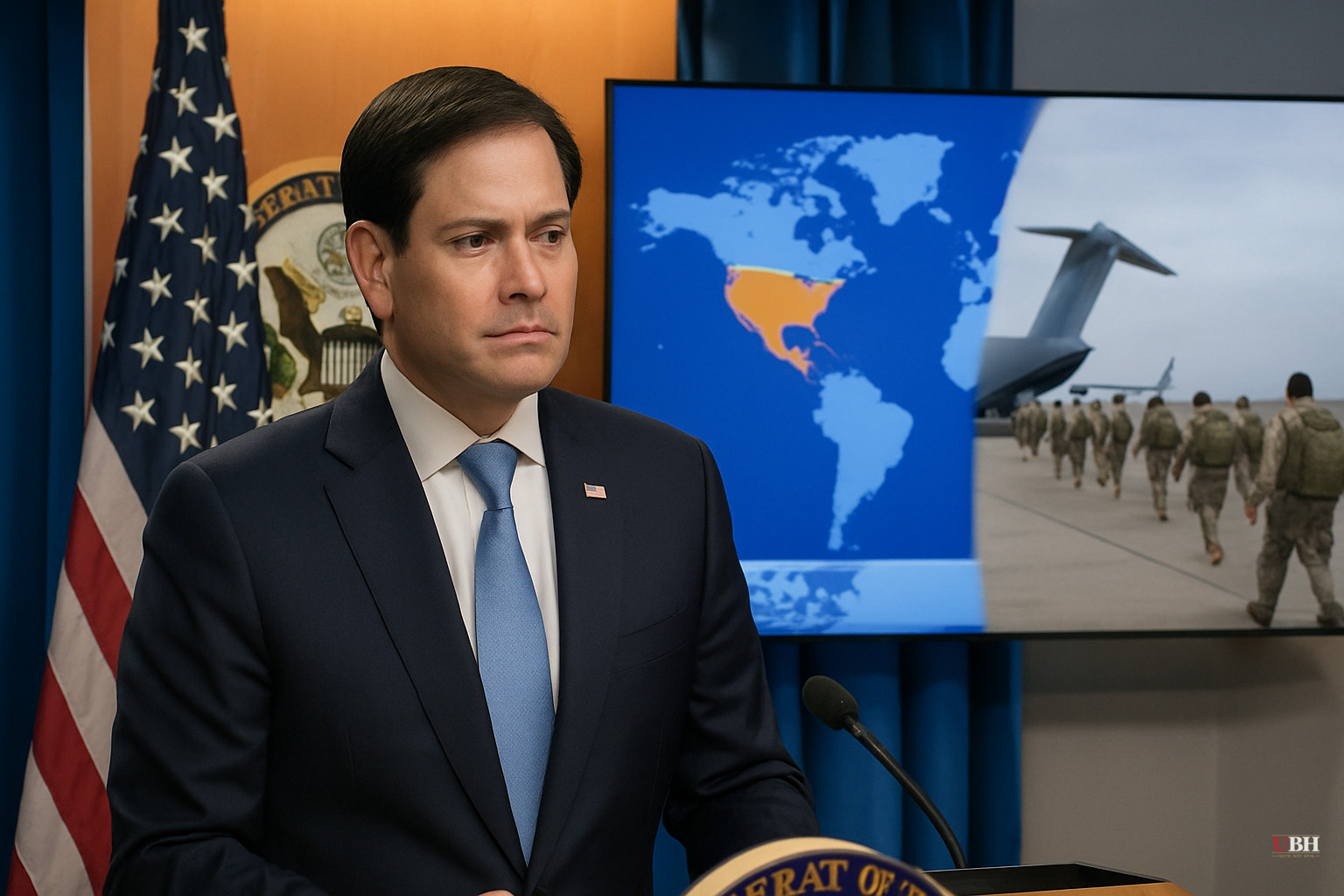
Rubio's Venezuela Playbook
Secretary of State Marco Rubio is now directing much of Venezuela's economic and political future from Washington, according to a New York Times report cited by The Daily Wire. That's an extraordinary amount of influence for a cabinet official to hold over a foreign government, and it followed the U.S. operation that captured former dictator Nicolás Maduro.
The Times reported that Venezuela's oil export revenue now largely flows through the U.S. Treasury before being released under conditions Rubio and his team set. Rubio is also reportedly deciding which foreign companies get sanctions exemptions to operate in Venezuela, while pushing to get more American firms into the country's oil sector.
Acting Venezuelan President Delcy Rodríguez reportedly checks in regularly with Washington on major government appointments, according to the Times report. Rubio's team is described as shaping both economic and diplomatic decisions alongside her.
The stated goal, according to Rubio's own congressional testimony in January, isn't occupation. "There is no war against Venezuela, and we did not occupy a country," Rubio told senators. "There are no U.S. troops on the ground." He pointed to the appointment of career diplomat Laura F. Dogu as chargé d'affaires, the first restored U.S. diplomatic post in Venezuela since 2019, as evidence the administration wants a normal relationship, not a military one.
Rubio has also framed the effort as geopolitical: using financial leverage to push Venezuela away from Iran, China, and Russia, according to the Times. If accurate, that's a notable shift after two decades of those countries expanding influence in Caracas.
Washington isn't occupying Venezuela with troops, but a U.S. cabinet secretary controlling oil revenue disbursement and sanctions exemptions for a foreign government is still direct control over that country's economy. Whether that's smart stabilization policy or an uncomfortable amount of American hands on another nation's finances is a fair question that hasn't been settled, and it's one Congress should be asking Rubio directly rather than reading about in a newspaper.
Iraq: 23 Years Later, Troops Are Leaving
Separately, Iraqi Prime Minister Ali al-Zaidi announced during an Oval Office meeting with President Trump that U.S. forces will complete their withdrawal from Iraq by September 30, according to The Daily Wire. Al-Zaidi, speaking through an interpreter, said the future relationship between the two countries is economic, not military. "The social relations is about the economy, not about military relations," he said.
This is the tail end of a process, not a sudden decision. A 2024 agreement began winding down the U.S. military mission in Iraq, and most forces started leaving in September 2025. Roughly 2,000 to 2,500 troops remained in advisory and counter-ISIS roles, many stationed in Iraq's semi-autonomous Kurdistan region, before this latest announcement.
The scale of the drawdown over two decades is stark. U.S. troop levels peaked around 170,000 during the 2007 surge. Most forces left by 2011, before roughly 5,000 returned in 2014 to fight ISIS. More than 4,400 U.S. service members died in Iraq across the war and its aftermath, a cost that shaped how both parties think about open-ended Middle East deployments.
Trump argued Iran's regional weakening, following recent U.S. and Israeli military operations, made a continued Iraq presence less necessary. "We don't think we need the military there anymore," Trump said. "We're there to help them. We're there to protect them if need be. But we don't think that's going to be necessary."
He's betting the relationship going forward is about oil, not troops. "Iraq has tremendous potential because of their oil," Trump said, adding that new deals would create jobs "for both countries." According to The Associated Press, Iraq is expected to sign an agreement with Chevron as part of that economic push.
The Common Thread
Both the Venezuela and Iraq moves reflect a shift toward fewer American boots on the ground and more American leverage through money and contracts. In Venezuela, that means Rubio effectively co-managing a foreign government's oil revenue and sanctions regime from the State Department. In Iraq, it means ending a 23-year military commitment while U.S. companies move in on energy deals.
Whether that trade works out depends on things nobody can guarantee yet: whether Venezuela's Rodríguez government stays cooperative once U.S. leverage over sanctions eases, and whether Iraq's security holds without a permanent American troop presence as a backstop against ISIS remnants or Iranian-aligned militias. Neither outcome is settled. Congress hasn't held hearings specifically on the scope of Rubio's authority over Venezuelan oil revenue, and no date has been set for one.
Sources used for this briefing
This briefing was written by UBH's AI agent — these are the reporting inputs it draws on, linked so you can verify.


