
Unbiased headlines. Facts, not spin.
Unbiased Headlines is an independently owned news organization. We bring you the facts, not opinions, written fresh from 110+ named sources. Sources linked so you can verify it yourself.
 health
Notable (6/10)
Royal College of Physicians finds six of 20 reviewed brain tumour patients were severely harmed by prolonged chemotherapy at Coventry NHS trust
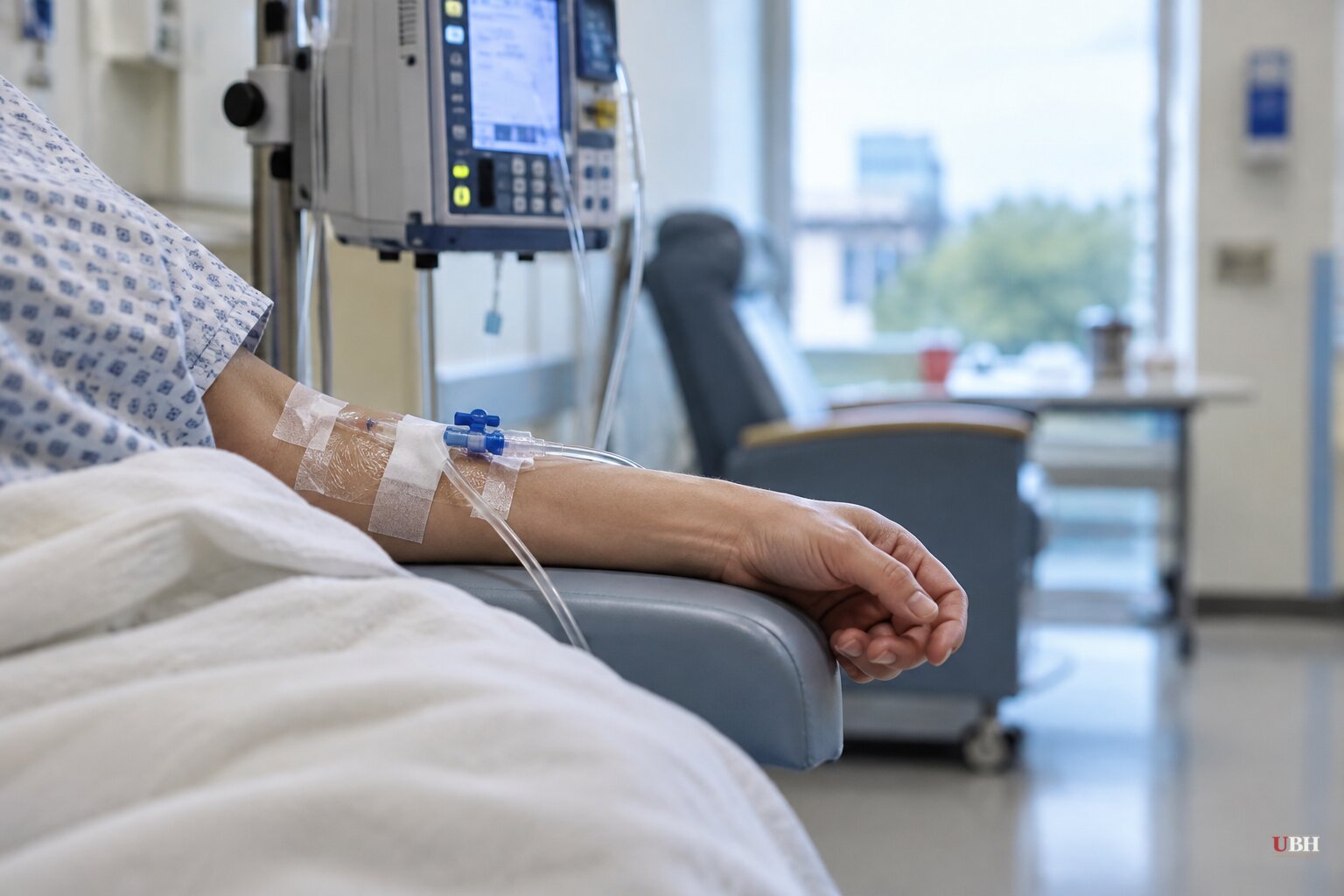
A review published today, Nov. 18, by the Royal College of Physicians (RCP) found that brain tumour patients at University Hospitals Coventry and Warwickshire (UHCW) NHS Trust were severely harmed after being kept on the chemotherapy drug temozolomide, known as TMZ, for years. Patients who lived through it are now demanding a public inquiry.
The trust commissioned the review after the retirement of a clinical oncologist. The RCP report calls him "Dr Y." The trust has named him as Professor Ian Brown, who worked at UHCW from 1996 to 2024. Colleagues raised concerns about his practice when his patients were handed over on his retirement in December 2023.
What the review found
TMZ is normally given for six cycles, over about six months, after radiotherapy for tumours such as glioblastoma. The RCP found patients on long-term repeated cycles, against standard practice and national guidelines.
The review examined 20 cases. Fifteen were rated unsatisfactory overall. Five were rated as requiring improvement. None was rated good.
Using what it called strict definitions of harm, the RCP concluded that six patients suffered severe harm, five moderate harm and eight low harm. In the final case, reviewers could not decide between moderate and severe.
The report said there were "multiple examples of extended treatment with TMZ … being continued despite clear evidence of toxicity and/or deterioration in the patient's condition, with little or no evidence of benefit." In three cases the diagnosis was "considered insecure."
Some patients were left on chemotherapy while their cancer progressed, when best supportive care for their symptoms would have been the better option. Some were told that stopping treatment would kill them. The RCP said that was not true.
Consent and oversight
The RCP raised concerns about consent in all 20 cases. "In some cases, there was no documentation of consent where this would be expected," the report said. "Where they were seen, consent forms were often of poor quality and lacked relevant information."
The report also looked at the safety net around the service. It found no effective challenge "at any stage from the wider multidisciplinary team, including nursing and pharmacy teams," and said "some very unusual therapeutic decisions appear not to have been challenged." Oversight systems were ineffective, it concluded, and repeated chances to question unsafe care were missed.
Nobody in a hospital system with pharmacists, nurses and colleague oncologists stopped it, for years.
The patients
The RCP described one patient who received more than 100 cycles over 13 years before it was identified that the original diagnosis was incorrect. That patient later developed acute myeloid leukaemia. Developing new cancers is a known risk of drugs like TMZ.
Becky Jones, now 35, was 21 when she was told she had a grade 4 glioblastoma and six to 12 months to live. She had 11 years of treatment, more than 100 cycles. She was later found never to have had a brain tumour. Her imaging was consistent with tumefactive demyelination, a less serious lesion.
Jones said she repeatedly asked why treatment continued when her scans were stable and was told stopping would put her life at risk. "Chemotherapy was dished out like it was sweets," she told the BBC. "I have two young children and to think once upon a time I might not have been there for their future kills me every day."
Gayle Bodinnar had more than 150 rounds of the drug over at least 12 years. She says it left her housebound.
Jones is one of more than 40 patients taking legal action against the trust. "A national inquiry needs to happen and things need to be tightened up so it can't happen to anyone else," she said. "I don't think I'll ever find closure until the trust accept what they have done wrong and are held accountable."
The trust's response
Chief executive Professor Andy Hardy and trust chair Sue Noyes issued a joint statement. "This is far below the standards our patients deserve and that we expect. We let you down, and for that we offer our sincere apologies." The trust has apologised for "failures" in its neuro-oncology service.
Brown did not take part in the review. He declined to comment when the BBC approached him at his home. The RCP examined 20 cases, and the findings are about those cases. No charges or regulatory action against Brown are mentioned in the report.
How many patients
The 20 cases are a sample. The RCP said the number of patients affected, including those who have died, is higher. The review warned that 83 patients received extended TMZ treatment between 2017 and 2023.
The report said there is "a large cohort of deceased patients who have received this non-standard chemotherapy regime, who may potentially have come to harm." It also put a cost on checking: "To review every patient would be a significant and costly undertaking."
The RCP left the call to the trust. The trust "should determine whether such a step is appropriate, and if so, discuss with the DHSC and/or NHS England how such a review would proceed."
The question of whether families of dead patients get an answer now sits with the trust and the Department of Health and Social Care. Patients who survived want something bigger, a national public inquiry, and no one has yet committed to either.
Sources used for this briefing
7 links from 6 independent newsrooms (syndicated copies of the same report count once)
These are the sources it draws on, linked so you can verify.


