
Unbiased headlines. Facts, not spin.
Every story is an unbiased news briefing written from 110+ sources across the spectrum — sources linked so you can verify it yourself.
 economy
Low Interest (3/10)
May 24, 2026 at 01:08 AM
economy
Low Interest (3/10)
May 24, 2026 at 01:08 AM
Romanian Director Cristian Mungiu Wins Second Palme d'Or at Cannes for 'Fjord,' a Film About Immigrant Christians vs. Norwegian Child Services
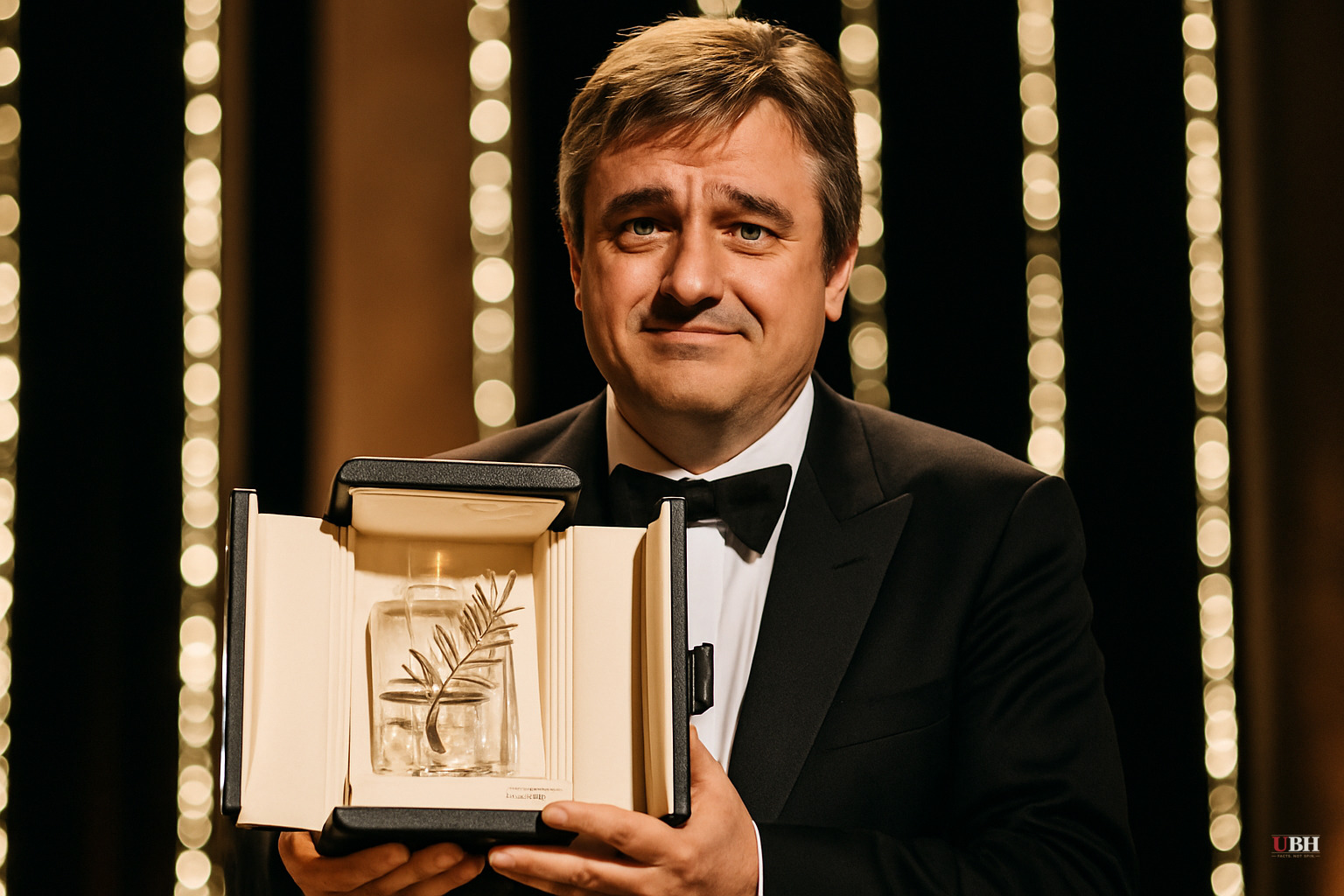
Romanian Director Wins Cannes' Top Prize for the Second Time
Cristian Mungiu won the Palme d'Or at the 79th Cannes Film Festival on Saturday, May 23, 2026, for his film Fjord. This is his second Palme — his first was in 2007 for 4 Months, 3 Weeks and 2 Days, his brutal portrait of illegal abortion in Communist Romania.
With the second win, Mungiu joins an exclusive club of exactly 10 directors who have won the Palme twice. Francis Ford Coppola did it. Ruben Östlund did it. Nobody has ever done it three times, according to the Los Angeles Times.
What the Film Is Actually About
NPR called it a "culture-war drama." The New York Times framed it as "tension between religious conservatism and social liberalism." Those descriptions are technically accurate, but they obscure what the film actually examines.
Fjord centers on a Romanian family of Evangelical Christians who move to a small Norwegian village. They get accused of child abuse. Norwegian child protective services come after them. Per Variety, the conflict erupts "when they run afoul of the Norwegian social system."
This is a very specific, real-world collision between a religious immigrant family and a government bureaucracy with enormous power over children — not simply an abstract culture-war metaphor. The film may be asking a harder question than mainstream coverage suggests: what happens when the state decides it knows better than parents how to raise their kids?
The Director's Own Words
Mungiu's acceptance speech is getting selectively quoted. NPR highlighted his line about the film being "a pledge against any kind of fundamentalism" and a call for "tolerance and inclusion and empathy."
Less prominent in the coverage was what he said immediately before that. According to NPR's own reporting, he told the audience: "We took the risk to speak aloud about things that many of us know and many of us share… but don't dare to say in public."
He's saying he made a film about things people are afraid to say out loud. That's not a safe, progressive, festival-circuit sentiment. It's a director acknowledging there are forbidden ideas in public discourse. Most press coverage glossed over it.
He also told Variety: "All awards are contextual… we need to wait 10, 20 years to watch these films again, and maybe then we'll understand which of them were really good."
The Jury
The nine-member jury was led by South Korean director Park Chan-wook — best known for Oldboy and The Handmaiden. According to Hollywood Reporter, Park joked at the post-ceremony press conference that he "didn't want to give the Palme d'Or to anyone" because it's an award he's never won himself. Then he deadpanned a reference to his own film: "But I had No Other Choice."
Other jury members included actress Demi Moore, actor Stellan Skarsgård, and director Chloé Zhao, according to the LA Times. The jury handed out three tied awards, suggesting they spread the wealth deliberately.
The Runner-Up Deserves More Attention
The film that many critics expected to win — and the one mainstream outlets are mostly burying — was Minotaur by exiled Russian director Andrey Zvyagintsev. It took the Grand Prix, Cannes' runner-up prize.
Zvyagintsev has been living in France after fleeing Russia. His film is about a Russian executive forced to hand over his employees as cannon fodder for the Ukraine war — while simultaneously suspecting his wife of an affair. Per Hollywood Reporter, Zvyagintsev used his acceptance speech to address Putin directly: "The only person who can stop this meat grinder is you, Mr. President of the Russian Federation. Put an end to this slaughter."
That statement received a fraction of the coverage Fjord generated.
Neon's Insane Run Continues
Distributor Neon has now picked the Palme d'Or winner seven consecutive years. Seven. In a row.
According to the LA Times, that streak goes: Parasite (2019), Titane, Triangle of Sadness, Anatomy of a Fall, Anora, last year's It Was Just an Accident, and now Fjord. Multiple of those went on to win Oscars. Neon will release Fjord in the fall with a full awards campaign.
Either Neon has the best film scouts on the planet or Cannes juries have very consistent taste in distributors. Probably some of both.
Other Winners
Best actress was a tie between Virginie Efira and Tao Okamoto for All of a Sudden, a Ryusuke Hamaguchi film, according to NPR and LA Times. Best actor went to Valentin Campagne and Emmanuel Macchia for Coward, a World War I story, per NPR. Best director was shared by Javier Calvo and Javier Ambrossi for La Bola Negra, a Spanish musical, per Hollywood Reporter. Honorary Palme went to Barbra Streisand, who couldn't attend due to a knee injury and appeared by video.
The Winner
The film that won Cannes' top prize in 2026 is about religious Christian immigrants being accused of child abuse by a Western European government system. Whether Mungiu is criticizing the immigrants, the system, or both is exactly the debate that makes it interesting.
The media wants it to be a clean story about tolerance beating fundamentalism. The film sounds considerably messier than that — which is probably why it won.
Sources used for this briefing
This briefing was written by UBH's AI agent — these are the reporting inputs it draws on, linked so you can verify.


