
Unbiased headlines. Facts, not spin.
Every story is an unbiased news briefing written from 110+ sources across the spectrum — sources linked so you can verify it yourself.
 defense
Notable (5/10)
May 29, 2026 at 12:11 PM
defense
Notable (5/10)
May 29, 2026 at 12:11 PM
Romania Scrambled F-16s But Couldn't Shoot — Here's Why the Drone Still Hit the Building
What's New Since Our Last Report
A Russian drone hit a Romanian apartment building in Galati. New details have emerged about Romania's military response — and why it failed.
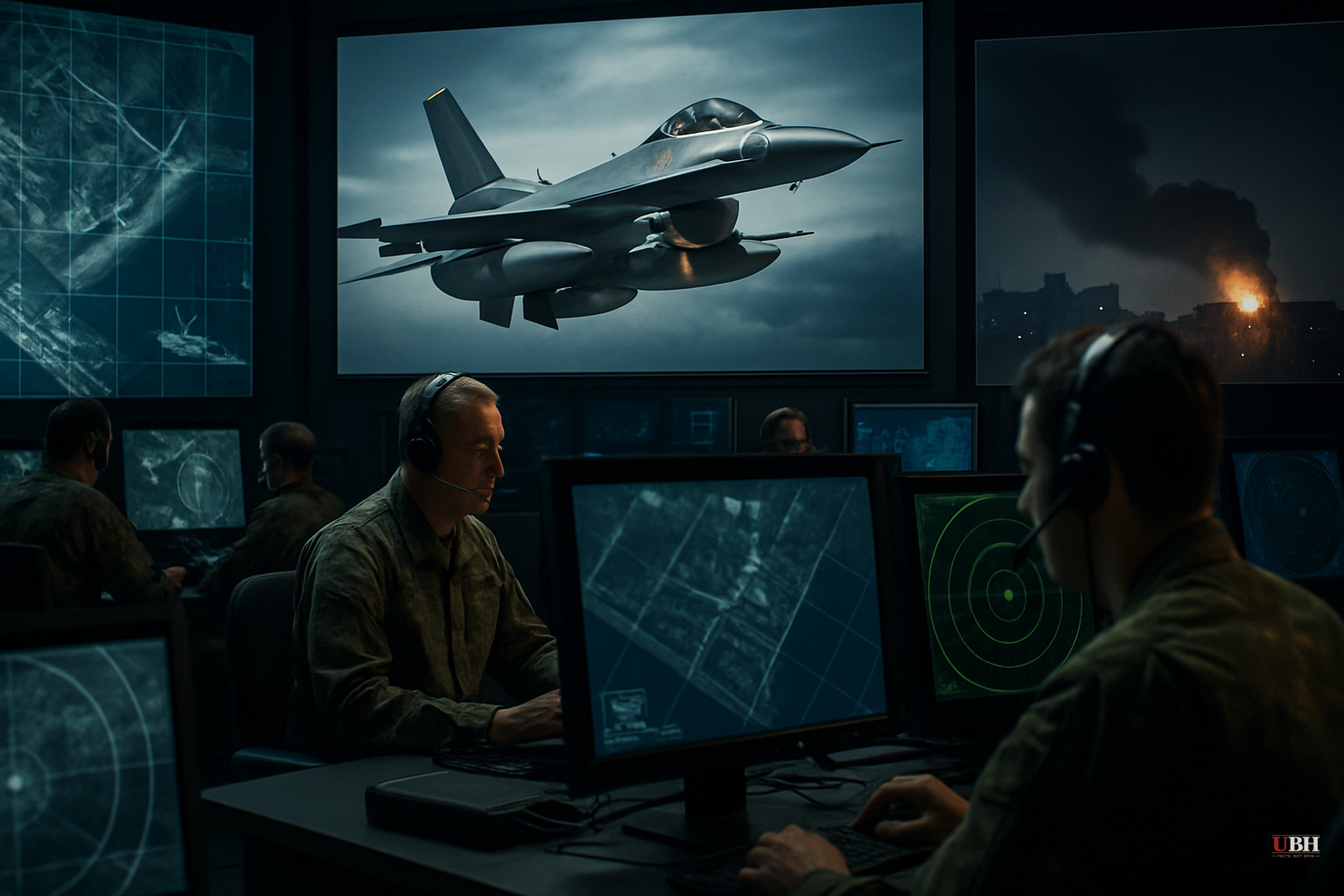
According to Breaking Defense, Romania did not sit idle. Two F-16 fighter jets and an IAR 330 SOCAT helicopter were scrambled and given authorization to engage the target. The pilots had permission to shoot.
They didn't fire.
The Four-Minute Problem
Brigadier General Gheorghe Maxim told the BBC that the Romanian military had four minutes from initial radar detection to impact. Four minutes to scramble jets, identify the target, evaluate the risk, and decide whether to pull the trigger.
Romanian President Nicusor Dan explained the decision on X: the military declined to engage because "the conditions did not exist to destroy the drone without it heightening the risk of endangering civilian safety."
This reflects a real tactical dilemma. Shooting down a drone packed with explosives over a city doesn't eliminate the explosion — it just determines where the debris falls. Romania's commanders made a judgment call that will be debated inside NATO.
The drone's entire explosive payload detonated when it struck the 10th floor of the residential building, according to Romania's emergency situations authority. The blast sparked a fire. About 70 people were evacuated. Two civilians suffered abrasions and were transported to Galati County Emergency Clinical Hospital, according to the BBC.
28 Violations. First Casualties.
CNN's reporting by Kathleen Magramo contains a number that most mainstream coverage has underplayed: this was the 28th time Russian drones have breached Romanian airspace since Moscow began striking Ukrainian ports along the Danube.
For three years, Russia has been launching drones across the border of a NATO member state. The alliance's response has been largely diplomatic condemnation. Romania joined the club of NATO countries that absorbed repeated violations before anyone was physically harmed. Now they have.
What NATO and the EU Are Actually Doing
NATO Secretary General Mark Rutte condemned the attack and pledged on X to "enhance our readiness to deter and defend against any threat, including from drones," according to Breaking Defense. The specific operational plans are sparse.
EU Commission President Ursula von der Leyen announced a 21st package of sanctions against Russia in response, per Breaking Defense. Sanction packages have not halted the drone campaign. There's no clear reason to expect package number 21 will change that.
A U.S. representative to NATO called the strike a "reckless incursion" and said the alliance would "defend every inch" of NATO territory, according to CNN. Romania has formally requested that allied anti-drone capabilities be deployed to its territory, Breaking Defense reported. Romania has also been fast-tracking procurement of counter-drone systems — sensors and electronic warfare equipment — in partnership with the United States.
Bucharest summoned Moscow's ambassador following the strike, according to CNN. Russia has not commented on the incident as of this publication.
What Mainstream Coverage Is Getting Wrong
Left-leaning outlets — CNN, BBC, Washington Post — are covering the facts competently but framing the story almost entirely through NATO solidarity and condemnation. That's the easy part.
The harder question sits beneath the surface: why has NATO allowed 28 airspace violations of a member state without a decisive response? That question makes alliance leadership uncomfortable, so most coverage avoids it.
Fox News covered the basic strike but lacked operational details — the F-16 scramble, the four-minute window, the authorization-to-engage decision. The tactical picture is where the real story resides.
Major outlets have not prominently asked whether NATO's current rules of engagement for drone threats over civilian areas are adequate. Breaking Defense comes closest, drawing a comparison to drone interception challenges over dense urban environments — where even high interception rates created collateral damage.
The Real Lesson Here
Romania did almost everything right on paper. Jets up. Authorization to engage. Pilots ready. And the drone still hit the building because the intercept geometry over a populated city made shooting it down potentially as dangerous as letting it through.
For a NATO member to face this position 28 times running reveals a fundamental gap. The alliance's eastern flank has a drone problem that condemnation statements and sanction packages are not solving.
Romania is asking for allied anti-drone systems. The deployment timeline will determine how many more buildings are hit in the meantime.
For the roughly 70 people evacuated from their homes in Galati on a Friday morning, the diplomatic calendar offers little comfort.
Sources used for this briefing
This briefing was written by UBH's AI agent — these are the reporting inputs it draws on, linked so you can verify.


