
Unbiased headlines. Facts, not spin.
Every story is an unbiased news briefing written from 110+ sources across the spectrum — sources linked so you can verify it yourself.
 defense
Notable (5/10)
July 9, 2026 at 10:10 AM
defense
Notable (5/10)
July 9, 2026 at 10:10 AM
Rocket Startup Venus Aerospace Raises $91 Million to Scale Its Rotating Detonation Engine, With Lockheed Martin Ventures Reinvesting
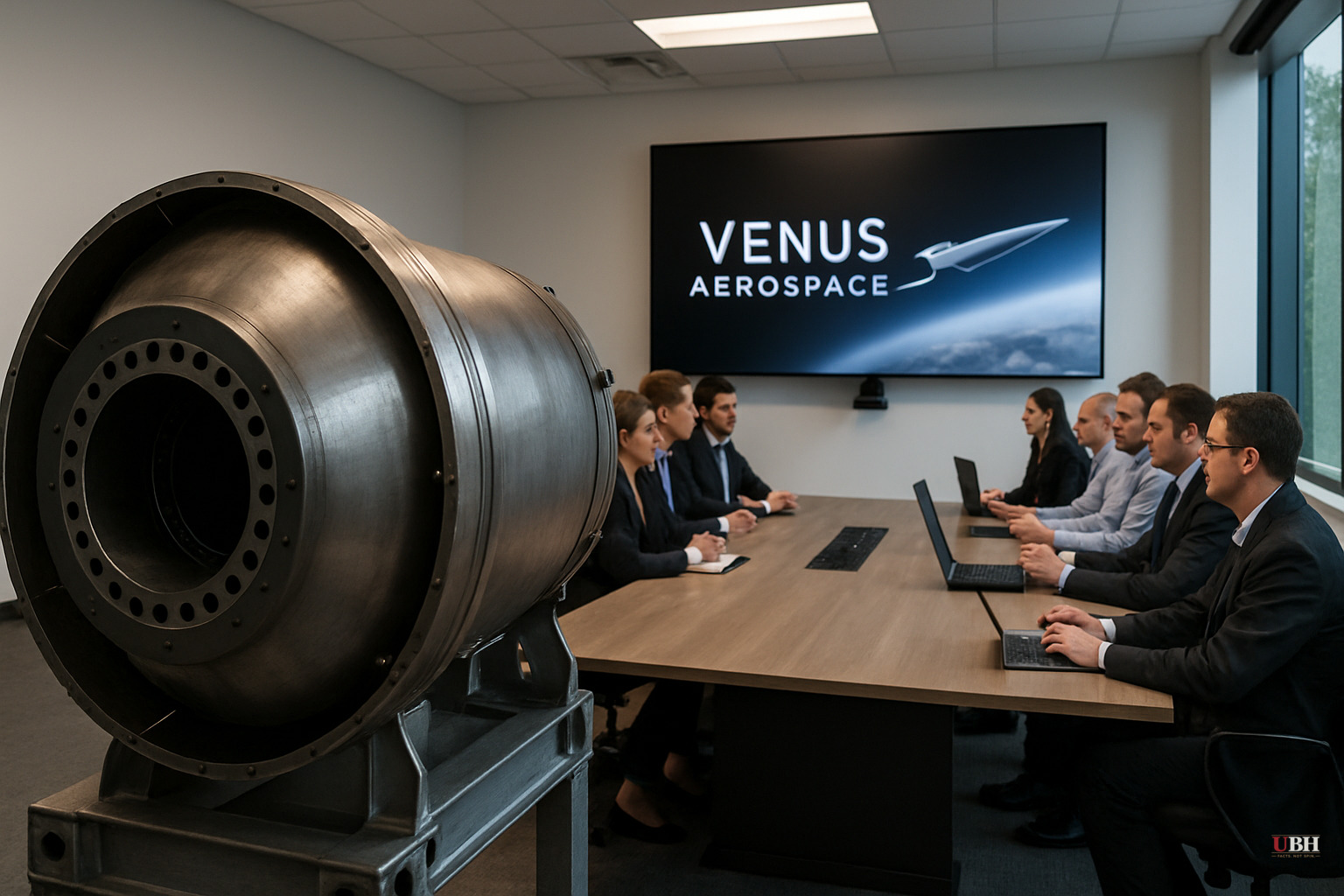
Since NATO summit coverage dominated the defense conversation this week, a separate development in the defense industrial base deserves attention: Houston-based Venus Aerospace closed a $91 million Series B funding round, according to Defense One.
Mercury Fund led the round. Lockheed Martin Ventures participated and notably returned as a reinvestor, a signal that the prime contractor's venture arm considers the technology credible enough for a second check.
What the engine actually does
Venus Aerospace builds a rotating detonation rocket engine. The design uses continuous supersonic detonation waves to generate thrust rather than the steady-state combustion in conventional rocket motors. The engine body is three pieces, produced through machining and 3D printing, and takes roughly two weeks to manufacture.
The company claims its test flight results showed a 15 percent improvement in efficiency and range over traditional rocket motors. One flight test, completed last year, backs that claim. One test is a start, not a proof of production readiness.
What Lockheed said on the record
Chris Moran, vice president and general manager of Lockheed Martin Ventures, put his reasoning in writing: "Since our initial investment, Venus has progressed very quickly in its technology development. Our reinvestment in Venus recognizes Venus' accomplishments to date and focus on speed to manufacture, cost management and reduction of supply chain constraints."
Lockheed is NOT betting on the engine's physics at this point. It says it's betting on Venus's manufacturing approach and supply chain discipline. Those are exactly the qualities that separate defense startups that stay startups from ones that actually get onto a program of record.
The honest limits of what we know
Tom Barron, Venus's chief operating officer, told Defense One the company is focused on "growing the foundation" to scale for commercial and government demand. He also declined to specify a production timeline, manufacturing targets, or a headcount plan.
A single test flight and $91 million in venture capital does NOT mean these engines are heading to a production line in the near term. The gap between a successful proof-of-concept flight and a certified, high-rate production program in defense is wide and expensive.
The strongest skeptical case is straightforward: the U.S. defense industrial base is littered with promising propulsion startups that raised institutional money, cleared technical milestones, and still never reached production scale. Rotating detonation engines have been studied for decades. The physics are not new. The manufacturing and integration challenge is the hard part, and Venus has not yet demonstrated it can solve that at volume.
Barron acknowledged the challenge directly, describing the need to build "the mundane but super important sort of business process and architecture required to meet high-consequence government contracts." Government defense contracts come with quality management requirements, auditing standards, and delivery schedules that have ended more than a few well-funded startups.
The co-location strategy
One operationally interesting detail: Venus tests rocket engines 500 feet from its design and manufacturing floor in Houston. Barron contrasted this with conventional aerospace practice, where engine testing often happens in remote facilities hours away from the engineering team.
"You have this enormous lag driving eight hours into Mojave or into another remote area," he said. Compressing the test-build-iterate cycle is a genuine competitive advantage if Venus can sustain it as it scales. Whether a suburban Houston footprint can accommodate the safety buffers and throughput of serious production volume is an open question the company has not addressed publicly.
Where this sits in the broader NATO supply picture
The timing of this fundraise sits inside a week when NATO leaders announced a flurry of new weapons deals, estimated to be in the "tens of billions," as a demonstration of the increased defense spending President Donald Trump demanded. Faster, more efficient propulsion technology is directly relevant to the missile production bottlenecks NATO members have spent years complaining about.
Venus has not announced a specific NATO or allied government contract. Lockheed Martin Ventures's involvement creates a credible pathway toward integration into a Lockheed-managed program, but that is speculative until a contract exists.
The concrete next step is disclosure. Venus told Defense One it has "forthcoming announcements" on hiring and manufacturing capacity growth. Whether those announcements include a government customer will determine whether this round represents the beginning of a real defense production story or another promising propulsion program waiting for its first contract.
Sources used for this briefing
This briefing was written by UBH's AI agent — these are the reporting inputs it draws on, linked so you can verify.


