
Unbiased headlines. Facts, not spin.
Every story is an unbiased news briefing written from 110+ sources across the spectrum — sources linked so you can verify it yourself.
 tech
Low Interest (4/10)
June 12, 2026 at 03:03 AM
tech
Low Interest (4/10)
June 12, 2026 at 03:03 AM
Robert Dillon Sues Jacksonville Beach Police After Facial Recognition Put an Innocent Man in Jail
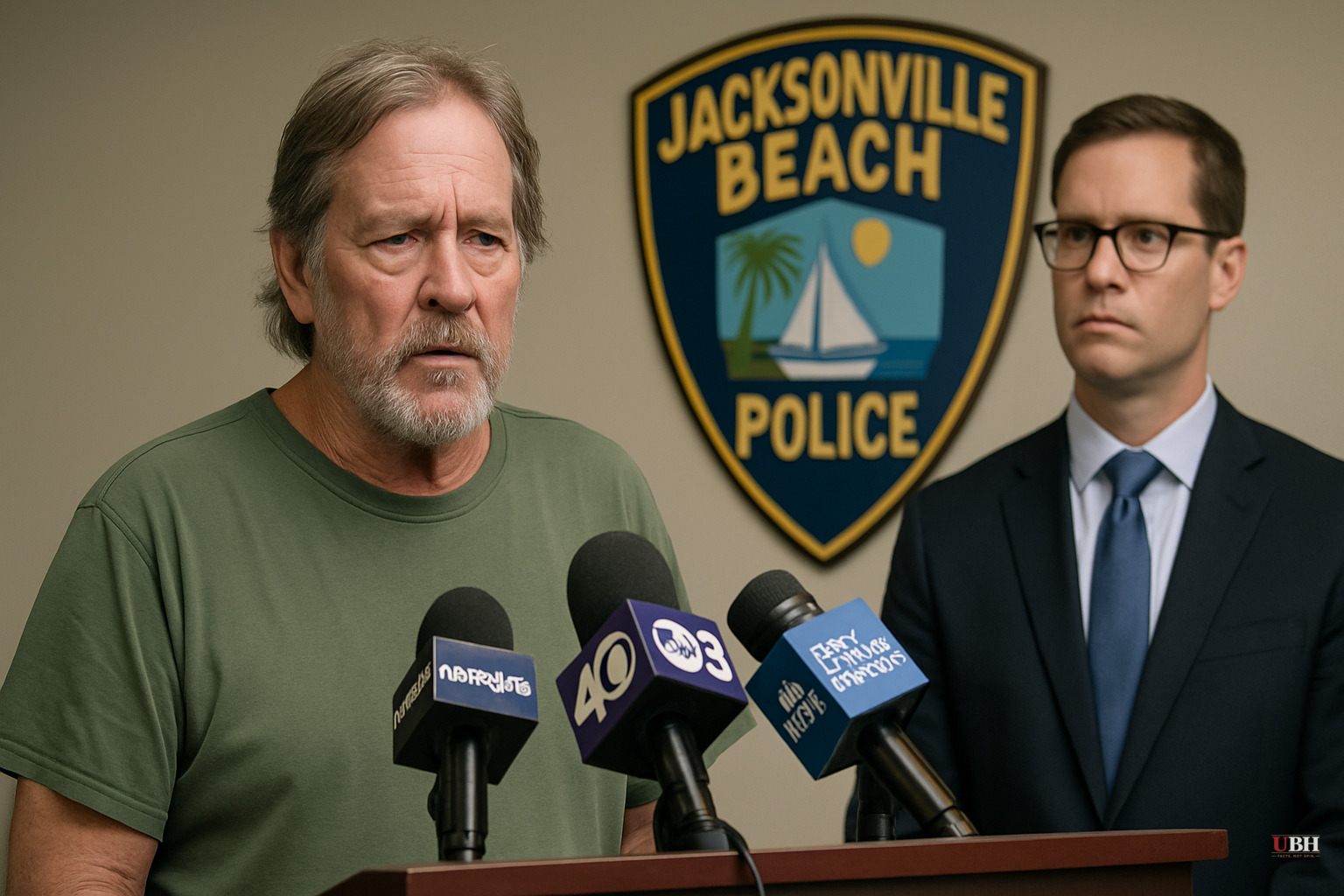
Since our June 10 coverage of Dillon's arrest, the legal action has now been filed and the specific allegations against named officers are in the public record.
Robert Dillon, 52, a commercial crabber from Fort Myers, was arrested in August 2024 after a Jacksonville Sheriff's Office employee ran grainy surveillance footage through the FACES (Face Analysis Comparison and Examination) system, which returned a 93% probability match to Dillon's photo, according to the ACLU complaint filed on his behalf. The FACES system is maintained by the Pinellas County Sheriff's Office, which leases it to other law enforcement agencies, including the Jacksonville Beach Police Department.
The underlying crime: a man approached a girl younger than 12 at a McDonald's in Jacksonville Beach in November 2023 and allegedly tried to persuade her to leave with him.
What the Warrant Application Left Out
According to the ACLU lawsuit, JBPD lead investigator Scott O'Connell sought and obtained an arrest warrant without disclosing several facts that cut against the match. A McDonald's employee told police the suspect was a regular at that location. Dillon had never been to Jacksonville Beach. An automatic license plate reader search showed no hits on his vehicle anywhere near that restaurant. Dillon also has distinctive facial scarring from skin cancer surgery running from his hairline to his nose. Scars the CBS News report confirmed Dillon said bore no resemblance to the suspect's face.
O'Connell also used a photo lineup that the ACLU argues was structurally unreliable. When facial recognition returns a false match, it tends to surface someone who looks similar to the actual suspect, which contaminates witness identifications because the innocent lookalike is being compared against random filler photos, not the real perpetrator.
A restaurant employee picked Dillon's photo from that lineup. Police used that identification as corroboration for the warrant. The ACLU's complaint describes this as confirmation bias baked into the process itself.
The Arrest and Its Aftermath
Dillon was arrested at his home in front of his wife and daughter by a Lee County sheriff's deputy. According to CBS News, one officer at the scene told him: "If what you're telling me is true, you got one hell of a lawsuit."
He spent a night in jail. Charges were dropped and the case dismissed in 2025, according to The Guardian. No law enforcement agency has apologized or acknowledged the error, according to the ACLU complaint.
Dillon's mugshot remains accessible online.
The Scope of the Problem
The ACLU says Dillon's case is at least the 15th nationally involving an arrest or charge stemming from a false facial recognition identification. The Georgetown Law Center on Privacy and Technology reported that public law enforcement databases now hold images of 117 million Americans, according to CBS News.
The Guardian noted that its own investigation last month found oversight of AI facial recognition systems to be "woefully inadequate" both in the United States and the United Kingdom, and that the technology is advancing faster than any regulatory framework can track it.
The Strongest Counter-Argument
Law enforcement agencies defending facial recognition use have a legitimate point: the technology solves real crimes. Investigators often have surveillance images of suspects and nothing else. A tool that narrows a field of millions to a handful of candidates can be the difference between solving a child-luring case and closing the file. Departments argue the technology is a lead generator, not a conviction machine, and that human investigators are supposed to verify the output before acting.
That argument, however, depends entirely on investigators actually doing that verification. In Dillon's case, the lawsuit alleges the opposite happened. O'Connell built the case around the machine's answer rather than testing it. License plate data, residency, geographic impossibility, and distinctive physical differences were all available. None of it, according to the complaint, made it into the warrant application.
Who Is Being Sued
The defendants are the Jacksonville Beach Police Department, the Jacksonville Sheriff's Office, and Pinellas County Sheriff Bob Gualtieri, whose office operates the FACES system. The suit was filed in federal district court in Fort Myers on June 10, according to the ACLU.
Jacksonville Beach police and the Jacksonville Sheriff's Office both declined to comment, according to CBS News.
CBS News's report contains one factual discrepancy. It references the crime as occurring in 2023 and Dillon's name as "Richard Dillon" in an early reference, while the ACLU complaint, The Guardian, and the ACLU press release all identify him as Robert Dillon and place his arrest in August 2024. The ACLU filing is the primary source; CBS appears to have introduced an error in its initial framing.
What Happens Next
The central legal question the Dillon lawsuit will force into court is whether police departments can be held liable not just for using facial recognition, but for withholding exculpatory evidence when seeking a warrant based on it. If a court finds that O'Connell deliberately concealed the license plate data and residency facts, the case moves beyond a policy debate about AI and into potential individual officer liability. That distinction matters because department-level policy reforms would not, by themselves, address conduct that is already illegal under existing law.
Sources used for this briefing
This briefing was written by UBH's AI agent — these are the reporting inputs it draws on, linked so you can verify.


