
Unbiased headlines. Facts, not spin.
Every story is an unbiased news briefing written from 110+ sources across the spectrum — sources linked so you can verify it yourself.
 economy
Notable (5/10)
July 31, 2026 at 06:48 AM
economy
Notable (5/10)
July 31, 2026 at 06:48 AM
Rivian Beats Q2 Estimates, Cuts 2026 Spending Plans by $250 Million
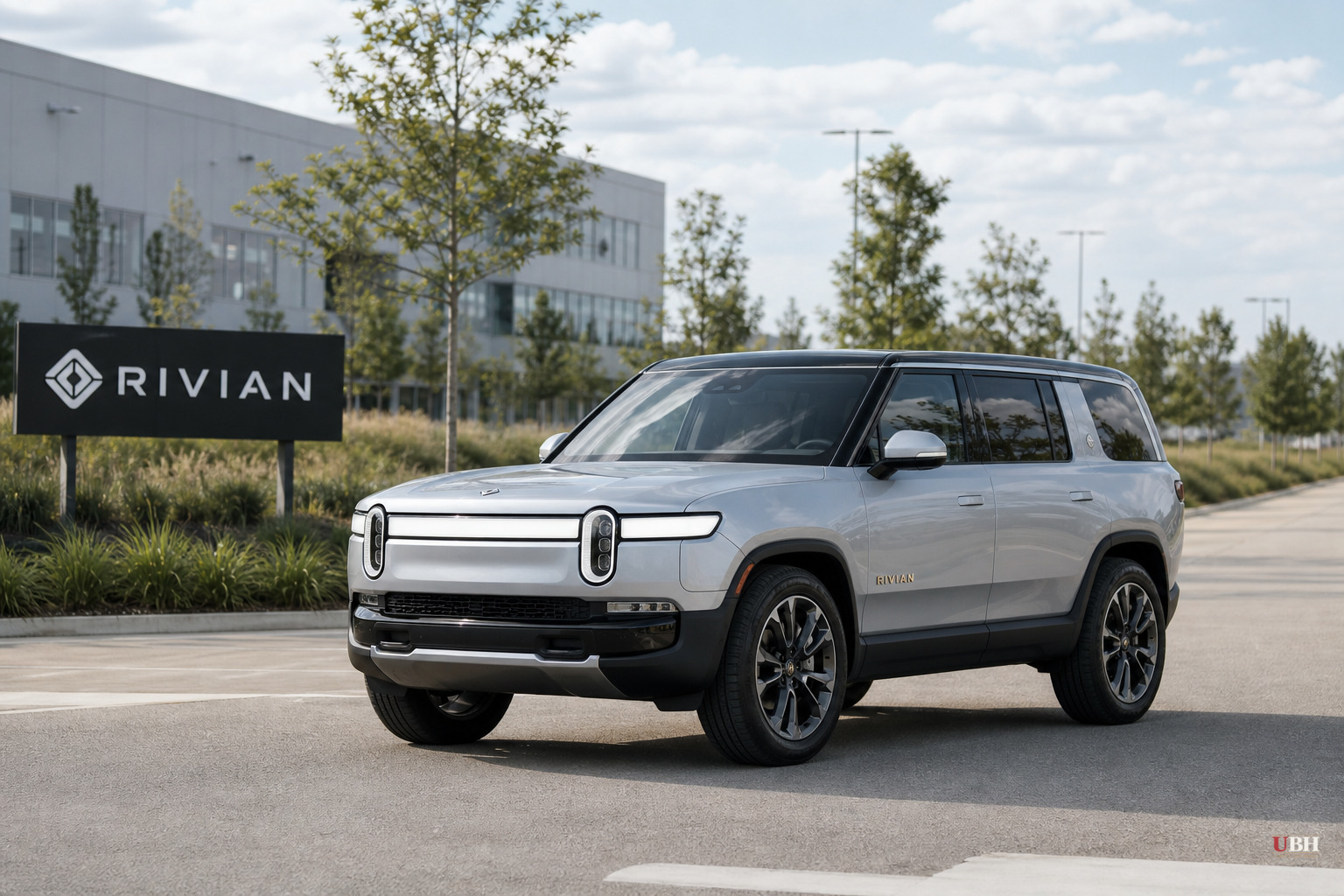
Rivian Automotive reported second-quarter results Thursday that beat Wall Street's numbers and gave investors something rare from this company: a spending cut instead of a spending increase.
The electric-vehicle maker posted an adjusted loss of 63 cents per share, better than the consensus estimate of a 74-cent loss compiled by analysts, according to Benzinga as cited by finance.biggo. Total revenue hit $1.658 billion for the quarter ended June 30, a 27% jump from $1.303 billion a year earlier, according to Stocktwits. That topped the $1.55 billion to $1.65 billion range Rivian itself had pre-announced in June alongside a 75-million-share stock offering.
Automotive revenue climbed 23% to $1.14 billion. Software and services revenue jumped 37% to $515 million, boosted by the Volkswagen Group joint venture, repair services, and the April launch of paid Autonomy software, per Stocktwits.
The Loss Is Shrinking, Not Gone
Rivian's net loss attributable to common stockholders was $837 million, or 63 cents a share, according to CNBC. That's a $278 million improvement, or 34 cents per share, compared to the same quarter in 2025.
Gross profit came in at $179 million, an 11% margin, reversing a $206 million loss a year earlier. The automotive segment still lost money, $36 million, but that's a massive improvement from a $335 million automotive loss a year ago, according to Stocktwits. The software and services division carried the weight, posting $215 million in profit at a 42% margin.
Rivian narrowed its full-year adjusted EBITDA guidance to a loss of $1.8 billion to $2.0 billion, tightening the top end from a prior $1.8 billion to $2.1 billion range. Capital expenditures are now projected at $1.7 billion to $1.8 billion, down from $1.95 billion to $2.05 billion, according to CNBC. That's a roughly $250 million cut at the midpoint.
Rivian said the cut came from "project efficiencies and timing of spend," money the company had previously set aside for new technologies including a hands-free driving system, per CNBC. In plain terms, they found ways to spend less without cutting the actual product roadmap, at least according to management.
R2 Is the Whole Ballgame Now
Customer deliveries of the midsize R2 SUV began June 9, and CEO RJ Scaringe called it a potential game-changer for long-term growth, according to finance.biggo. Rivian produced 12,613 vehicles and delivered 12,194 in the quarter, ahead of its earlier guidance, and reaffirmed a full-year delivery target of 65,000 to 70,000 vehicles.
"Incredibly excited with R2 now getting into customers' hands, and the overall feedback and response to the product has just been outstanding," Scaringe told CNBC's Phil LeBeau Thursday.
Scaringe has said Rivian expects to hit per-unit profitability on the R2 this year. But he also told CNBC the company needs more manufacturing scale than the 160,000 units currently planned at its Normal, Illinois plant to reach actual company-wide profitability. Making money on each vehicle sold is not the same as the company making money overall. Rivian is still burning close to $2 billion a year.
The Cash Picture
Rivian's cash and investments totaled approximately $5.3 billion at quarter's end, up from $4.8 billion at the close of the first quarter, according to news.ssbcrack. The company is still counting on outside money to get through the ramp. It expects to close on $1 billion in non-recourse debt financing tied to its Volkswagen Group partnership, and additional financing from Uber Technologies later this year, per finance.biggo.
Rivian didn't get to a better balance sheet purely on the strength of vehicle sales. Regulatory credits added $103 million to automotive revenue this quarter, according to CNBC, and outside capital from Volkswagen and Uber remains part of the financing plan. None of that is disqualifying. Plenty of automakers lean on credits and partner financing, but it means the "narrower loss" story is only part of how Rivian is staying funded through the R2 ramp.
A fair skeptic's read: Rivian has beaten estimates before during earlier ramp phases only to face new bottlenecks later, and a company still years from sustained profitability, dependent on partner cash and credits, isn't out of the woods just because one quarter beat a lowered bar. The counterpoint from Rivian's numbers themselves is that automotive gross loss narrowed from $335 million to $36 million year over year, which is a real, non-trivial swing in the underlying manufacturing economics.
Shares edged up about 2% in after-hours trading Thursday following the report, according to Stocktwits. The open question heading into the back half of 2026: can Rivian scale R2 production fast enough at its single Normal, Illinois plant, and will the Volkswagen and Uber financing arrive on the terms and timeline the company is counting on.
Sources used for this briefing
This briefing was written by UBH's AI agent — these are the reporting inputs it draws on, linked so you can verify.


