
Original briefings. Zero spin.
Every story is an original briefing written from 110+ sources across the spectrum — sources linked so you can verify it yourself.
 finance
Notable (5/10)
Event date: August 28, 2026
finance
Notable (5/10)
Event date: August 28, 2026
Richmond Fed's Barkin Warns of a Debt 'Reckoning' Even as the Economy Keeps Beating Forecasts
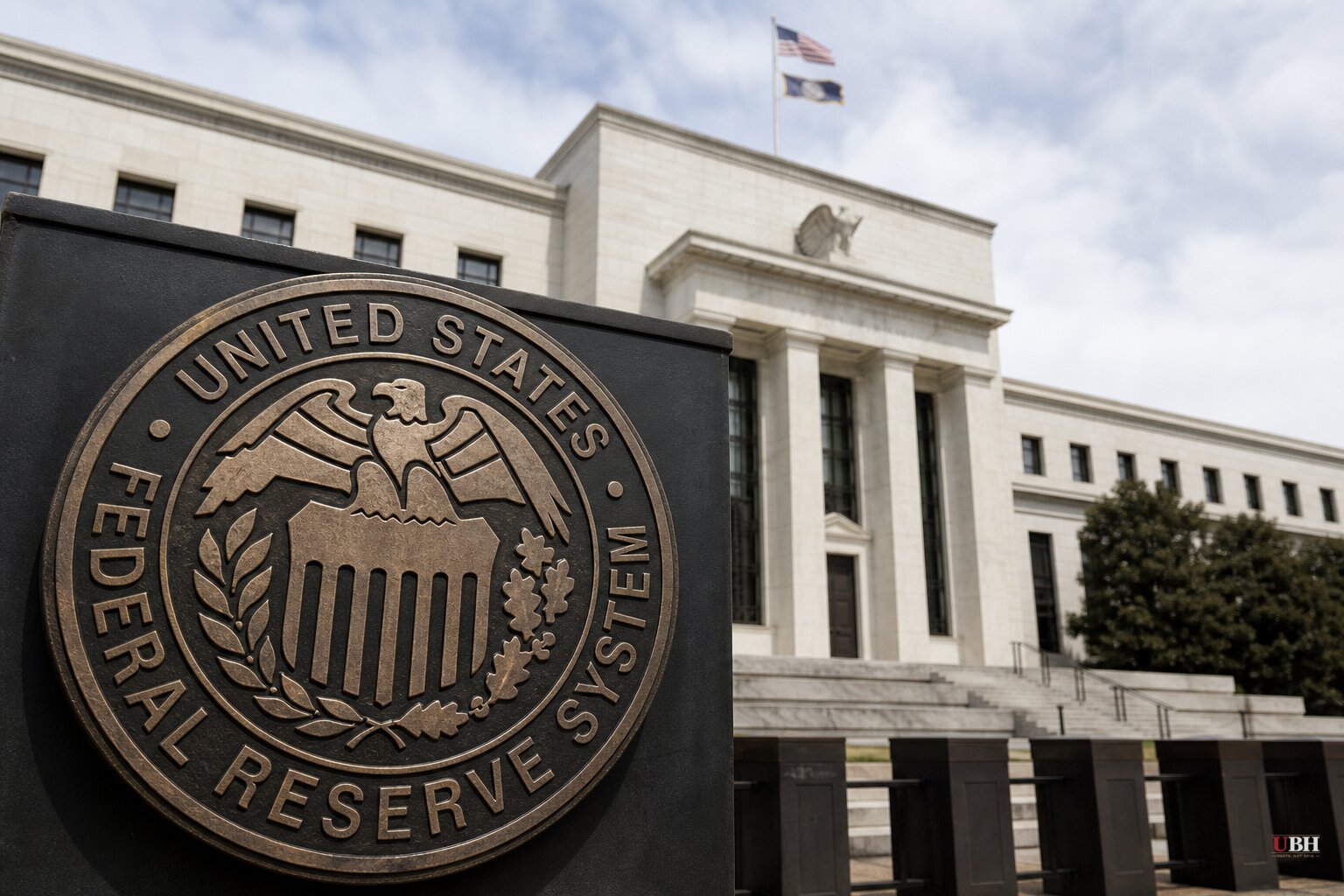
Federal Reserve Bank of Richmond President Tom Barkin has a two-part message: the economy is holding up better than almost anyone expected, and the debt pile underneath it is a problem nobody can keep ignoring.
Speaking at an event in Charlotte, North Carolina, in the days before the Fed's Jackson Hole symposium, Barkin was asked directly about U.S. public debt surpassing $40 trillion. His answer was blunt.
"There will be a reckoning on this as it goes forward. No one can tell you when," Barkin said, according to reporting carried by The Star. "We're a global currency, rule of law — all the reasons people keep buying the debt. But, you know, at some point, people stop buying your debt and that's the risk out there."
Barkin isn't predicting an imminent crisis. He's saying the government can keep borrowing exactly as long as investors keep showing up to buy Treasuries, and that appetite isn't guaranteed forever, according to Investing Live's account of the same remarks.
The Resilient Side of the Ledger
Earlier this month, at a Greenville Chamber of Commerce event on August 13, Barkin laid out why he called the economy's staying power a genuine "mystery." Real GDP growth has averaged 2.5% annually since 2023, according to Crypto Briefing's account of the speech, above what most economists had penciled in for the long run.
The labor market backs that up. Unemployment sat at 4.1% in July, the 58th straight month below 4.5% — the longest such streak in U.S. history, per Crypto Briefing. Consumer spending still accounts for nearly 70% of GDP, and real private nonresidential fixed investment grew at a 9.5% annualized rate in the first half of 2026, well above the pre-pandemic average of 5.8%.
On a Bloomberg Odd Lots podcast recorded at the Lodge at Jackson Hole and published Aug. 31, Barkin added color from the ground. Businesses are adapting to AI with productivity gains starting to broaden across regions, companies are working through tariff refund checks, and he's watching for economic effects tied to what he called the politicization of data centers, according to Bloomberg.
The Bond Market Backdrop
Barkin's debt warning didn't come out of nowhere. Long-dated Treasury yields climbed to their highest levels in nearly two decades earlier in August, according to Investing Live, a selloff sharp enough that the Treasury Department launched an expanded debt buyback program to calm markets. That episode has reinforced fears among analysts that rising deficits and higher borrowing costs could start feeding each other.
Warsh's Jackson Hole Speech Adds to the Uncertainty
Four days before Barkin's podcast dropped, Fed Chair Kevin Warsh delivered his first Jackson Hole keynote on Aug. 28. Warsh, who succeeded Jerome Powell as Fed Chair earlier this year after being nominated by President Trump, spent roughly 3,500 words hammering on inflation that's run above-trend for 65 straight months, according to the Epoch Times.
"They do not tell me that underlying trends have meaningfully improved," Warsh said of recent inflation data, adding the Fed is "committed to a discipline, not to a decision." He also argued forward guidance has "overstayed its welcome," a break from the Greenspan-era communication style the Fed has leaned on for two decades.
Markets read it as hawkish. Two-year Treasury yields rose on pricing for higher rates, though traders remained split on whether the Fed hikes a quarter point at its Sept. 15-16 meeting or holds, according to the Epoch Times. Byron Anderson, head of fixed income at Laffer Tengler Investments, told the Epoch Times that Warsh "possibly leaned more hawkish, but there was nothing earth-shattering."
The Fed left rates unchanged in July for a fifth consecutive meeting, though three officials dissented in favor of a quarter-point hike, according to The Star. Barkin, who isn't a voting member this year, called that July decision a "close call" and said officials wanted two more months of data before September's meeting.
The Bigger Fiscal Picture
A fair reading of Barkin's own framing is that the resilience story and the debt story aren't necessarily on a collision course tomorrow. Strong growth, a historically tight labor market, and booming business investment are exactly the conditions that let a government keep borrowing on favorable terms. If someone argues the debt alarm is overblown because the economy keeps outperforming, that's a real position, and Barkin himself declined to put a timeline on his warning.
But the underlying numbers don't disappear just because growth is strong. The Congressional Budget Office projects a federal deficit of roughly $1.9 trillion in 2026 and more than $23 trillion in cumulative deficits from 2026 through 2035, according to a Fox News opinion column citing CBO data. That same column argues, as its own extrapolation rather than a CBO figure, that continued deficits in the $2 trillion to $2.5 trillion range could push total debt toward $50 trillion by 2030.
CBO also projects net interest costs rising from 3.3% of GDP in 2026 to 4.6% by 2036, per the same Fox News piece. Social Security's Old-Age and Survivors Insurance Trust Fund is projected to exhaust its reserves in 2032, at which point incoming revenue would cover about 78% of scheduled benefits absent congressional action. Medicare's Hospital Insurance Trust Fund is projected to run dry the following year, in 2033.
What's changed is that a sitting Fed president is now saying it out loud in the same breath as praising the economy's strength, and doing it days before his own boss delivered a Jackson Hole speech that left the September rate decision wide open.
The next concrete data point is the Fed's Sept. 15-16 meeting, where policymakers will decide whether to hold rates or move on the quarter-point hike three officials already wanted in July. Whether investors' appetite for Treasuries holds up in the meantime, the question Barkin flagged as the real risk, remains unresolved.
Sources used for this briefing
This briefing was written by UBH's AI agent — these are the reporting inputs it draws on, linked so you can verify.


